Federal Judge Imposes Restrictions on Tear Gas Use at Portland ICE Building Protests
A federal judge in Oregon has issued a significant preliminary injunction that restricts federal officers from deploying tear gas and other chemical munitions during protests at the U.S. Immigration and Customs Enforcement building in Portland. This legal action comes in response to a lawsuit filed by the American Civil Liberties Union of Oregon, which is representing protesters and freelance journalists who allege excessive force was used against them.
Legal Proceedings and Testimonies
U.S. District Judge Michael Simon granted the preliminary injunction following a comprehensive three-day hearing. During this hearing, plaintiffs provided compelling testimonies about their experiences with federal officers. The plaintiffs included a demonstrator known for wearing a chicken costume, a married couple in their eighties, and two freelance journalists. They all described being subjected to chemical or projectile munitions during protests.
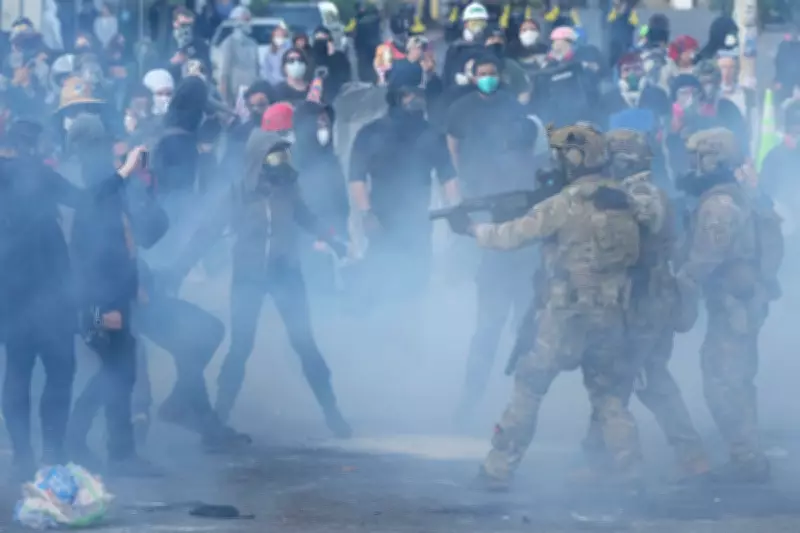
Judge Simon noted in his written order that the plaintiffs submitted numerous video recordings as evidence. These videos clearly showed Department of Homeland Security officers spraying OC Spray, commonly known as pepper spray, directly into the faces of peaceful protesters. The footage also captured officers discharging tear gas and firing pepper-ball munitions into crowds of nonviolent demonstrators.

Judge's Ruling and Legal Justifications
In his Monday order, Judge Simon emphasized that the defendants' conduct—physically harming protesters and journalists without prior dispersal warnings—is objectively chilling to First Amendment rights. The lawsuit argues that the use of such munitions by federal officers constitutes retaliation against protesters, thereby suppressing their constitutional freedoms.
The preliminary injunction imposes specific restrictions on federal agents. They are prohibited from using chemical or projectile munitions, including pepper balls and tear gas, unless an individual poses an imminent threat of physical harm. Additionally, agents are ordered not to fire munitions at the head, neck, or torso unless legally justified in using deadly force against that person.
Furthermore, officers cannot use pepper spray indiscriminately against groups in a manner that would affect bystanders. Pepper spray may only be targeted at individuals engaging in violent unlawful conduct, actively resisting arrest, or used as reasonably necessary in a defensive capacity. Judge Simon clarified that acts such as trespassing, refusing to move, and disobeying dispersal orders constitute passive resistance, not active resistance.
Broader Implications and Context
This preliminary injunction is the second recent legal restriction on tear gas use at the Portland ICE facility. It follows a similar order from another federal judge overseeing a separate case brought by residents of an adjacent affordable housing complex. Judge Simon had previously issued a temporary restraining order with comparable limitations, highlighting ongoing judicial scrutiny of federal crowd-control tactics.
The Department of Homeland Security has not immediately responded to requests for comment regarding the new injunction. In previous statements, DHS maintained that federal officers followed their training and used the minimum amount of force necessary. However, the judge's ruling underscores growing concerns about aggressive crowd-control methods as demonstrations continue across the country in response to immigration enforcement policies.
Judge Simon also granted provisional class certification, extending the order's coverage to a broader group. This includes all individuals who have peacefully protested or reported on demonstrations at the Portland ICE building in recent months. The preliminary injunction will remain in effect while the lawsuit proceeds through the legal system, potentially setting a precedent for how federal authorities manage protests and protect constitutional rights.