Missouri Abortion Rights Struggle Highlights National Legal Conflicts
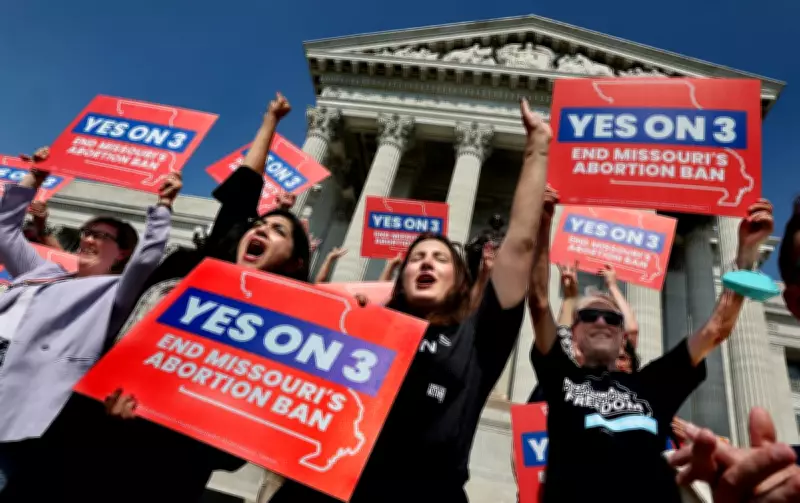
Demonstrators celebrated in Jefferson City, Missouri, on 10 September 2024 following a state Supreme Court ruling, yet the path to securing abortion rights remains fraught with legal obstacles. This scene underscores a broader national pattern where voter-approved measures face significant resistance from conservative lawmakers and protracted courtroom conflicts.
Voter Mandates Meet Legislative Resistance
After Missouri residents voted to repeal the state's near-total abortion ban and embed reproductive rights into the constitution in 2024, advocates immediately launched legal challenges. A lawsuit filed the day after the election contested not only the ban's constitutionality but also numerous other restrictions that providers argue render abortion care practically inaccessible. More than a year later, these disputes remain unresolved, with a recent two-week trial concluding without an immediate verdict.
Missouri is not alone in this struggle. Similar legal battles are raging in Arizona, Michigan, Montana, Nevada, and Ohio, where activists seek to fully implement ballot measures designed to expand abortion access. In several of these states, legislators have introduced bills that experts believe would undermine the clear will of the electorate, creating a tense standoff between democratic outcomes and political maneuvering.

The Limitations of Constitutional Amendments
Advocates warn that ballot measures, while powerful, are not a cure-all solution. Amy Myrick, senior counsel at the Center for Reproductive Rights, emphasised that constitutional amendments require judicial and legislative follow-through to dismantle existing restrictions. "Even when there's a right in the constitution, burdensome regulations can persist, making it difficult or impossible for people to obtain care," Myrick stated. This reality is evident in Missouri's history, where stringent clinic regulations nearly shuttered the state's last abortion facility in 2019, causing a 97% drop in procedures from 2010 to 2020.
During the recent trial, Missouri providers argued that many state restrictions, such as bans on telemedicine abortion pills and mandatory 72-hour waiting periods, constitute unconstitutional barriers. Dr. Margaret Baum of Planned Parenthood Great Rivers testified that abortion is policed unlike other medical procedures, noting she faces no similar requirements when performing vasectomies. State officials, however, defended the rules as necessary for patient safety.
Nationwide Pattern of TRAP Laws and Fetal Personhood
The legal conflicts extend beyond Missouri, largely focusing on Targeted Regulations of Abortion Providers (TRAP) laws. Arizona advocates are challenging requirements for two in-person clinic visits 24 hours apart, while Ohio and Michigan activists target similar waiting-period laws. Montana faces licensing rules that could close clinics, and Nevada is contesting parental notification laws for minors.
Conservative legislators continue to push new restrictions, often through fetal personhood doctrines that grant legal rights to embryos and fetuses. In Ohio, lawmakers proposed strengthening such measures despite 57% of voters supporting abortion rights in 2023. Arizona's Republican-controlled legislature has advanced three fetal personhood bills this year, directly contradicting the 62% voter approval for abortion protections in 2024.
Jos Raadschelders, a professor at Ohio State University, criticised these legislative efforts as "democratic backsliding" and "a snub to the voter." This sentiment echoes concerns that voter mandates are being disregarded through technical legal challenges and new legislative proposals.
Ongoing Challenges and Future Ballot Measures
Even if Missouri providers prevail in court, access may be short-lived. Anti-abortion activists have placed a measure on the 2026 ballot to repeal the 2024 amendment and restore the ban, despite 51% voter support. Mallory Schwarz of Abortion Access Missouri called this move "disheartening," highlighting the need for sustained, multi-pronged advocacy to secure practical rights.

With at least three states set to vote on pro-abortion-rights measures in November, advocates hope to expand the list of twelve states that have passed such measures post-Roe v. Wade. However, the ongoing battles in Missouri and elsewhere demonstrate that electoral victories are only the beginning of a complex, enduring struggle for reproductive healthcare access across the United States.