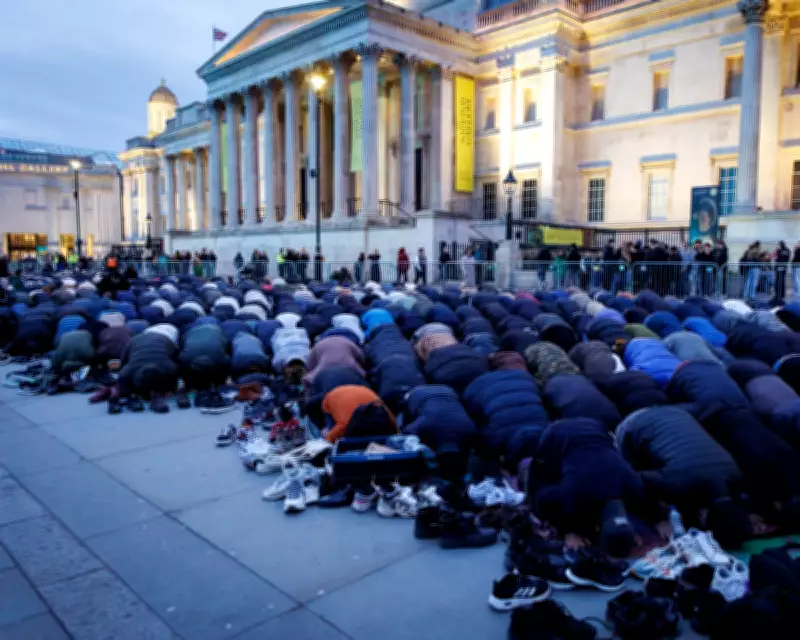
British Muslims Defend Public Ramadan Prayer Amid Political Criticism
As a young British Muslim, I was deeply troubled to see public prayer described as an "act of domination" by the shadow justice secretary, Nick Timothy. To characterise a few minutes of prayer in this way is simply unjust and undermines the principles of fairness and equal treatment that Britain stands for. If other faiths can gather in public spaces like Trafalgar Square, Muslims should be afforded the same right without being singled out, as this erodes the very foundation of justice.
Integration and Equality Under Scrutiny
Events such as open iftars are not about imposing beliefs but about bringing people together in a spirit of community. We are often encouraged to integrate, yet when Muslims do so visibly and peacefully, they face criticism that deepens division and makes young British Muslims feel unwelcome in their own country. This contradiction highlights a troubling issue: equality cannot be conditional, and peaceful acts like breaking the fast or offering a short prayer do not amount to domination.
There is no evidence of Muslims imposing their beliefs on others; in fact, Islam upholds the principle "for you your religion, and for me my religion." To portray Islamic practices, including the call to prayer, as threatening is not only false but irresponsible, as such rhetoric fuels division and risks making Muslims targets of abuse.

Historical Context and Public Perception
I wonder why the sight of people lined up for prayer at Trafalgar Square seemed unfamiliar to Nick Timothy, given that people of other faiths have congregated there for years to mark their religious days. Perhaps his fear arises from a lack of understanding. A prayer is merely an act of communion between a believer and God, whether in private or public, and should not be seen as sinister.
It is particularly saddening to see even a remote threat to religious freedom in Great Britain. For instance, at a recent iftar event in Scunthorpe, a friend wished to join in the female prayer area to observe and requested an English translation of the salat prayer, which was gladly provided. I encourage anyone who shares Mr Timothy's views to seek similar understanding rather than jumping to conclusions.
Political Rhetoric and Social Norms
While politicians like Kemi Badenoch and Nigel Farage revive old English norms of persecuting minorities—a history faced by Catholics and Jews for centuries—most British citizens respect religious freedom and tolerance. We must show which norms we uphold through the ballot box in May, reinforcing that British values include diversity and inclusion.
It is ironic how "British values" include monks and nuns praying separately, wearing distinctive head coverings and clothing, yet when non-Christians engage in similar practices, it becomes controversial. This double standard highlights the need for a more consistent application of the law, which must apply equally to all faiths to prevent discrimination and uphold justice.
In summary, the response to the Ramadan event in Trafalgar Square underscores a broader debate about religious freedom and integration in Britain. By condemning divisive language and advocating for equal rights, we can foster a more inclusive society where all communities feel welcome and respected.