

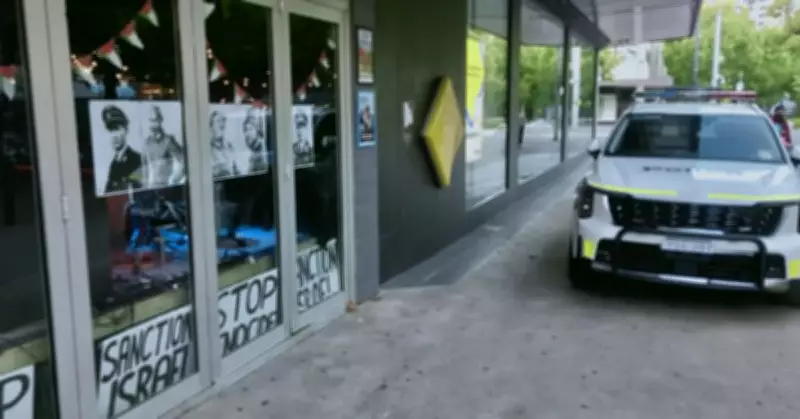
Police Seize Nazi Uniform Posters of World Leaders from Canberra Bar
In a controversial incident in the Australian capital, police have seized five art posters from Dissent Cafe and Bar in Canberra's central business district. The posters depicted prominent world leaders, including Donald Trump, Vladimir Putin, and Benjamin Netanyahu, dressed in Nazi uniforms, sparking an investigation under newly enacted federal hate symbol laws.
Bar Shutdown and Owner's Outrage
The venue was temporarily shut down for approximately two hours on Wednesday night as officers responded to a complaint about hate imagery. David Howe, the owner of Dissent Cafe, expressed disbelief at the police action, describing it as "ludicrous" and emphasizing that the posters were intended as an anti-fascist statement. He noted that the closure forced the cancellation of a performance by an interstate band, causing significant disruption to the establishment's operations.
Investigation Under Hate Symbol Laws
ACT Policing confirmed in a statement that they had declared the cafe a crime scene and seized the posters to determine whether charges should be laid. The investigation focuses on whether the display violates hate symbol legislation passed earlier this year, which aims to address antisemitic, racist, and hate incidents promptly. This marks the first such complaint in Canberra since the laws were introduced following the Bondi shooting.

Police reported that they attempted to discuss removal of the posters with Howe, but when he declined, they proceeded to secure the scene. Howe disputed this account, stating he would have complied if directly asked, and instead had to wait for a serious crimes unit from Gungahlin, about a 25-minute drive away, to handle the removal.
Artistic Exemptions and Political Reactions
The new laws include exemptions for displays deemed for artistic, educational, or literary purposes, provided they are not contrary to the public interest. Howe argued that the posters serve as a critique of authoritarian regimes and police states, falling squarely under this artistic exemption. Political figures have weighed in on the matter, with ACT Senator David Pocock highlighting art as a "legitimate form of political dissent" and stressing the need to balance hate prevention with protest rights.
ACT independent MLA Thomas Emerson expressed concern, describing the situation as "Orwellian" and warning against government suppression of artistic expression. He has written to the ACT police minister to question why the artistic purpose exemption was not applied in this case, emphasizing the risk of creating division through such actions.
Broader Implications and Ongoing Inquiry
This incident raises important questions about the enforcement of hate symbol laws and the protection of free speech in Australia. As the investigation continues, authorities must navigate the fine line between combating hate and respecting artistic and political expression. The outcome could set a precedent for how similar cases are handled in the future, impacting venues and artists across the nation.
Guardian Australia has reached out to the ACT police minister for further comment, but a response is still pending. The community and legal experts will be closely watching as this case unfolds, with potential implications for civil liberties and law enforcement practices in the capital and beyond.






