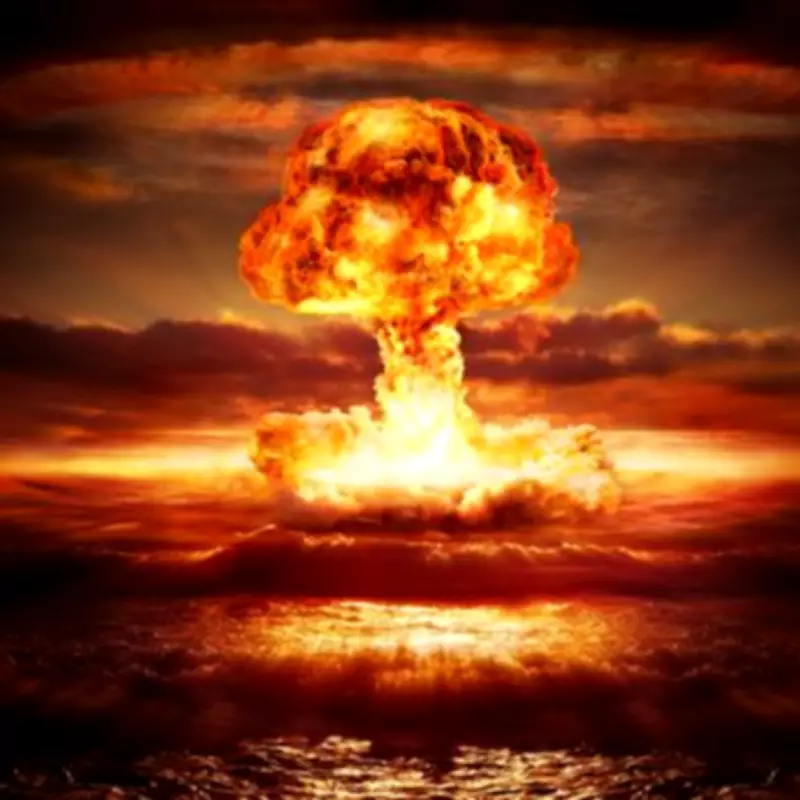
As international tensions continue to rise across multiple global hotspots, crucial nuclear war survival techniques have been circulating that could prove lifesaving for civilians. A specific emergency method has gained attention for its potential to help individuals when confronted with the ultimate choice between life and death during a catastrophic event.
Escalating Global Concerns
With ongoing instability in the Middle East and other regions, many citizens worldwide are growing increasingly anxious about the possibility of widespread conflict. The recent confirmation that the United States is collaborating with Israel in efforts to challenge Iran's existing regime has heightened fears about potential escalation. This geopolitical climate has prompted numerous people to question where safety might be found and how to prepare for worst-case scenarios.
The Critical 72-Hour Shelter Method
One survival expert recently shared remarkably accurate guidance online that outlines a straightforward but potentially lifesaving approach. According to this methodology, the single most important action following a nuclear detonation is immediate sheltering.

The expert explained in detail: "If there is ever a nuclear event, the only thing you ever need to do is get indoors. If you can survive the initial blast, the only thing that should be on your mind is getting indoors, into a basement, as far into the ground as possible."
He emphasized the critical time frame: "You need to stay there for 72 hours. The radiation dissipates quickly, but you need to stay there for two to three days. Ninety percent of the radiation goes away after the first 24 hours, but a lot of people die after a nuclear event trying to flee the scene."
The guidance includes a crucial warning about proximity: "If you can see the flash, if you can feel the shockwave, you are too close. You need to get indoors. You only have 15 minutes before the radiation starts coming down from the sky and killing you."
Essential Survival Protocols
Should the United Kingdom ever face a nuclear event, evacuation is strongly discouraged. The primary survival factor involves rapid movement indoors, preferably to protected spaces like basements or the central areas of concrete structures, followed by remaining in place while awaiting official instructions.
Attempting escape by vehicle or on foot frequently results in dangerous gridlock situations, and standard vehicles provide minimal protection against radioactive fallout. Instead, several additional measures should be implemented to maximize safety.
Immediate Protective Actions
Never look directly at the light emitted during a nuclear explosion. The instantaneous, intense flash exceeds the sun's brightness and can cause immediate flash blindness along with potential permanent retinal damage. Even from considerable distances, this light can inflict serious harm. Individuals must immediately turn away, close their eyes, shield their heads, and seek cover.
Additionally, keeping your mouth slightly open during a nuclear explosion helps balance pressure on both sides of your eardrums. This simple technique minimizes the risk of eardrum rupture from the powerful shockwave generated by the detonation.
Post-Detonation Procedures
If you find yourself in immediate danger, relocation becomes possible once the initial blast subsides. However, the most vital sequence of actions after a nuclear detonation involves getting inside, staying inside, and remaining alert to official news broadcasts and emergency communications.
Waiting for radioactive fallout to settle proves crucial, as hazardous material typically arrives 10 to 15 minutes or more following the initial explosion. This fallout remains most lethal during the first 24 to 72 hours, which explains why extended sheltering becomes essential.
Decontamination Measures
Never decide to evacuate until authorities have identified dangerous fallout zones and established safe evacuation routes. Disregarding official guidance could lead individuals directly into fatal radiation levels.

As soon as circumstances permit, remove outer clothing to eliminate up to 90 percent of radioactive contamination. Wash exposed skin thoroughly with soap and water, then seal contaminated garments in airtight bags before changing into clean clothing that has been stored in sealed containers.
If showering becomes necessary, avoid using hair conditioner entirely. This product contains ingredients that act as adhesives, potentially binding radioactive particles to hair strands and making complete decontamination significantly more difficult.
By understanding and implementing these nuclear survival protocols, individuals can dramatically improve their chances of enduring what would otherwise represent a catastrophic scenario. The combination of immediate sheltering, extended protection, and proper decontamination creates a comprehensive approach to nuclear event survival that could mean the difference between life and death.