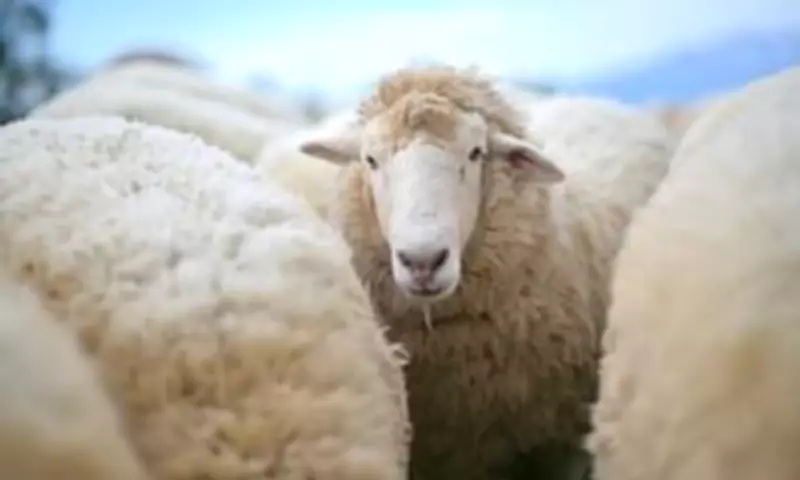
Campaigners from People for the Ethical Treatment of Animals (PETA) are urging the Oxford English Dictionary to urgently update its entries for the word 'wool' to include plant-based alternatives. This move aims to reflect modern innovations in textiles that avoid animal exploitation.
Historical Context and Modern Demands
For centuries, the term 'wool' has been defined as the soft, curly hair forming the fleecy coat of sheep and other animals, even featuring in traditional nursery rhymes like 'Baa Baa Black Sheep'. However, PETA argues that this definition is outdated and must be expanded to encompass plant-powered varieties that 'leave sheep in peace'.
Yvonne Taylor, PETA's vice president of corporate projects, stated, 'Adding plant wool to the Oxford Dictionary would recognise a simple truth: wool doesn't need to be taken from suffering animals. It can be warm, stylish, durable, and entirely made from plants.'

Environmental and Ethical Arguments
The organisation highlights that sheep produce significant amounts of methane, contributing to global warming, and notes that sheep's wool is ranked as a 'Class E' material by the Made-By Environmental Benchmark for Fibres. In contrast, plant-based materials like hemp, which has been used for thousands of years, are ranked as 'Class A'.
In a letter sent to dictionary editors, Ms Taylor emphasised, 'As part of your regular updates to ensure the dictionary accurately reflects our ever-evolving language, we're requesting that you please include "Plant Wool" under the entry for "Wool" to encompass the many innovative, eco-friendly, animal-free yarns available.'
Innovative Fibres and Fashion Revolution
PETA points out that plant wools, such as those derived from linen, hemp, and bamboo, have existed for centuries, with the OED already noting 'pine wool' usage since the 1850s. Additionally, cutting-edge fibres made from food waste, flowers, and fruit are now being utilised by designers in various applications, from sportswear to knitwear.
'Plastic-free plant wools match (and often outperform) animal wool for warmth and comfort while being less environmentally impactful and kinder to animals,' the letter added. 'We're in the throes of a fashion revolution borne of people's desire to subvert concern for animals and the planet, with plant wool at the forefront.'
Current Dictionary Definitions and Past Campaigns
Currently, the main online dictionary entry for 'wool' refers to the fleece or 'woolly covering' of sheep and similar animals, with a secondary entry allowing for 'any fine fibrous substance naturally or artificially produced'. This isn't the first time PETA has lobbied for linguistic changes; in April last year, they requested the Cambridge Dictionary to update its definition of 'rat' when used informally to describe a person, arguing it unfairly maligns the animals.
Similarly, in May last year, PETA called for World Milk Day to be renamed 'World Bovine Mammary Secretion Day', citing ethical concerns in the dairy industry. These efforts are part of a broader strategy to promote animal welfare through language reform.
Response and Implications
The Oxford English Dictionary has been contacted for comment on this latest request. If implemented, the update could influence public perception and industry practices, aligning dictionary entries with growing trends in sustainable and ethical fashion. PETA's campaign underscores the ongoing debate over how language evolves to reflect societal values and technological advancements.