Pro-Palestinian Marches Planned for Israeli President's Visit Amid Protest Law Debate
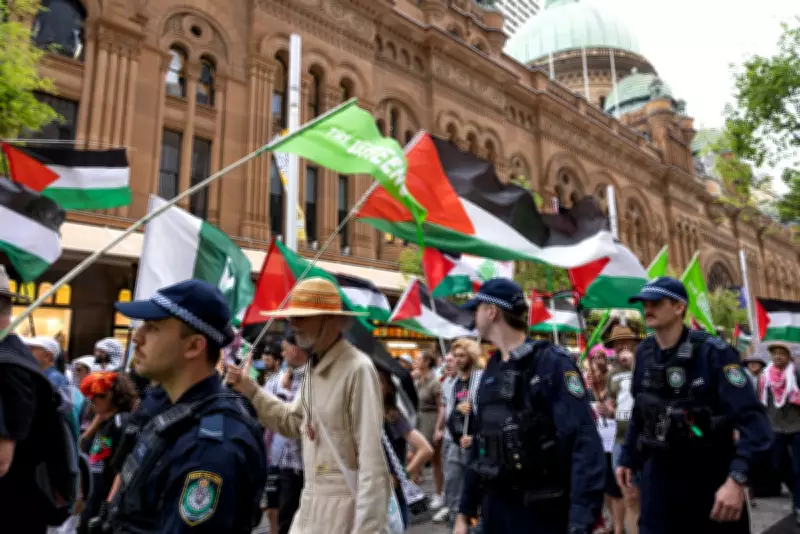
Thousands of Australians are expected to participate in nationwide protests on Monday, opposing the visit of Israeli President Isaac Herzog to Australia. The invitation, extended by Prime Minister Anthony Albanese following the Bondi terror attack, has reignited discussions about the right to protest across the country.
This issue is particularly acute in New South Wales, where a new law has significantly curtailed the ability for protesters to march in designated areas. This legislation is now the subject of a constitutional challenge, highlighting the ongoing tension between public safety and civil liberties.
Is There a Right to Protest in Australia?
Australia lacks an explicit federal right to protest, with protections varying by state and territory. Jurisdictions such as Victoria, Queensland, and the Australian Capital Territory have legislated specific rights, while others rely on common law and constitutional implications.

The High Court has recognised an implied right to freedom of political communication within the Australian Constitution, which prevents governments from enacting laws that substantially impede this freedom. However, critics argue that numerous laws have eroded these protections over time.
Tim Roberts, president of the NSW Council for Civil Liberties, emphasises that a protest itself is not illegal. However, individual protesters can face charges based on their conduct during events, such as failing to comply with police move-on directions.
Do Protests Require Approval?
Generally, protests do not require formal approval. However, New South Wales and Queensland operate permit-style systems where organisers can submit details of planned marches to police. While not mandatory, this process offers protection from charges related to obstructing traffic or pedestrians if police accept the application.
In Queensland, protests are deemed authorised provided five days' notice is given and no court order blocks them. In NSW, if police oppose an application, the matter is decided by a court. For instance, the Palestine Action Group successfully obtained court permission for a march across the Sydney Harbour Bridge but was denied a similar protest at the Sydney Opera House on safety grounds.
Following the Bondi terror attack, the Minns government passed legislation restricting the use of this permit system in designated areas, a move now under constitutional challenge by groups including Blak Caucus and Jews Against Occupation.
When Can Police Issue Move-On Directions?
Police powers to issue move-on directions vary by jurisdiction. In Victoria, these powers apply in declared designated areas. In NSW and Queensland, police have limited move-on authority during authorised protests.
For unauthorised protests, police in NSW can issue move-on orders if protesters obstruct traffic or pedestrians or pose a serious safety risk. In Queensland, such directions must not interfere with peaceful assembly unless necessary for public order or safety.
What Is the Law Impacting Sydney's March?
The NSW legislation, passed by Premier Chris Minns, bans marches in designated areas without risk of arrest by restricting the permit system. The police commissioner can impose a Public Assembly Restriction Declaration for up to 90 days after a terror attack.
The proposed route for Monday's Palestine Action Group march, from Town Hall to NSW Parliament, falls within a restricted area. While protests can still occur there, police have full move-on powers if traffic or pedestrians are obstructed.
Three NSW Labor backbenchers have announced plans to attend the rally, with one scheduled to speak, though it remains unclear if they will join the march. Meanwhile, the Victorian government is considering similar legislation to grant police powers to shut down protests following terror attacks.
As the constitutional challenge proceeds in the Court of Appeal, set for hearing on 26 February, the debate over balancing protest rights with public safety continues to evolve across Australia.