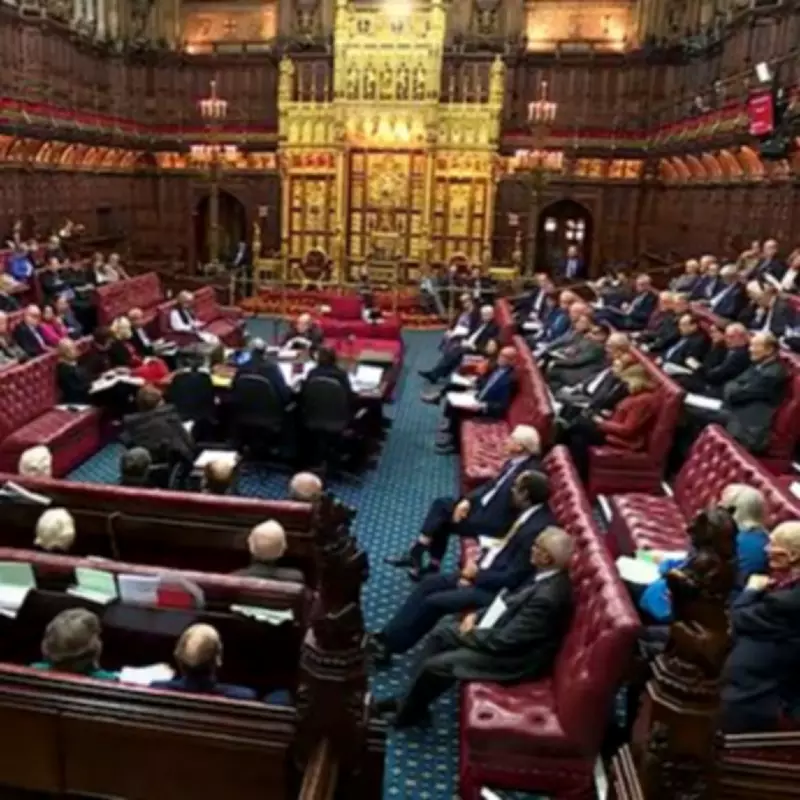
Public Support for Assisted Dying Remains Overwhelming Despite Lords Debate
Lengthy debates in the House of Lords have failed to diminish overwhelming public support for assisted dying legislation, according to a comprehensive new survey. The National Centre for Social Research (NatCen) has found that eight out of ten Britons continue to back the historic bill, with researchers stating that parliamentary discussions have had no "detectable impact" on public opinion.
Survey Reveals Remarkable Stability in Public Attitudes
The latest British Social Attitudes survey, conducted with just over 1,000 respondents, shows that 79% believe assisted dying should be allowed for terminally ill patients who request medical help to end their lives. This figure represents remarkable consistency, matching the proportion recorded in the previous year's survey.
When presented with a scale from "definitely" to "probably," 46% of respondents felt assisted dying should "definitely" be legalised, showing only a slight decrease from 47% in autumn 2024. Meanwhile, 33% said it "probably" should be allowed, a marginal increase from 32% the previous year.

Widow Condemns Lords Debate as "Disgusting and Insulting"
Louise Shackleton, 59, who accompanied her husband Antony to Dignitas in Switzerland in December 2024, expressed no surprise at the survey results. She branded the Lords debates she has witnessed as "disgusting and insulting" to families like hers who have faced difficult end-of-life decisions.
"It is a known fact that there is outstanding and intense support from the public regarding their right to have a choice in whether they suffer in death or die in peace," Shackleton stated. "Polls frequently show more than 80 per cent of people would want the choice. But yet there are one per cent of Peers who are trying to undermine democracy and trying to silence the majority."
Shackleton expressed particular concern about some of the more than 1,100 amendments proposed, including requirements for pregnancy tests regardless of gender and restrictions limiting eligibility to those aged 25 and over. "This makes no sense as anyone over the age of 18 can run for Parliament," she argued. "And the Government can send an 18 year old to a possible death in a war. These useless debates are costing the public millions of pounds."
Three Decades of Consistent Support
NatCen has been tracking public opinion on assisted dying since 1995, when 80% supported legalisation. This figure rose to 82% in 2005 and has remained consistently high ever since. Researchers describe the issue as "one of remarkable stability and near consensus in public attitudes."
"The introduction of the Westminster Bill has not had any detectable impact on the balance of public opinion," the researchers noted. "The ensuing debate has seemingly made little impression on a public that largely seems to have made its mind up in favour of change a long time ago."
Campaigners Urge Lords to Act on Public Mandate
Sarah Wootton, Chief Executive of the assisted dying campaign group Dignity in Dying, welcomed the survey findings as a powerful reminder of sustained public support. "The British public has long supported giving dying people the choice and control they desperately need, and that this support has not wavered despite a year of intense scrutiny and debate," she said.
Wootton expressed concern that some peers might be deliberately obstructing rather than properly scrutinising the legislation. "A majority would see it as wrong if the Bill were to fail simply because it ran out of time in the House of Lords," she warned. "If the Lords allow this Bill to fail through delay, it will be seen as a democratic outrage by the millions who support this change."
Thousands have already signed a new petition calling on the government to ensure that bills supported by both MPs and the public have sufficient time to complete all parliamentary stages.

The Bill's Provisions and Parliamentary Process
The Terminally Ill Adults (End of Life) Bill proposes allowing adults with terminal illnesses in England and Wales who have less than six months to live to apply for an assisted death. Applications would require approval from two doctors and a panel including a social worker, senior legal figure, and psychiatrist.
The legislation has faced extensive scrutiny in the House of Lords, with supporters accusing some peers of attempting to delay or "talk out" the draft legislation before the current parliamentary session ends this spring. Opponents maintain they are simply fulfilling their duty to scrutinise what they consider an unsafe bill that requires strengthening.
Former No 10 adviser Nikki Da Costa, an opponent of the legislation, argued that peers were "doing their best to patch the holes" in what she described as "an unsafe, deficient bill." Critics maintain the legislation poses particular risks for vulnerable people and requires extensive amendment before it could become law.
Despite these parliamentary tensions, the survey evidence suggests the British public has reached a clear and consistent position that has remained largely unchanged through three decades of debate and discussion on this profoundly important ethical issue.