Queensland Government Announces Sweeping Hate Speech Reforms
The Queensland government has unveiled comprehensive new hate speech legislation that will make the state the first in Australia to explicitly ban specific pro-Palestine slogans. Premier David Crisafulli announced the proposed laws on Sunday, with plans to introduce them to parliament on Tuesday.
Proscribed Phrases and Penalties
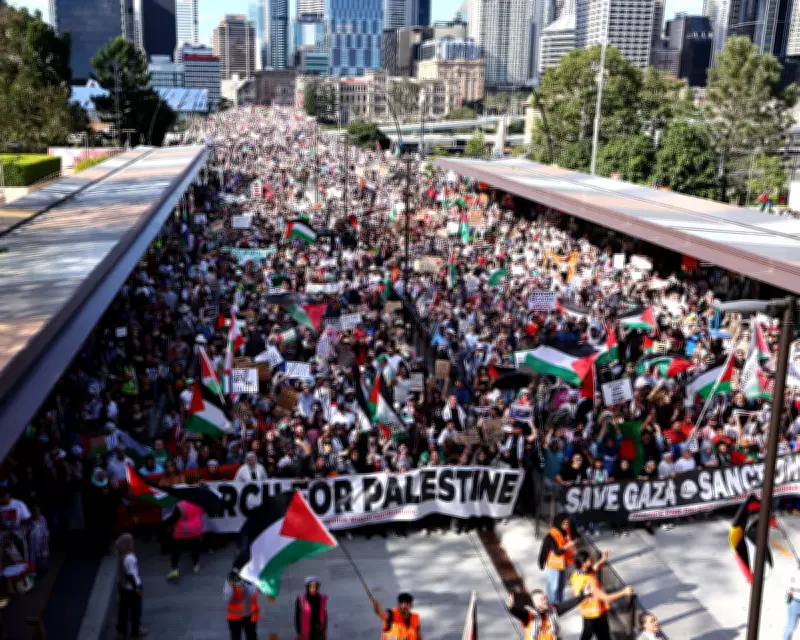
Attorney General Deb Frecklington confirmed that the phrases "globalise the intifada" and "from the river to the sea" will be included as proscribed expressions under the new legislation. The laws create a new offence prohibiting the public distribution, publication, display, or recitation of these phrases when intended to cause menace, harassment, or offence.
Individuals found guilty of violating these provisions could face maximum penalties of two years imprisonment. Frecklington emphasized that these sayings have no place in Queensland when used to incite hatred, offence, or menace, stating she doesn't even like to say them out loud.

Legislative Context and Consultation
The government described the legislation as a direct response to the Bondi terror attack, where fifteen people were killed during a Hanukah celebration. Premier Crisafulli characterized the response as "considered," "calm," and "detailed" rather than a kneejerk reaction.
Frecklington revealed that the government consulted extensively with multiple agencies during the drafting process, including the Crime and Corruption Commission, the Human Rights Commission, and Queensland police. The premier expressed confidence that the resulting legislation would be the best of its kind in the country.
Expanded Religious Protections and Symbol Bans
The reforms extend beyond phrase prohibitions to include enhanced protections for religious practices and expanded bans on offensive symbols. The legislation introduces a new offence for impeding or harassing people attending religious services, carrying a maximum penalty of three years imprisonment.
Penalties for assaulting or threatening religious officiants will increase from two to five years, while wilful damage to places of worship will now carry the toughest maximum sentence of seven years. The existing ban on displaying certain symbols will be extended to include:
- Nazi emblems
- The Hamas flag
- The Islamic State flag
- The Hezbollah emblem
The maximum penalty for displaying prohibited symbols will increase from six months to two years imprisonment.
Community Response and National Context
The reforms have received strong support from Jewish community representatives. Jason Steinberg, president of the Queensland Jewish Board of Deputies, welcomed the legislation, stating it would make the Jewish community feel safer and help rebuild confidence to live openly.
Steinberg noted that the Jewish community has endured unprecedented levels of hate, intimidation, and fear over the past two and a half years, and the reforms send a clear message that antisemitism and hate have no place in Queensland. He described the bill as going beyond words to deliver real, practical protections for all people targeted by hate.
The Queensland approach differs from recent recommendations in New South Wales, where a parliamentary inquiry last month suggested banning "globalise the intifada" only when used to incite hatred, harassment, intimidation, or violence. The NSW inquiry did not recommend banning "from the river to the sea," which has been interpreted differently by various groups.
While critics argue the slogan calls for Israel's elimination, some supporters, including Palestinian-American writer Yousef Munayyer, contend it advocates for Palestinians living as free and equal citizens in their homeland. The phrase references the land between the Jordan River and the Mediterranean Sea.
Additional Government Actions
Premier Crisafulli also announced that the government would reveal how it plans to "take action on guns against terrorists and criminals" on Monday afternoon. This follows his previous statement that Queensland would not participate in a national gun buyback scheme.

The comprehensive hate speech reforms represent one of the most significant legislative responses to religious and ethnic tensions in recent Australian history, setting new precedents for how states address inflammatory language and symbols in public discourse.