State Terror Tactics Emerge in US and Israel, Warns War Correspondent
After years spent meticulously documenting state terror across conflict zones, veteran war correspondent Janine di Giovanni asserts she recognises its patterns unmistakably. She now observes these same alarming methods being adopted in the United States and Israel, nations that historically condemned such authoritarian practices. Di Giovanni, who serves as the executive director of The Reckoning Project, a war crimes investigation unit operating in Ukraine, Sudan, and Gaza, warns that democratic erosion is unfolding through subtle yet devastating shifts.
Historical Precedents of State Violence
Drawing from her extensive fieldwork, di Giovanni recounts harrowing examples of state-sponsored terror. In Syria, under Bashar al-Assad's regime, victims were often seized by masked men before dawn, a tactic designed to disorient and intensify subsequent torture. Survivors consistently described their lives as split into "before and after the morning they came for me." In Iraq, dissent against Saddam Hussein was met with brutal, vengeful punishment. The case of Giulio Regeni, an Italian academic tortured to death in Egypt in 2016, allegedly by security forces under President Abdel Fatah al-Sisi, further illustrates the grim reality. Similarly, the assassination of journalist Anna Politkovskaya in Chechnya, executed on Vladimir Putin's birthday, served as a stark warning to silence critics.
In the West Bank and Gaza, di Giovanni notes that Israeli forces frequently target Palestinian professionals—doctors, journalists, and activists—not for specific actions but simply for their identity. These patterns, she argues, are now mirroring developments in Western democracies, where governments increasingly employ rhetoric centred on "security" and "order" to justify aggressive policies.

The Normalisation of Fear in Democracies
Di Giovanni emphasises that state terror operates not only through overt violence but also through the insidious cultivation of fear. She references historian Timothy Snyder's warnings in On Tyranny about societies sliding into danger as citizens "obey in advance." In the United States under Donald Trump, she has witnessed fear overriding moral decency among CEOs, academics, and officials. This process begins with labelling certain groups as dangerous and suspending legal safeguards, ultimately leading to a more compliant and cynical society.
Unlike authoritarian regimes that openly wield violence without apology—such as Saddam Hussein's Anfal campaign or Hafez al-Assad's massacre in Hama—democracies often cloak their actions in legalistic justifications. Constitutions and obscure laws are invoked to defend aggressive measures, while institutions like courts and a free press are maintained superficially even as they erode. This subtle shift, di Giovanni contends, allows democracies to increasingly resemble the tyrannies they once opposed.
Contemporary Examples of Eroding Freedoms
The tools of this erosion are becoming familiar. Di Giovanni points to media consolidation, such as the installation of a journalist aligned with political interests at CBS, undermining journalistic integrity. On university campuses, surveillance of pro-Palestinian activists includes photographing students and threatening their future careers. At Northwestern University, mandatory antisemitism training was criticised as biased. Academics and journalists face pressure to conform, with dissenters labelled enemies of the state and sometimes arrested.
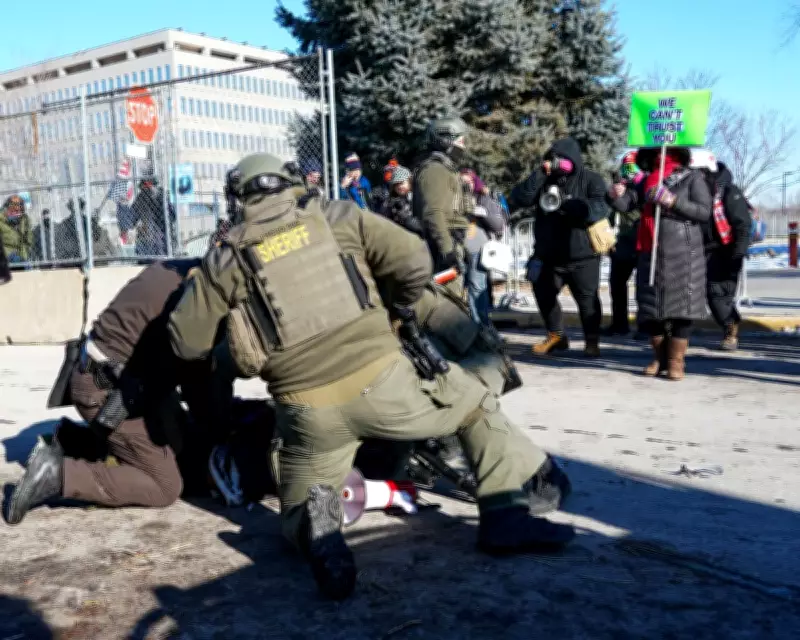
ICE tactics, long used disproportionately against minorities, are now more visible and accepted, mirroring patterns of arbitrary detention and militarised policing. Loyalty tests reminiscent of the red scare have resurfaced, targeting dual citizens and reframing immigration enforcement as a hunt for "criminals." In Gaza, organisations like Doctors Without Borders are coerced into providing staff lists, endangering healthcare workers. The United Nations, intended to prevent conflict, is sidelined and mocked, losing its efficacy.

The Consequences for Society and Global Standing
Di Giovanni warns that the internalisation of fear leads individuals to self-censor, questioning whether legal protections will hold if targeted. This environment does not enhance safety; rather, it weakens democratic states, fraying their global credibility and sacrificing the moral legitimacy that distinguishes them from oppressive regimes. State terror, she concludes, is not confined to overt actors like Iran's Revolutionary Guard but includes lawyers, bureaucrats, and journalists who distort truth, as well as policies like family separations and deportations without due process.
Urging vigilance, di Giovanni calls for listening to survivors' testimonies as early warnings. She stresses that ignoring these voices risks normalising a dangerous descent into authoritarian practices within democracies, ultimately undermining the very foundations of freedom and justice.