Police Disruption of Muslim Prayers in Sydney Sparks Outcry Over Religious Freedom
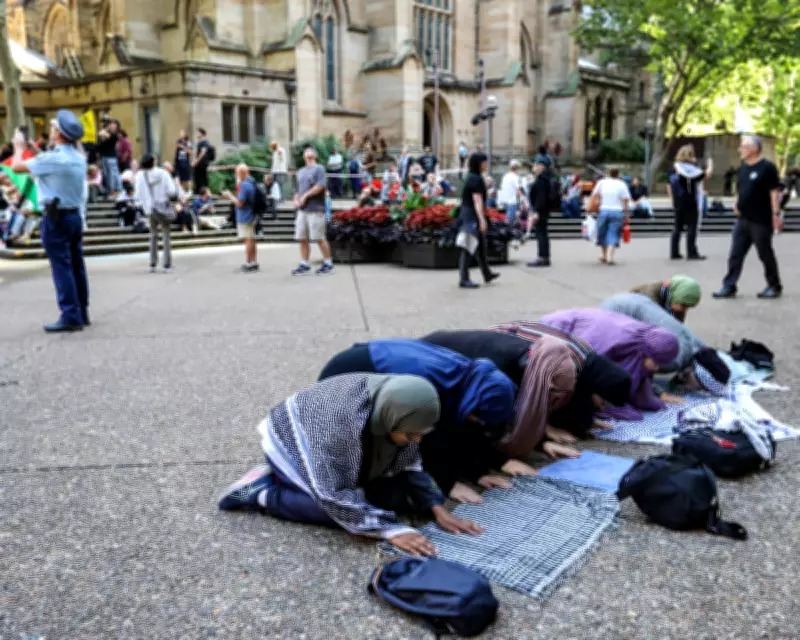
On Monday, disturbing footage emerged from Sydney's central business district, showing New South Wales police officers dragging and shoving a group of men while they were engaged in prayer. Despite the forceful intervention, the worshippers displayed remarkable discipline, continuing their ritual without retaliation or chaos. This quiet continuity underscored the sacred nature of the act, which for observant Muslims represents the closest proximity to God during prostration—a posture of complete vulnerability and surrender.
Symbolic Weight of the Incident
The interruption of prayer at such a defenceless moment is not merely about moving bodies; it intrudes upon an intimate act of spiritual surrender. In a nation that prides itself on protecting freedom of religion, the images of worshippers being seized mid-prayer carry profound symbolic weight. For many Muslim Australians, this event felt like more than a policing incident—it resonated deeply within a community shaped by decades of securitisation, surveillance, and persistent framing of Muslim civic life as a security concern.
Apologies and Political Responses
NSW Police Commissioner Mal Lanyon contacted senior Muslim community leaders to offer a private apology for any offence caused. However, Premier Chris Minns declined to issue a public apology, defending the police response as appropriate given the tense and fast-moving situation. Critics argue that when an incident occurs in full public view, impacting families, young Muslims, and the broader community, private outreach alone is insufficient. A public apology is about recognition and affirming equal dignity in the national narrative, not politics or humiliation.

Broader Implications and Community Trust
The footage landed in a context of heightened sensitivity, following recent terror attacks and a surge of collective suspicion towards Muslim Australians. This physical handling of men at prayer is not just an operational detail; it ricochets through a community grappling with Islamophobia. Political leaders have sometimes framed solidarity as finite, pitting concerns about Islamophobia against antisemitism, which fragments public empathy and protection under the law.
Refusing to apologise may signal short-term toughness, but long-term trust depends on demonstrating that state power can be corrected as well as asserted. Resentment accumulates in everyday experiences—from classrooms where children explain geopolitics to workplaces where "jokes" about terrorism pass as banter—and when Muslim grief is framed as volatility rather than equal citizenship.
Calls for Action and Reckoning
A serious response now requires an independent inquiry to examine operational choices, command structures, and proportional use of force. Transparency is the minimum condition for rebuilding community legitimacy. Meaningful engagement with Muslim leaders and grassroots organisers is essential, moving beyond curated photo opportunities or closed-door apologies.
The question should not be how to manage anger, but how to address the conditions that produce it. As a saying attributed to the prophet Muhammad reminds us, "The strong person is not the one who overpowers others, but the one who controls himself in anger." Ultimately, Australia must reckon with Islamophobia as more than interpersonal prejudice—it operates as a policy lens, media reflex, and security grammar that conditions Muslim civic presence. Multiculturalism cannot thrive on cuisine and costume alone without accountability.
Australia's reputation as a successful multicultural society hinges on the consistency of principle and rule of law. This incident underscores the urgent need for empathy, restraint, and public acknowledgment to foster trust and inclusion.