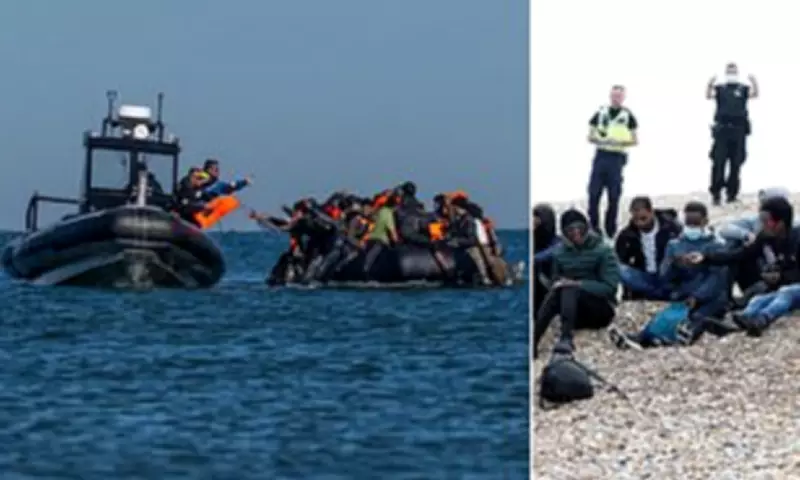
Taxpayers Foot Bill for Unlawful Phone Seizures from Channel Migrants
The High Court has delivered a landmark ruling that has resulted in taxpayer-funded compensation payments to dozens of migrants who arrived in Britain via small boats. Judges determined that the Home Office acted unlawfully by confiscating mobile phones from asylum seekers upon their arrival, a policy implemented during the surge in Channel crossings in 2020.
Compensation Costs Mount as Legal Battle Unfolds
So far, thirty-two asylum seekers have received payouts totalling £210,800, averaging £6,587.50 per individual. An additional forty-one cases remain unresolved, and if settled at the same rate, the total bill could rise to approximately £480,887. The initial ruling suggested that as many as 1,323 migrants might be eligible to seek damages, raising concerns that the final cost could escalate to £8 million.
According to a Freedom of Information response reported by The Sun, the Home Office has already expended £735,000 contesting the case. Of the £210,800 paid out, £163,900 represents pure compensation costs, while £46,900 was allocated under Calderbank offers, covering both compensation and legal expenses without distinction.

Policy Deemed Unlawful and Breaching Human Rights
The controversial policy involved searching asylum seekers and confiscating their mobile phones and SIM cards, with data often fully downloaded. Devices were frequently held for three months or longer, and some were never returned. The High Court found that this approach breached the European Convention on Human Rights, specifically interfering with migrants' rights to family and private life.
Lord Justice Edis stated that then-Home Secretary Priti Patel acknowledged the blanket seizure policy was not in accordance with the law. Judges ruled in October 2022 that the Mobile Phone Policy was unlawful because it was unpublished and operated in a blanket manner. They also identified a failure of governance surrounding the unpublished policy.
Legal Challenge and Its Consequences
The legal battle originated from a judicial review launched in November 2020 by three asylum seekers, identified only as HM, MA, and KH. Evidence presented during proceedings included claims that asylum seekers were bullied into handing over passcodes, allowing personal data to be extracted and added to an intelligence system known as Project Sunshine.
Between April and November 2020, nearly 2,000 phones were taken under this policy. Until July 2020, all seized devices and SIM cards underwent full data downloads, after which downloads were limited to cases where a person of interest had been identified on a boat.
Following the ruling, the court ordered the Home Office, now led by Home Secretary Shabana Mahmood, to use all reasonable endeavours to contact migrants whose phones had been seized, advising them to seek legal advice.
Outrage and Political Reactions
The compensation payments have sparked significant outrage among critics. Reform MP Robert Jenrick commented, "This is further proof, as if it were needed, of how rulings made by European judges are working against the British people. It is a farce and total waste of taxpayers' money." He added that a Reform government would stop this by eliminating the rule of European judges.
Alp Mehmet, chairman of Migrationwatch UK, said, "This beggars belief. The taxpayer should not be made to hand over huge sums to people who have made their way here illegally to break into the country." William Yarwood of the TaxPayers' Alliance described the situation as "utterly perverse," arguing that the system has ended up financially rewarding illegal entry instead of deterring it.
Home Office Defence and Legislative Changes
The Home Office had defended the policy as a necessary tool to gather intelligence on smuggling gangs organising Channel crossings. In response to the controversy, ministers have since passed legislation making it lawful to seize migrants' phones and electronic devices. Mobile phone seizures resumed last month at Manston processing centre in Kent as part of a renewed crackdown on people-smuggling networks.

Border Security and Asylum Minister Alex Norris announced, "We are implementing robust new laws with powerful offences to intercept, disrupt and dismantle vile gangs and cut off their supply chains."
Legal Representation and Impact on Vulnerable Individuals
The migrants who brought the original challenge were represented by law firms Gold Jennings and Deighton Pierce Glynn. Daniel Carey of Deighton Pierce Glynn stated after the case, "Nearly 2,000 phones were taken from migrants in an indiscriminate blanket policy that the High Court has now found to be unlawful on multiple fronts. All of this had real impacts on very vulnerable people, who lost touch with their families and couldn't get their asylum documentation, while the phones languished on a shelf for many months, many which now cannot be returned."
The Daily Mail has approached the Home Office for further comment on the ongoing developments.