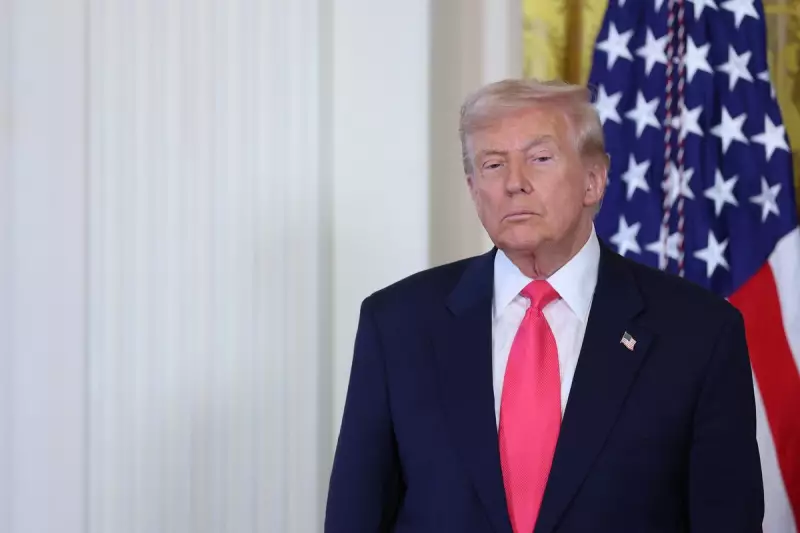
Former President Donald Trump has attempted to clarify his inflammatory comments suggesting Democratic lawmakers should face execution for what he termed "seditious behaviour," walking back his position during a radio interview just one day after making the controversial statements.
The Controversial Social Media Posts
On Thursday, Trump took to his Truth Social platform to accuse six Democratic legislators of engaging in what he called "seditious behaviour at the highest level." The targeted lawmakers included Michigan Senator Elissa Slotkin, Arizona Senator Mark Kelly, Colorado Representative Jason Crow, New Hampshire Representative Maggie Goodlander, and Pennsylvania Representatives Chris Deluzio and Chrissy Houlahan.
Notably, all six politicians targeted by Trump's remarks have backgrounds in military or intelligence services. The former president labelled them "traitors to our country" who should be "arrested and put on trial" after they participated in a video encouraging American service members to refuse illegal orders and uphold their constitutional oaths.

In a subsequent post that escalated the situation further, Trump repeated his accusations in all capital letters and claimed such behaviour was "punishable by DEATH." The posts immediately drew widespread condemnation from across the political spectrum.
The Fox News Walk-Back
During an interview with Fox News host Brian Kilmeade on his talk radio programme on Friday, Trump appeared to soften his position when asked to clarify his controversial statements. "In the old days, if you said a thing like that, that was punishable by death," Trump explained, attempting to contextualise his earlier remarks.
The former president then denied directly threatening the Democratic legislators, despite having reposted content from another Truth Social user that urged him to "HANG" the lawmakers featured in the video.
"I think they're in serious trouble. I would say they're in serious trouble. I'm not threatening death, but I think they're in serious trouble. In the old days, it was death. That was seditious behaviour," Trump told Kilmeade during the Friday interview.
Legal and Political Fallout
The initial comments sparked immediate concern among legal experts and political figures, with many questioning the constitutional basis for such accusations. Legislators typically enjoy broad immunity for statements made in their official capacities, and the First Amendment provides strong protections for political speech.
Notably, the United States hasn't had laws criminalising speech against the government as sedition since Congress repealed the World War I-era Sedition Act in 1920. While federal law does include provisions against "seditious conspiracy," this charge requires evidence of conspiracy to use force against the government and carries a maximum penalty of 20 years imprisonment - not execution.
The controversy represents the latest instance where Trump has suggested using government power against political opponents who criticise him, drawing criticism from both Democrats and some Republicans concerned about the erosion of democratic norms and the targeting of political adversaries.