Wetherspoon Faces Legal Claims Over Assistance Dog ID Policy
JD Wetherspoon pubs are confronting allegations of potential legal breaches after implementing a policy that requires visually impaired individuals to present photo identification for their assistance dogs, according to an equality organisation. The pub chain introduced this measure in May of last year, mandating that anyone seeking entry with a dog must provide identification from the charity Assistance Dogs UK (ADUK).
Customer Experiences of Humiliation
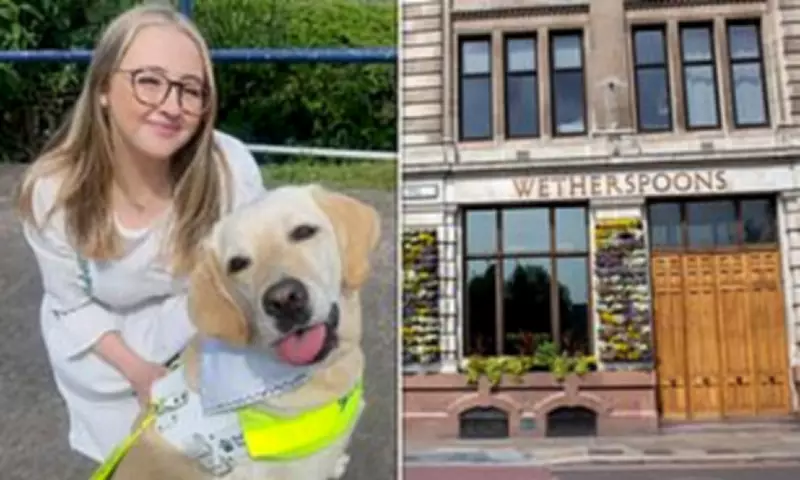
Megan Stephenson, who is visually impaired and possesses an ADUK ID card, described feeling humiliated when bar staff requested her identification on three separate visits to a Wetherspoon establishment between May and September last year. Despite her dog, Bobby, being clearly identifiable as a guide dog with a harness and flash in the lead, she was stopped upon entry each time.
"Fortunately, on this occasion, I did actually have it with me, so they thankfully let us in. But I was still stopped, still singled out, still treated differently. I just felt so sick, so stressed," Stephenson recounted. She has since ceased patronising Wetherspoon pubs due to feeling discriminated against.

Wetherspoon's Defence and Legal Context
Wetherspoon has asserted that its policy, which adjusts its usual 'no dogs' rule, complies with the law and is reasonable, having been formulated after seeking legal advice. The company's official policy permits only 'trained guide dogs' and 'assistance dogs with accredited training from ADUK member organisations.'
The pub chain argues that this requirement was instituted to protect customers following a rise in attempts to gain access with dogs through illegitimate means, such as using ID and jackets purchasable online. A spokesperson stated, "We consider the requirement for assistance dogs to have accredited training from ADUK member organisations to be a reasonable adjustment to our policy, as required by the relevant legislation."
They added, "Our pubs are large and very busy. Bearing in mind the significant increase in dog bites and hospitalisations, common sense indicates a clear need for documentary proof of training in our pubs."
Equality Concerns and Formal Warnings
However, the Equality and Human Rights Commission (EHRC) has formally written to Wetherspoon, warning that its dog policy might be unlawful. Under the Equality Act 2010, service providers are obligated to make 'reasonable adjustments' for disabled people and avoid treating them less favourably than other customers.
Assistance Dogs UK has maintained that there is no legal requirement to produce ID, deeming the policy discriminatory. ADUK chief executive Vicky Worthington revealed that Wetherspoon consulted the charity before establishing the policy but did not incorporate their advice.
Broader Impact and Historical Friction
Liberal Democrat MP Steve Darling shared that he was challenged for ID last August and felt compelled to defend his position, cautioning that the policy could adversely affect individuals with various disabilities, including those with PTSD.
This incident is part of a pattern of friction between Wetherspoon and the assistance dog community since the chain implemented a ban on dogs in 2018, with exceptions only for assistance dogs. In January 2020, Louise Harris, a wheelchair user with multiple sclerosis, was left in tears after being ejected from The Reginald Mitchell in Stoke-on-Trent for bringing her assistance dog, Bella, despite providing proof of credentials.
More recently, Rob Gray, who is diabetic, was denied entry because he lacked the correct ID card for his dog Molly, who alerts him to blood sugar fluctuations. ADUK reiterated at the time that "no such requirement exists" under law for possessing an ID card for assistance dogs.
The ongoing dispute highlights tensions between business policies aimed at safety and the rights of disabled individuals to access services without facing discrimination or undue barriers.