The United States Justice Department has indicted Cuban leader Raul Castro for his alleged role in the 1996 shootdown of two civilian planes operated by Brothers to the Rescue, an exile group based in Miami. This move revives one of the lowest points in the long and bitter relationship between the two countries. At the time of the incident, Castro was serving as defense minister, making him the highest authority after his brother Fidel.
What is Brothers to the Rescue?
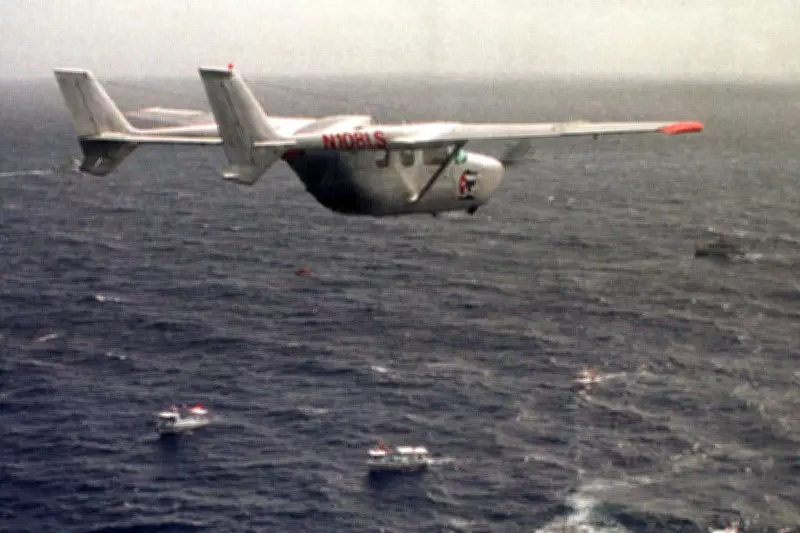
Brothers to the Rescue, also known by its Spanish name Hermanos al Rescate, was founded in 1980 by Cuban emigre Jose Basulto. The group began operations during a mass exodus of 125,000 Cubans to the United States. Its mission was to assist Cuban refugees in the Florida Straits by dropping supplies from small aircraft and alerting the U.S. Coast Guard. The crisis started when Cubans protested travel restrictions imposed by Fidel Castro's communist government, prompting Castro to open the port of Mariel to anyone wishing to leave, filling the straits with desperate people.
The Clinton administration changed immigration rules to discourage Cubans from attempting the dangerous journey north on makeshift boats. However, Brothers to the Rescue continued to fly near Cuban airspace, deliberately provoking Havana.

What happened with the planes?
On February 24, 1996, three planes carrying Brothers to the Rescue members entered a zone close to the 24th parallel, a short distance north of Havana and near some of Cuba's most valuable targets. Cuban fighter jets shot down two of the unarmed civilian Cessnas, killing all four men aboard. A third plane, carrying the organization's leader, narrowly escaped.
What did Cuba and the United States do to avoid the crisis?
According to American University Cuba specialist William LeoGrande and National Security Archive senior analyst Peter Kornbluh, their 2015 book "Back Channel to Cuba: The Hidden History of Negotiations between Washington and Havana" reveals that the Clinton administration's repeated warnings about provoking Cuba did not deter Hermanos al Rescate. "Only after the shootdown did the FAA issue a concrete 'cease and desist' order against Basulto for what it called 'careless or reckless' operations that 'endanger the lives or property of others,'" the authors wrote.
LeoGrande noted that between the exile group's provocations, the U.S. failure to stop them, and the Cuban air force's attack on civilian planes, "there's no good guys in this story."
Was anyone charged?
U.S. counterintelligence caught five Cuban intelligence agents who had infiltrated Brothers to the Rescue. Their story was fictionalized in the 2019 film "The Wasp Network." Two of the Cuban agents served long prison sentences, while three were released in a prisoner exchange that preceded former President Barack Obama's detente with Raul Castro.
Two Cuban fighter jet pilots and their commanding officer, who were also indicted for the shootdown, have remained outside the reach of U.S. law enforcement while living in Cuba.