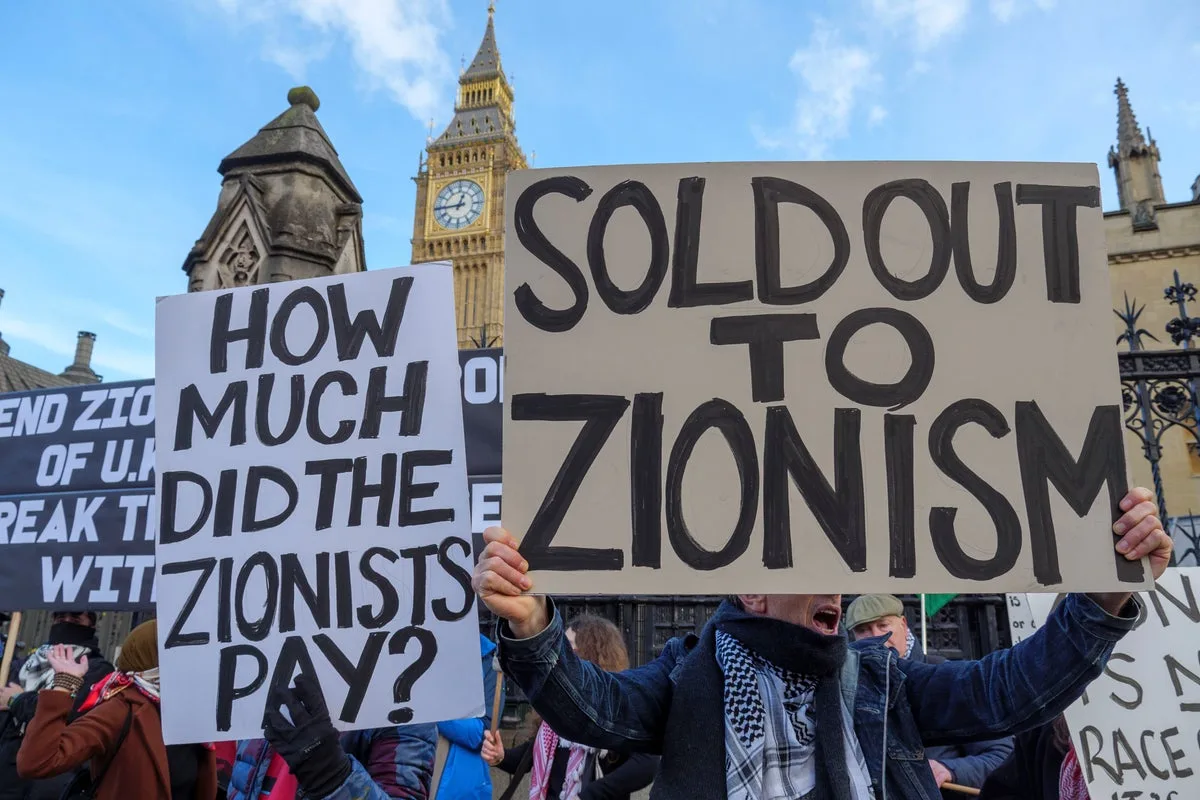
A Green Party candidate, Tina Ion, has called for the killing of “every single Zionist”, describing them as “vermin” and “rats”. Other Green candidates have made similar remarks: Aziz Hakimi claimed “Zionists” were behind 9/11, while Feda Shahin alleged they “killed 20 million Christians” in the Soviet Union and “love genocide”. A motion to declare “Zionism is racism” failed at the party’s spring conference only because of a time limit.
The language extends beyond the Greens. Labour MP Zarah Sultana has criticised Jeremy Corbyn for not being anti-Zionist enough. In Bristol, a cafe formerly called the “Zion Community Space” changed its name because it was “a barrier” to customers. In New York, protesters chanted “say it loud, say it clear, Zionists are not welcome here”. Movements are seeking to create “Zionist free zones” in parts of Leith and on university campuses.
The definition of Zionism is fiercely contested. The Oxford Dictionary describes it as “a movement for (originally) the re-establishment of a Jewish nation in Palestine and (now) the development and protection of Israel”. However, a recent dispute on Wikipedia led to a temporary moratorium on editing the entry, which now reads: “Zionists wanted to create a Jewish state in Palestine with as much land, as many Jews, and as few Palestinian Arabs as possible.”

For many Jews, Zionism is inseparable from Jewish self-determination and safety after centuries of persecution, culminating in the Holocaust. The Amidah prayer, recited three times daily, emphasises a yearning to “return” to Zion, and every Passover meal ends with “next year in Jerusalem”. Zionism emerged in the late 1800s as Jews faced pogroms in Eastern Europe, with over 100,000 coming to the UK. Theodor Herzl, inspired by George Eliot’s novel Daniel Deronda, published Der Judenstaat in 1896, advocating a Jewish homeland.
Early anti-Zionists were often Jews in Western Europe who favoured assimilation, while ultra-orthodox Jews rejected Zionism on religious grounds. As Western nations closed their doors to Jewish refugees, the need for a safe haven grew. Today, the weaponisation of the term “Zionist” has blurred the line between criticism of Israeli policy and outright antisemitism, with some using it as a proxy for attacking Jews collectively.