Historic Boat Race Shifts Broadcasters as BBC Loses Rights After Decades
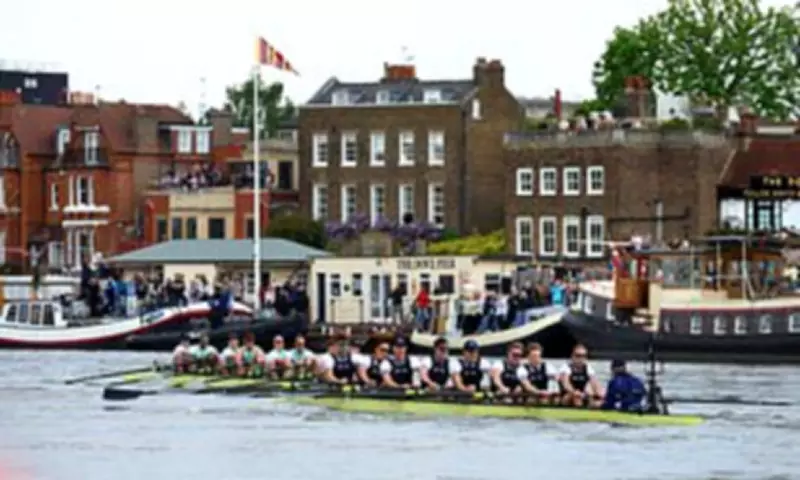
Thousands of spectators are preparing to line the banks of the River Thames this weekend as Oxford and Cambridge renew their historic rivalry in the annual Boat Race. This cherished university competition, first contested in 1829, has become a fixture of British sporting tradition, with only the Second World War and the Covid-19 pandemic interrupting its annual staging since 1856.
Sunday marks the 171st edition of the men's race alongside the 80th women's competition, with crews racing between Putney and Mortlake on the Thames. The event retains much of its traditional character, with Cambridge wearing light blue and Oxford in dark blue, while the winning cox is still ceremonially thrown into the water during celebrations.
Broadcasting Tradition Ends After Nearly a Century
While the race occupies a quaint and historic position in British sport, approximately 2.6 million viewers typically tune in to watch on television, with many more listening on radio. However, the 2026 race marks a significant departure from tradition as the BBC will not broadcast the event this weekend after losing the rights last year.

Television viewers will instead watch on Channel 4, which secured a five-year broadcast deal in October, while Times Radio was confirmed last month as the official radio partner for the next three years. This change ends a broadcasting relationship that began when the BBC first covered the race on radio in 1927 and televised the men's race in 1938.
The corporation had previously lost television rights to ITV from 2005 to 2009, ending 66 years as the event's broadcaster before regaining rights in 2010. Following the latest rights loss in October, the BBC was forced to deny suggestions that its director of sport, Alex Kay-Jelski, considered the famous event 'elitist' and had been 'lukewarm' during negotiations.
BBC Cites Financial Constraints and Changing Priorities
'The BBC has been proud to broadcast the Boat Race over many years,' a BBC spokesperson told Daily Mail Sport at the time. 'Our decision not to continue reflects the difficult choices we need to make to ensure we deliver the best value for audiences with the money that we have.'
It is understood that while the BBC previously did not pay for race rights, instead funding broadcast operations, production costs have increased while viewing figures have decreased. This represents a considerable shift in tone from the corporation, which in 2010 described the Boat Race as 'one of the British sporting institutions' and admitted it had been 'painful' to have previously lost the rights.
The Boat Race now follows several other pillars of British sport that have moved away from the BBC in recent years. The Open Championships, Masters, Ryder Cup, Derby, Grand National, Royal Ascot, and Cheltenham Festival have all been snapped up by other broadcasters.
Broader Trend in Sports Broadcasting Rights
Channel 4, which has secured numerous significant events, has been home to the Paralympic Games since London 2012. This year will see another multi-sport event, the Commonwealth Games, broadcast by TNT Sports after the BBC admitted it was 'unable to match' TNT's bid, ending its exclusive live coverage since 1954.
A substantial portion of the BBC's live sports offering is now shared with other broadcasters, including the FA Cup, Wimbledon, World Snooker Championships, and Challenge Cup. This year's Six Nations marked the first time ITV showed all of England's matches, following the BBC giving up rights to Scotland and Wales matches when hosting England.
The corporation has acknowledged that 'a rise in the cost of sports rights' has had major impact alongside budgetary cuts. Despite this, the BBC maintained coverage of last year's Women's Rugby World Cup and holds agreements for Bundesliga, women's Champions League, and Premiership Women's Rugby matches.

Strategic Shift Toward Digital Content
Kay-Jelski reflected this changing approach earlier this year, telling the Financial Times Business of Football summit that broadcasters no longer need to show live sport to remain relevant. 'We're not competing against who we were competing with before,' he said. 'We're in a race to not be swiped. Up against people selling you holidays, or clothes companies, or two-for-one chicken breasts.'
The BBC has shifted strategically toward digital platforms, holding rights for highlights and clips from the Premier League, Champions League, La Liga, and cricket coverage to appeal to younger audiences. This drive may explain controversial decisions like broadcasting the Battle of the Sexes match between Aryna Sabalenka and Nick Kyrgios last December, which likely appealed to different demographics than traditional Boat Race viewers.
Despite these changes, the BBC maintains that its reporting, live pages, and digital video content continue to draw millions of viewers, demonstrating that relevance can be maintained without exclusive live sports broadcasting.