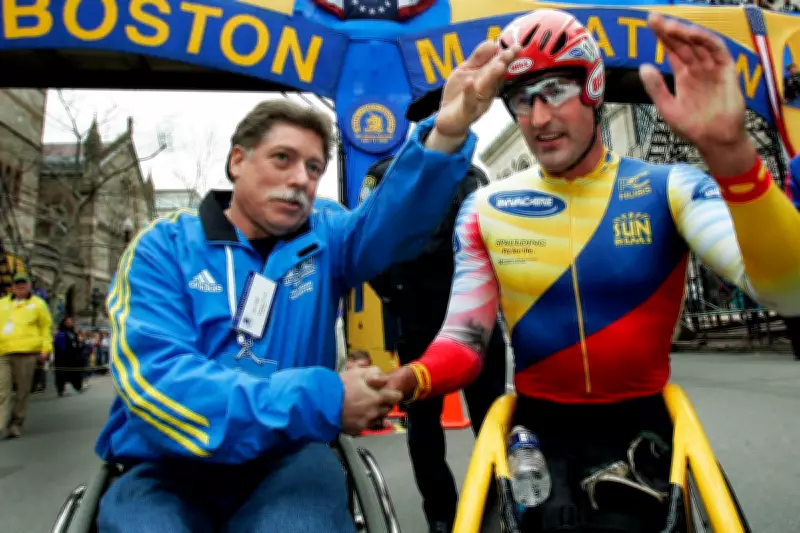
Bob Hall, Father of Wheelchair Racing and Boston Marathon Pioneer, Dies at 74
The Boston Athletic Association has announced the death of Bob Hall, widely regarded as the father of wheelchair racing, at the age of 74. Hall, a childhood polio survivor who lost the use of both legs, made history by winning the Boston Marathon twice and later building racing chairs for generations of competitors, fundamentally transforming disability sports.
A Trailblazing Journey to Inclusion
In 1975, Hall convinced Boston Marathon organisers to allow him to compete, securing a promise of a finisher's certificate if he completed the 26.2-mile course in under three hours. He crossed the finish line in an impressive 2:58, a moment he later described as not just about the marathon but about inclusion. "It was that I was bringing people along," Hall said last year when he served as grand marshal on the 50th anniversary of his pioneering ride.
Hall returned to the Boston race in 1977, when it hosted the National Wheelchair Championship, and emerged victorious in a field of seven competitors. During that race, notable runners like Bill Rodgers and Tom Fleming slowed to encourage him as they crested Heartbreak Hill, a gesture Hall saw as a sign of full acceptance as athletes.

Legal Battles and Lasting Legacy
Hall's advocacy extended beyond Boston; in 1978, he sued to have wheelchair racers admitted into the New York Marathon, a fight that culminated in the race establishing men's and women's wheelchair divisions in 2000. His efforts paved the way for over 1,900 wheelchair racers to follow in his footsteps from Hopkinton to Boston, with this year's race on April 20 featuring 50 more competitors across eight para divisions vying for over $300,000 in prize money.
Many elite athletes, including five-time Boston winner and eight-time Paralympic gold medalist Tatyana McFadden and seven-time Boston winner Marcel Hug, learned to race in chairs built by Hall. McFadden expressed profound gratitude, stating, "Because of him crossing that finish line, we're able to race today. It was him being brave and saying, 'I'm going to go out and do this because I believe that we should be able to race Boston Marathon just like everyone else.'"
Enduring Impact on Sports and Society
Hall's influence on wheelchair racing is immeasurable. Beyond his competitive achievements, including three other top-three finishes in Boston, he remained actively involved with the race and continued to innovate in chair design. His legacy is one of courage, perseverance, and a relentless push for equality in athletics, inspiring countless individuals with disabilities to pursue their sporting dreams.
The news of his death, confirmed by his family on Sunday, marks the end of an era but ensures his pioneering spirit will live on through the athletes and communities he empowered.