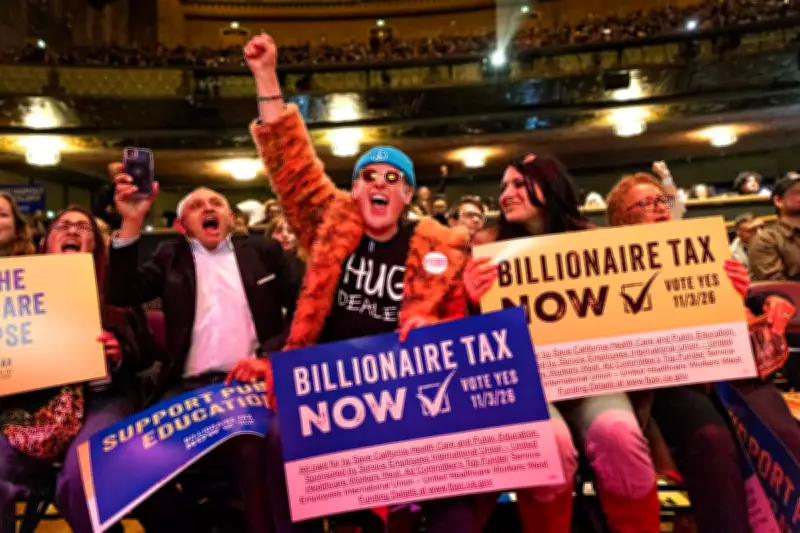
Supporters of a proposal to impose a one-time tax on billionaires in California have announced that they have collected enough signatures to place the measure on the November ballot. The initiative has become one of the most politically contentious issues in the state over the past year, prompting tech moguls to spend tens of millions of dollars in opposition.
Signature Milestone
The campaign, sponsored by the Service Employees International Union-United Healthcare Workers West labor union, has gathered more than 1.5 million signatures, according to a statement from the organization. The measure required 870,000 signatures to qualify for the ballot.
Proposed Tax Details
The proposed billionaires' tax would impose a one-time 5% levy on the assets of billionaires, including stocks, art, businesses, collectibles, and intellectual property. The revenue would be used to backfill federal funding cuts to health services for lower-income people that were signed by former President Donald Trump last year. The tax would apply retroactively to billionaires living in the state as of January 1.

Support and Opposition
Advocates for the tax, including labor union members, held a press conference on Monday to announce they would turn in the signatures for ballot approval. Flanked by healthcare workers holding signs such as "keep hospitals and ERs open," union members called for Californians to back the tax to save the state's public health system and address inequality.
"Ultra-wealthy billionaires have seen their fortunes skyrocket, even as food, rent, gas prices increase," said Mayra Castañeda, a healthcare worker who campaigned for the proposal. "We say that those who have prospered from here in California can afford to invest a little more in keeping California running."
California has more billionaires than any other state, with a few hundred by some estimates. Nearly half of the state's personal income tax revenue, a financial backbone in its nearly $350 billion budget, comes from the top 1% of earners.
"Being taxed like every other resident will not hurt the billionaires," said Liz Perlman, a California labor leader, at the press conference. "It will not reduce the number of yachts they get to waterski behind, but it will help our hospitals and the workers who have been unfairly punished by Trump's cruelty."
Tech Moguls Fight Back
Tech moguls, including current and former chief executives from companies such as Google, DoorDash, Reddit, LinkedIn, and Facebook, have poured money into the campaign against the tax. Alphabet president Sergey Brin has donated at least $45 million to the Super PAC Building a Better California, which is dedicated to blocking the tax. Alphabet's former CEO Eric Schmidt donated more than $3 million. Larry Page, who co-founded Google with Brin, spent about $173 million on two Miami mansions earlier this year and has moved a number of his limited liability companies out of California. Mark Zuckerberg, the Meta CEO, also purchased a $170 million Miami property earlier this year.
Political Rift
The proposal has created a deep rift between Governor Gavin Newsom and prominent members of his party's progressive wing, including Senator Bernie Sanders. The independent Vermont senator has endorsed the measure and touted it as a blueprint for other states. Newsom has long opposed state-level wealth taxes, believing such levies would be disadvantageous for the world's fourth-largest economy. The governor, who is considering a 2028 presidential run, has openly talked about his efforts to kill the proposal and said he would "do what I have to do to protect the state." Analysts say an exodus of billionaires could mean a loss of hundreds of millions of tax dollars.
"It's one of the reasons why Newsom's path to the Democratic nomination is not going to be an easy one," said Jack Pitney, a political scientist at Claremont McKenna College. "He's already facing a [budget] deficit the size of which is uncertain … and in the years to come, a billionaires tax that could backfire badly."

Union Perspective
The measure's lead proponent, the Service Employees International Union, sees the threat of an exodus as exaggerated. The tax is a "workable response to a crisis created by Congress," said Suzanne Jimenez, chief of staff of SEIU-United Healthcare Workers West, in a statement. She added that it would "keep emergency rooms open, hospitals staffed and health care systems functioning."
Opposition Campaign
The California Business Roundtable, a committee that has received massive donations from billionaires including Page and Palantir co-founder Peter Thiel, is leading the effort to defeat the measure. The organization claims the tax would "undermine our economy, decimate the state budget, drive investment out of the state and ultimately make everyday life more expensive for working families."