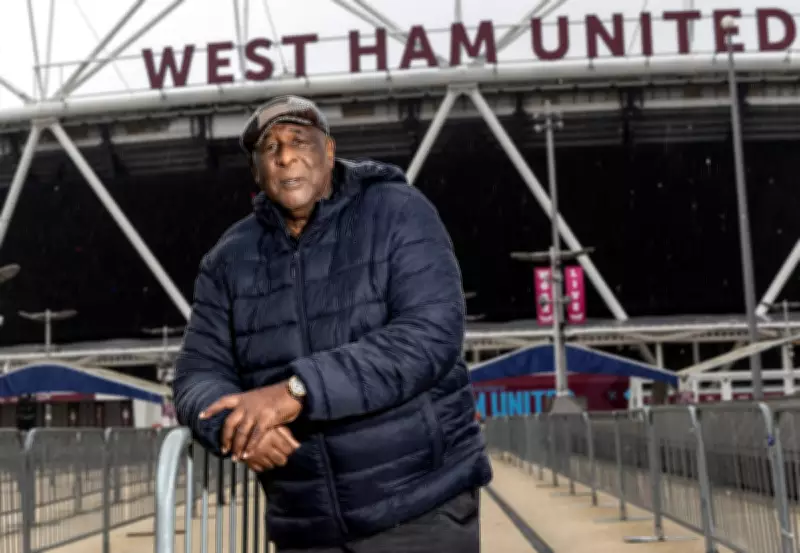
Clyde Best: The Trailblazing Black Footballer Who Faced Racism with Dignity
In a poignant interview, Clyde Best, now 75, recalls his groundbreaking journey as English football's first black superstar. Hailing from Bermuda, Best left home at just 17 in 1968 to trial with West Ham United, driven by opportunity rather than fear. His father, a naval officer and later deputy commissioner in Bermuda's prison service, imparted crucial advice: "When you go to England, you're not playing for yourself, you're playing for those coming after you." Best embraced this responsibility, vowing to carry himself with dignity and avoid any missteps that could jeopardize the path for future black players.
Early Career and Move to England
Best's football talent emerged early in Bermuda, where he played for Ireland Rangers and Somerset Trojans, often competing against British sailors in tough matches. By age 15, he was a Bermuda international, part of the team that finished second at the 1967 Pan American Games. His coach, Graham Adams, recommended him to West Ham manager Ron Greenwood, leading to a trial. Despite his mother's distress, his father supported his move. Upon arriving in London, Best faced initial confusion when no one met him at the airport, but a stranger helped him connect with the Charles family, whose sons John and Clive played for West Ham, easing his transition.
Racism and Resilience on the Pitch
Racism was rampant in English football grounds during Best's era. He handled it by focusing on his performance, refusing to retaliate against abuse. In a new film, Transforming the Beautiful Game: The Clyde Best Story, directed by Dan Egan, footage shows monkey chants from Tottenham fans at White Hart Lane. Best responded with skill, such as a virtuoso solo goal against Everton in the 1972-73 season that silenced the Goodison Park crowd. He credits his parents' guidance for his resilience, stating, "If I acted up all those years ago, how many black kids do you think would be playing football today?"

Impact and Legacy in Football
Best made his West Ham debut at 18, playing alongside legends like Geoff Hurst, Bobby Moore, and Martin Peters. He became the first black footballer to score over 50 goals for the club and, in 1972, was part of the first English team to field three black players in a starting XI, alongside Ade Coker and Clive Charles. His influence is acknowledged by modern stars; Ian Wright wore Arsenal's No 8 shirt as a tribute, and Michail Antonio credits Best for laying the groundwork for black players in the Premier League. The film includes interviews with figures like Viv Anderson, who was inspired by Best's televised performances.
Chilling Threats and Team Solidarity
One of the most harrowing incidents involved an anonymous letter threatening to throw acid in Best's face before a home game. He reported it to Greenwood, and captain Bobby Moore organized the team to surround Best as they entered the pitch, demonstrating remarkable bravery. Thankfully, no attack occurred. Best reflects on this with gratitude, noting, "They were brave. To want to take the acid for me ... that's unbelievable." Despite such challenges, he continued to excel, though he gradually drifted from the team and missed West Ham's 1975 FA Cup win.
Later Career and Friendship with Pelé
In 1975, Best left England for the North American Soccer League, joining Tampa Bay Rowdies and helping them win the Soccer Bowl. He also played for Portland Timbers and formed a friendship with Pelé after their first meeting in a 1970 friendly between West Ham and Santos. Best recalls Pelé saying, "Clyde, I'm the king, you're the prince," a moment that left him elated. The film suggests Best was happier after leaving England, often calling home about the racism he faced, but he remains proud of his contributions to football's diversity.
Today, Best lives in Bermuda but visits London to promote the documentary, which tenderly captures his story and its enduring impact on the sport. His journey underscores the importance of perseverance and responsibility in the face of adversity, leaving a legacy that continues to inspire generations of footballers.