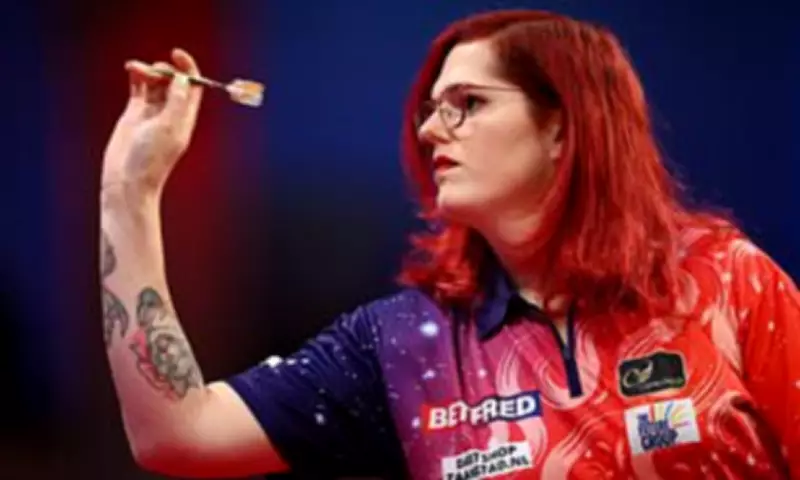
The Darts Regulation Authority (DRA) has implemented a sweeping ban preventing transgender women from participating in female tournaments, a decision announced yesterday that follows an extensive policy review. This landmark ruling stems from last year's Supreme Court gender decision and will significantly alter the competitive landscape of professional darts.
Impact on Pioneering Player
Dutch competitor Noa-Lynn van Leuven, who made history as the first transgender female to compete at the World Championships in 2024, will be directly affected by this prohibition. The 29-year-old athlete has secured six titles on the women's tour since joining in 2022 and has been a prominent figure in the sport.
Van Leuven expressed profound disappointment with the ruling, describing it as "another huge hit for the trans community" in a social media statement. She revealed that this decision would effectively force her into retirement at age 29, lamenting that "every day it's getting harder and harder for trans people just to exist, to compete."

Scientific Basis for Decision
The DRA, which serves as the independent regulator for the Professional Darts Corporation (PDC), based its new policy on a comprehensive review conducted by Dr. Emma Hilton, an academic developmental biologist specializing in sex and sporting categories. According to the authority's official statement, "As a result of its review, the DRA is satisfied that to achieve fair competition in darts, only biological females should be eligible to compete in women's tournaments regulated by DRA rules."
Dr. Hilton's report classified darts as a "gender-affected sport," identifying "multiple, small-magnitude sex differences" that collectively create a male advantage over female players. This scientific assessment formed the foundation for the regulatory change.
Mixed Reactions from Advocacy Groups
Fiona McAnena, director of campaigns for the sex-based rights charity Sex Matters, welcomed the announcement, stating: "Darts is a male-dominated world, played in pubs and clubs, and the top darts players are all men. Men's physical advantages in darts may be small but they all add up. That's why women need their own tournaments."
This perspective contrasts sharply with van Leuven's position and highlights the ongoing debate surrounding transgender participation in women's sports.
Alternative Competition Pathways
The DRA emphasized its commitment to inclusivity while implementing the new restrictions, noting that "all players – irrespective of their biological sex, legal sex, and/or gender identity – may compete in open tournaments and are encouraged to do so." This means van Leuven and other transgender women remain eligible for certain open PDC events, though they are barred from women's tournaments specifically.
The PDC issued its own statement confirming compliance: "All PDC events are played under DRA Rules and we will continue to abide by DRA regulations, which now include the Eligibility Policy and Rules for Open and Women's Tournaments. We take pride in how inclusive darts is as a sport, and will continue to support players to compete at the best of their ability in our events."
Broader Sporting Context
This darts policy change arrives just weeks after the International Olympic Committee (IOC) announced that only biological female athletes, determined through a one-time gene-screening test, would be eligible for female category events at the Olympic Games. Van Leuven specifically referenced these "recent decisions made by the IOC" in her criticism of the DRA ruling.
The Dutch player had achieved significant milestones in her career, becoming the first transgender woman to compete at the World Championship in 2024 and returning to Alexandra Palace in December. She qualified for the last two World Darts Championship tournaments through the PDC Women's Series and reached the semi-finals at the 2025 Women's World Matchplay.
This regulatory shift represents a significant moment for darts governance and raises important questions about fairness, inclusion, and the future of transgender athletes in competitive sports.