The Duke University men's swim team appears to have dedicated an extraordinary amount of time to strength training during the regular season, at least according to their recent social media posts. However, a closer look reveals a digital twist that has captivated online audiences.
Impossibly Ripped Images Go Viral on Instagram
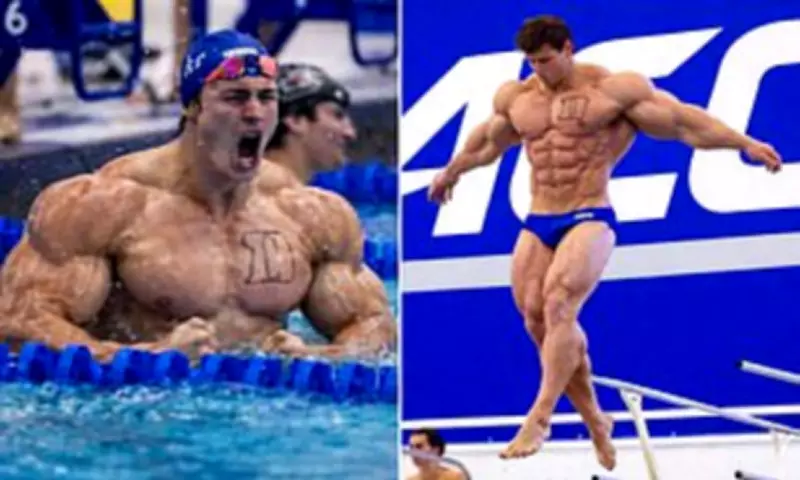
Earlier this week, the team's official Instagram account shared a series of photographs showcasing members of the men's swimming and diving program with remarkably muscular and defined physiques. The images depicted athletes both in the water and on diving boards, displaying what seemed to be killer abdominal muscles and massive shoulder development.
The caption enthusiastically declared, 'Duke Swim & Dive men are ready for ACCs!', referencing the upcoming Atlantic Coast Conference championships. Despite the confident message, it quickly became evident to many observers that these pictures were not authentic representations of the athletes' actual bodies.

Clear AI Generation Giveaways
Several glaring inconsistencies exposed the images as artificial intelligence creations. Most notably, many of the athletes were shown with identical Duke 'D' tattoos on their chests, featuring linework so poorly executed that it would make even the most inexperienced artist cringe. In one particularly telling photograph, a diver was depicted with six fingers on his left hand, a common error in AI-generated imagery.
These visual anomalies made it abundantly clear that the photographs were digitally manufactured rather than genuine representations of the team's physical condition. The Duke men's swimming and diving team had shared AI-generated images of their athletes with exaggerated muscular features, sparking widespread discussion across social media platforms.
Mixed Reactions in the Comments Section
The Instagram post rapidly went viral, attracting thousands of reactions and comments. Many users responded with humor and lighthearted jokes about the photographs' obvious artificial nature.
- 'Lifting coach needs a raise,' quipped one Instagram commenter, poking fun at the exaggerated physiques.
- Another user joked, 'So nice to see people achieve a solid beginner physique! Hopefully with more time in the gym they can really develop into their full potential!'
- A third comment read, 'Imagine actually trying to swim fly with traps that big!' highlighting the impracticality of such muscular development for competitive swimming.
Criticism and Confusion Over AI Usage
Alongside the humorous responses, numerous commenters expressed criticism regarding the team's decision to use AI-generated images. Some questioned the ethics of presenting artificially enhanced physiques, while others debated the appropriateness of such content in collegiate sports promotion.
Surprisingly, despite the obvious digital manipulation, a significant number of social media users either genuinely believed the images were authentic or felt compelled to ask whether they were created using artificial intelligence. This confusion highlighted both the sophistication of modern AI image generation and the public's varying levels of digital literacy when encountering such content online.
The viral incident has sparked broader conversations about the role of artificial intelligence in sports media and the potential implications for authenticity in athletic representation. As AI technology continues to advance, such episodes may become increasingly common across various sports and entertainment platforms.