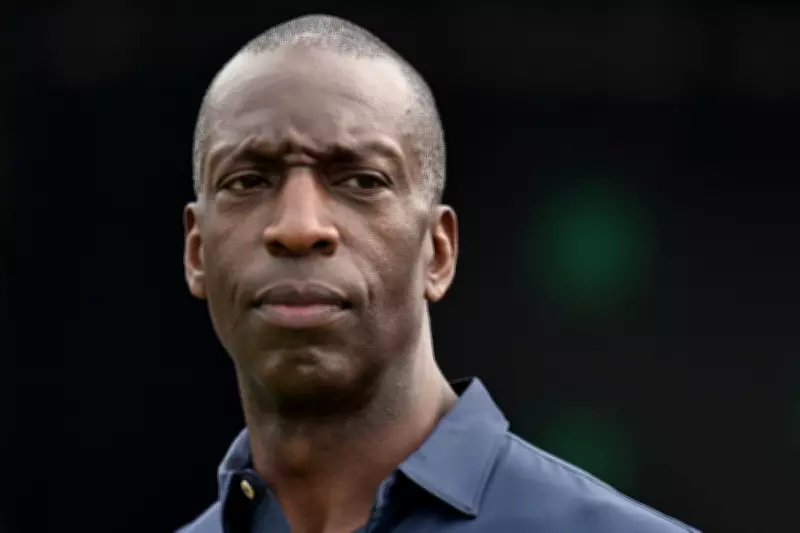
Michael Johnson's Grand Slam Track Collapse Threatens His Athletic Legacy
The Independent's journalism is supported by our readers. When you purchase through links on our site, we may earn commission.
Michael Johnson was once the undisputed king of track and field. Now, the dramatic collapse of his ambitious venture, Grand Slam Track, places his hard-earned reputation in serious jeopardy. Fresh allegations have emerged that Johnson paid himself half a million dollars just days before the project folded, leaving creditors unpaid—claims that GST vehemently denies. This marks the latest and most damaging turn in a saga that threatens to irrevocably tarnish his integrity.
A Visionary Start That Quickly Unraveled
The camera zooms in on a blurred face. Dramatic music swells. Michael Johnson emerges from the haze, his voice deep and commanding. "Calling all rivals," he declares. "We're about to change this game." That first advert for Grand Slam Track in the summer of 2024 sent a thrill through the athletics world. Here was a legend of the sport promising a revolutionary new future. Yet, in hindsight, it also highlighted a fundamental flaw: Johnson, not a current athlete, was the central figure.

By the time GST launched in spring 2025, skepticism was already mounting. Noah Lyles, the world's most famous sprinter, publicly questioned the business model, noting that the financial offers didn't match his commercial value and that marketing benefits were unconvincing. "Have you heard of Grand Slam Track?" Lyles asked an interviewer, who admitted he had not. "That proves my point!"
Multiple Factors Behind the Failure
There are myriad reasons why Grand Slam Track failed. It is a story of flawed financial planning, a convoluted competition format, over-promising, and under-delivering. Launching a successful new sports league in a crowded market is notoriously difficult, as seen with ventures like LIV Golf, which struggles despite vast financial backing.
GST managed to attract 28 Paris Olympic medallists with a $100,000 winner's prize, but key stars like Lyles declined. Femke Bol criticized the format for increasing injury risk, while Jakob Ingebrigtsen and Keely Hodgkinson were cautious about fitting it into their schedules. Johnson's teaser video boasted, "Only the fastest," but the reality fell short.
Another misstep was the exclusion of field events. Johnson stated, "I am going to save what I think I can save. I think I can save track. I don't think I can save track and field." This decision overlooked marketable athletes like pole vaulter Mondo Duplantis, whose world record at the Paris Olympics kept fans captivated late into the night.
Financial Troubles and Legal Allegations
The first meet in Kingston, Jamaica, was a flop, with half-empty stands. This poor attendance is believed to have prompted Eldridge Industries, co-owned by Chelsea CEO Todd Boehly, to withdraw a proposed $40 million investment. GST claimed $30 million in financial commitments, but reports suggested it was closer to $13 million without Eldridge.
Instead of halting operations, GST pressed on, hoping for new funding. Debts spiraled, and no large-scale investor emerged. The situation reached a new low this week with legal action alleging Johnson paid himself $500,000 eight days before the collapse. GST strongly denies this, noting Johnson invested over $2 million of his own money. One creditor, owed a six-figure sum, believes Johnson had "good intentions" but lost control.
The Human Cost and Future Hopes
Hundreds of people remain unpaid, from a major creditor awaiting $3 million to young hurdler Eric Edwards Jr., who says he is still owed $19,000—a significant loss for a struggling athlete. Some athletes are angry, while others, like triple world champion Melissa Jefferson-Wooden, support a potential reboot, calling the concept sound despite flawed execution.
Johnson's co-founder, Steve Gera, envisioned a league with the youngest fanbase globally, but launching such a competition proved insurmountable. Great sport requires human interest and genuine jeopardy, elements GST couldn't manufacture from scratch. While the principle of paying athletes well was commendable, GST failed to deliver on its promises.

A Legacy Under Threat
Johnson's fall is poignant for many. His gold-shoed triumphs at the 1996 Atlanta Olympics inspired a generation, and his later role as a BBC pundit showcased his passion for athletics. His recovery from a stroke was widely admired. However, his reputation has been indelibly hit not just by GST's failure, but by the manner of its collapse.
Johnson and Gera remain determined to resurrect Grand Slam Track, believing they can still revolutionize athletics. As noted in the Netflix documentary on Fyre Festival, "These guys are either completely full of s*** or they're the smartest guys in the room." Only time will tell which applies to this ambitious but flawed venture.