

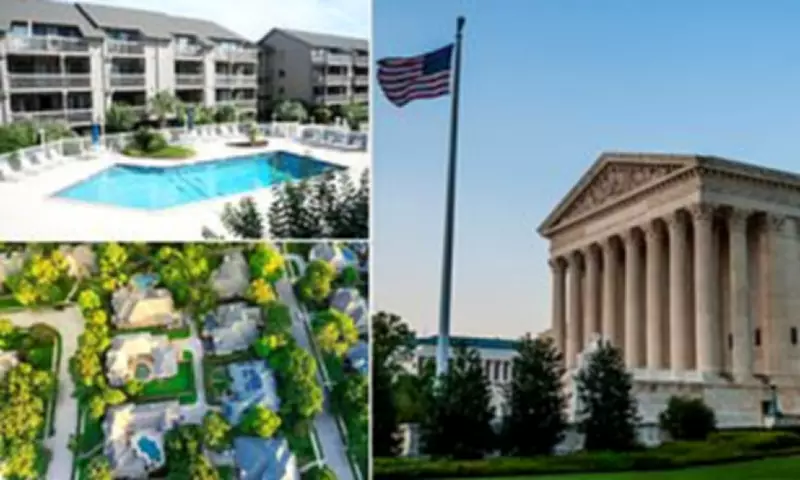
Homeowners across the United States could soon see their homeowners association (HOA) fees rise as a heated legal battle over a federal anti-fraud law heads toward the Supreme Court. The dispute centers on the Corporate Transparency Act, a law originally designed to crack down on fraud, shell companies, and money laundering. However, it now risks sweeping up millions of ordinary community associations, sparking fears of higher costs, more paperwork, and fewer volunteers willing to run neighborhood boards.
What the Law Requires
The law requires around 32 million business entities, including some condominium associations and homeowners associations, to report details about their 'beneficial owners' and officers to the federal government, including names and addresses. Failure to comply can lead to fines or even criminal penalties. Critics argue that the rules are overly burdensome for community groups that are not traditional businesses and constantly change leadership, with board members rotating regularly.
Legal Challenge and Supreme Court
After years of lawsuits and conflicting court rulings, the fight is heading toward the US Supreme Court. A coalition of business groups, including the National Small Business Association, is asking the court to strike the law down entirely, arguing it is unconstitutional and unfairly intrudes into state-level matters. HOA advocates have joined the challenge, warning that compliance could be expensive and complicated for neighborhood associations already struggling with rising costs and increasing dues.

Impact on Homeowners and Volunteers
The Community Associations Institute, which represents hundreds of thousands of condo and HOA communities, says the law unintentionally drags in organizations that were never the target. Many HOAs report that they could be forced to hire outside help just to keep up with reporting rules, adding to administrative costs that could ultimately be passed on to homeowners. There are also concerns that the rules could scare off volunteers. A recent survey found that many board members were uncomfortable sharing personal information with the federal government, and nearly half said they might step down if the requirements become too difficult or risky. This raises fears of a growing leadership gap in neighborhood associations at a time when many communities are already dealing with rising insurance costs, maintenance bills, and a string of fraud cases involving HOA funds.
Supporters' View
Supporters of the law argue that the concerns are overblown. They contend that the reporting requirements are relatively simple and are a key tool in fighting financial crime. By revealing who is behind business entities, authorities can better track down fraudsters and prevent abuse of shell companies. They also point out that many exemptions already exist for certain nonprofits and organizations, and say the law was never specifically aimed at HOAs in the first place.
Uncertain Future
Still, uncertainty remains as courts continue to weigh the law's future. If the Supreme Court takes the case, it could either strike down the law or force major changes, potentially reshaping how thousands of community associations across the country are regulated. For homeowners, the fear is simple: more red tape today could mean higher HOA fees tomorrow.






