FIFA Chief Asserts Iran's World Cup Spot Amidst Geopolitical Strife
FIFA President Gianni Infantino has publicly declared that Iran's national football team will definitely compete in the upcoming 2026 World Cup, despite the ongoing war involving the United States and Israel. Infantino made these significant remarks during an unannounced appearance at Iran's friendly match against Costa Rica in Turkey on Tuesday, firmly stating that Iran's participation is assured and their matches will proceed as originally planned in the United States.
Political Tensions and Tournament Participation
The Iranian football federation had previously indicated they were negotiating with FIFA to potentially relocate their World Cup matches from the United States to Mexico, citing security concerns due to the Middle East conflict. Mexican President Claudia Sheinbaum confirmed her country's willingness to host Iran's first-round matches if necessary. However, Infantino emphasized that Iran's "matches will be played where they are supposed to be, according to the draw," directly addressing these relocation discussions.
Infantino expressed confidence in Iran's team, noting: "Iran will be at the World Cup. That's why we're here. We're delighted because they're a very, very strong team, I'm very happy." He added that he had personally observed the team and spoken with players and coaching staff, confirming everything was proceeding appropriately for their tournament preparation.

Historical Context and Recent Performances
Iran has established itself as a consistent qualifier for the World Cup, having secured their place among the first nations for the 2026 tournament by finishing atop their Asian Football Confederation qualifying group. This marks their qualification for four consecutive men's World Cups and six of the last eight tournaments overall. Despite this impressive qualification record, Iran has faced challenges in advancing beyond the group stages in recent competitions.
In the 2014 tournament, Iran finished at the bottom of a group containing Argentina, Bosnia and Herzegovina, and Nigeria. Their subsequent appearances in 2018 and 2022 saw them eliminated on the final day of group play, finishing third both times in heartbreaking fashion. Their 2022 elimination came specifically against the United States in their concluding group match, adding historical context to the current geopolitical tensions surrounding their participation.
Tournament Schedule and Security Concerns
The 2026 World Cup, jointly hosted by the United States, Mexico, and Canada, is scheduled to commence on June 11th. Iran is set to begin their Group G campaign against New Zealand in Los Angeles on June 15th, followed by matches against Belgium on June 21st in Los Angeles and Egypt on June 26th in Seattle. These arrangements remain unchanged according to Infantino's statements.
Security concerns emerged prominently when former US President Donald Trump suggested Iran's team should not travel to the tournament "for their own life and safety," prompting strong rebuttal from Iranian officials who asserted that "no one can exclude Iran's national team from the World Cup." Infantino initially referenced Trump's assurances about Iran's welcome, but later emphasized FIFA's commitment to ensuring all teams participate as scheduled.
Symbolic Protests and Humanitarian Context
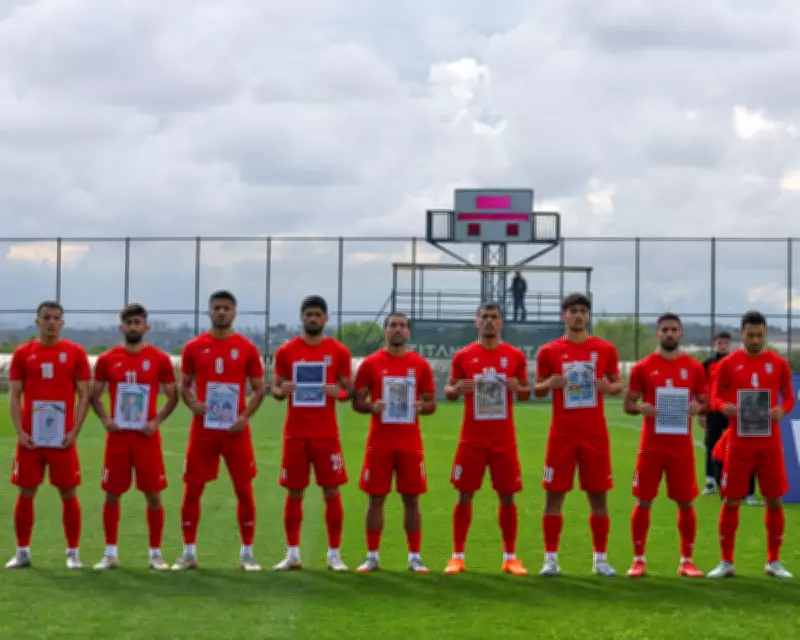
During recent friendly matches, Iranian players have engaged in symbolic protests regarding the conflict. In their match against Nigeria last Friday, players wore black armbands and posed with school rucksacks to memorialize victims of an airstrike on a primary school in Minab, southern Iran, which occurred on the first day of the Middle East war and claimed at least 170 lives including children and teachers.
The New York Times has reported that preliminary findings from a US military investigation suggest an American Tomahawk cruise missile struck the school due to a targeting error. These humanitarian aspects have added emotional layers to the geopolitical discussions surrounding Iran's football participation.

FIFA's Position on Geopolitical Conflicts
From Zurich during an online FIFA Council meeting on March 19th, Infantino articulated the organization's stance: "FIFA can't solve geopolitical conflicts, but we are committed to using the power of football and the World Cup to build bridges and promote peace as our thoughts are with those who are suffering as a consequence of the ongoing wars." He reinforced FIFA's dedication to hosting the tournament as planned with all qualified teams participating in an environment of fair play and mutual respect.
This position comes amidst warnings from organizations like Amnesty International, which has cautioned that the World Cup risks becoming a "stage for repression" if human rights concerns aren't adequately addressed. The intersection of international sports, politics, and humanitarian issues continues to shape the narrative around Iran's World Cup journey as tournament preparations advance.