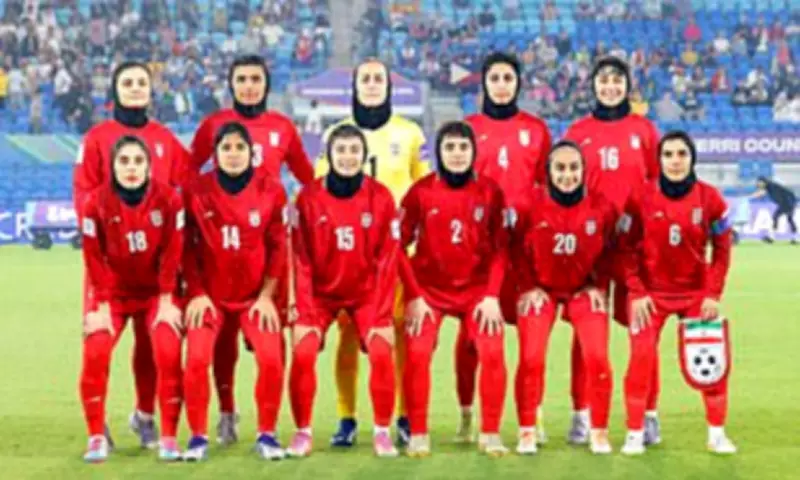
Iranian Women Footballers Defect in Australia After Anthem Protest Sparks Diplomatic Crisis
The stark contrast between Tehran's repressive regime and Australia's liberal Gold Coast collided dramatically this week at the Royal Pines Resort, where Iran's women's football team was staying during the Asian Cup. What began as a silent protest against singing the Islamic Republic's national anthem escalated into an international incident involving street demonstrations, death threats, and high-level political intervention.
From Silent Protest to Defection Drama
It all started when the Iranian women's football team decided to stand in silence rather than sing their national anthem before their opening match against South Korea. This symbolic gesture, coming just 48 hours after the death of Ayatollah Ali Khamenei during US and Israeli air strikes, was immediately condemned back in Iran as "the pinnacle of dishonour" by state television commentators.
The team's protest followed the January killing of Iranian women's footballer Zahra Azadpour during anti-regime protests. National team player Atefeh Ramezanizadeh, who would later defect, had expressed the team's grief on Instagram, telling her 15,000 followers: "Our hearts are heavy when our people are grieving the loss of their loved ones, it is hard to be happy."

Escape from Surveillance
After their initial protest, the players faced intense pressure from Revolutionary Guard members accompanying the team delegation. During subsequent matches against Australia and the Philippines, the team sang and saluted during the anthem under apparent duress. Meanwhile, the situation was being closely monitored by Australia's Iranian expatriate community, many of whom fled during the 1979 revolution and remain hostile to the regime.
The crisis reached its peak when approximately 200 protesters blocked the team bus after their final match at Gold Coast Stadium. Activists filmed a player making the international SOS distress signal, sparking accusations that Australian authorities were allowing women to be held hostage in a luxury hotel.
Orchestrating the Escape
Local woman Leigh Swansborough, who had previously met the team during a hiking holiday in Iran, traveled to the Royal Pines hotel to check on their welfare. She described a "tense and heavily controlled" atmosphere with players "under constant monitoring," forced to dine in a secure function room on the 21st floor rather than in private.
Swansborough collaborated with Iranian-Australian politician Tina Kordrostami to orchestrate an escape plan. After meeting in the hotel's underground car park, they managed to contact players who were "very frightened, looking round to make sure no one saw them and adjusting their hijabs," according to Kordrostami.
The escape involved players meeting their rescuers in the resort's reception on Monday evening, then running down a staircase into the underground car park when their minders' backs were turned. "They were running full bolt," Swansborough later described, noting that three Iranian officials attempted pursuit but were frustrated by a locked staircase door.
Political Intervention and Asylum
The drama attracted attention at the highest levels when former US President Donald Trump intervened via his Truth Social platform, accusing Australia of "making a terrible humanitarian mistake by allowing the Iran national women's soccer team to be forced back to Iran, where they will most likely be killed."
Trump then called Australian Prime Minister Anthony Albanese, who informed him that Home Secretary Tony Burke had already met with the players at their safe house and approved their humanitarian visa applications. The women were even offered training opportunities with A-League Women's club Brisbane Roar.
By Tuesday, six players and one support staff member had successfully defected and were being held at a safe house in Brisbane. Upon learning they had been granted humanitarian visas—a pathway to permanent residency—the group reportedly broke into a spontaneous chant of "Aussie, Aussie, Aussie, oi, oi, oi!"

Historical Context and Ongoing Restrictions
The incident highlights the long-standing challenges facing Iranian women footballers. The sport was outlawed for women following the Islamic Revolution and only permitted again in 2004. FIFA briefly banned the international side in 2011 over concerns about players being forced to wear restrictive hijabs.
To this day, team members must wear long-sleeved undergarments and socks, obtain permission from male relatives to travel with the national side, and face constant monitoring of their phone use and movements when overseas. These restrictions have created simmering resentment that boiled over following Azadpour's death.
Aftermath and Future Implications
The remaining team members departed Australia on Tuesday night, flying from Sydney to Kuala Lumpur before continuing to Turkey, from where they will be driven across the border to Iran. Their potential punishment for humiliating the regime remains uncertain.
The Royal Pines Resort's decision to lock down the building during the escape attempt will likely face scrutiny, particularly given the hotel is owned by the Royal Automobile Club of Victoria. Meanwhile, the incident has raised questions about FIFA's handling of the situation, as media monitors attempted to ban reporters from asking about the growing scandal during press conferences.
Looking ahead, Iran's men's team is scheduled to travel to California and Seattle for this summer's World Cup, creating potential for further diplomatic tensions. As this incident demonstrates, football can sometimes become much more than just a game, intersecting with human rights, international relations, and individual freedom in profound ways.