

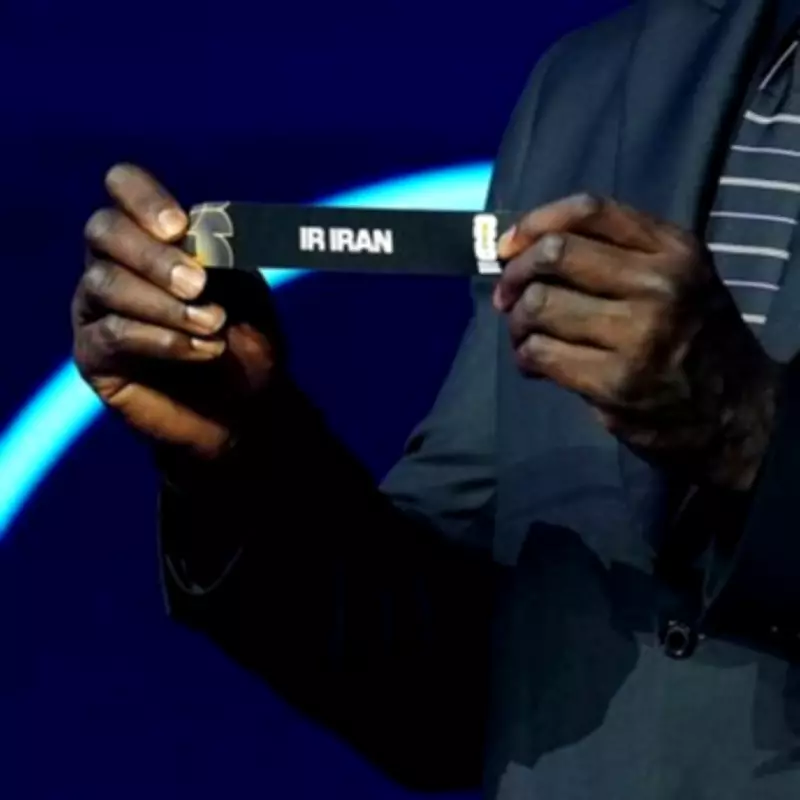
Iran's World Cup Withdrawal Triggers FIFA Sanctions and Replacement Plans
Iran's dramatic announcement of a boycott of the 2026 FIFA World Cup has set in motion a complex series of disciplinary actions and contingency planning by football's global governing body. The decision, confirmed by Iranian Sports Minister Ahmad Donyamal in a televised interview on March 11, 2026, stems from escalating geopolitical tensions between Iran and tournament co-host United States, which is engaged in military action alongside Israel against the Islamic Republic.
Severe FIFA Consequences for Boycott Decision
The Iranian Football Federation now faces substantial repercussions for their planned withdrawal from the tournament scheduled across the United States, Canada and Mexico. FIFA has confirmed that Iran risks a comprehensive ban from all FIFA-sanctioned tournaments, extending far beyond the 2026 competition to potentially include future World Cups and Asian Cup tournaments. This represents one of the most significant disciplinary measures available to football's governing body.
Financial penalties are equally severe, with withdrawal triggering fines ranging from €275,000 to €555,000. Additionally, the Iranian federation must reimburse FIFA for all preparation funds and competition-related contributions already received. These financial burdens come amid growing internal political pressure within Iran following the death of Supreme Leader Ayatollah Ali Khamenei, with some government officials advocating for complete withdrawal from international sporting events.

Geopolitical Conflict Creates Insurmountable Barriers
The boycott decision reflects deep-seated geopolitical tensions that have made participation in a North American-hosted tournament increasingly untenable for Iranian officials. "Since this corrupt government assassinated our leader, we have no conditions under which we can participate in the World Cup," declared Sports Minister Donyamal, referencing the United States' military actions against Iran.
Despite FIFA's assurances of "athlete exemptions" from travel restrictions, practical barriers remain substantial. The Iranian federation has already boycotted events like the World Cup draw due to visa denials for high-ranking officials. A broader travel ban on Iranian citizens continues to present major logistical challenges for players, coaching staff, and supporters attempting to enter the United States.
Player Safety and Internal Political Divisions
Serious concerns regarding athlete safety have emerged as a critical factor in the boycott decision. These concerns were highlighted recently when five members of Iran's women's national team sought asylum in Australia, underscoring the risks faced by athletes representing the nation internationally. FIFA has stated that player safety remains a priority, yet the risk of domestic punishment for Iranian footballers who might advocate for participation persists.
Internal political dynamics have created a significant divide between the sporting ambitions of players and the political stance of the regime. The national team faces immense pressure from government officials who view sporting participation as incompatible with current geopolitical hostilities, creating an environment where athletic aspirations conflict directly with political imperatives.
FIFA's Replacement Strategy and Tournament Continuity
FIFA has already begun contingency planning to maintain the 48-team tournament structure should Iran formally withdraw or face suspension. Reports indicate that Iraq or the United Arab Emirates could be invited to fill the vacancy created by Iran's absence, with both nations belonging to the Asian Football Confederation and therefore eligible as replacement participants.
The global football body has explicitly ruled out postponing the tournament, stating this week that the World Cup is "too big" to delay over geopolitical conflicts between participating nations and host countries. This position underscores FIFA's commitment to tournament continuity while acknowledging the unprecedented nature of a major footballing nation withdrawing over political hostilities with a tournament co-host.

The situation represents one of the most significant intersections of international sport and geopolitics in recent memory, with implications extending far beyond the football pitch to touch on diplomatic relations, athlete welfare, and the fundamental relationship between global sporting events and international political conflicts.





