

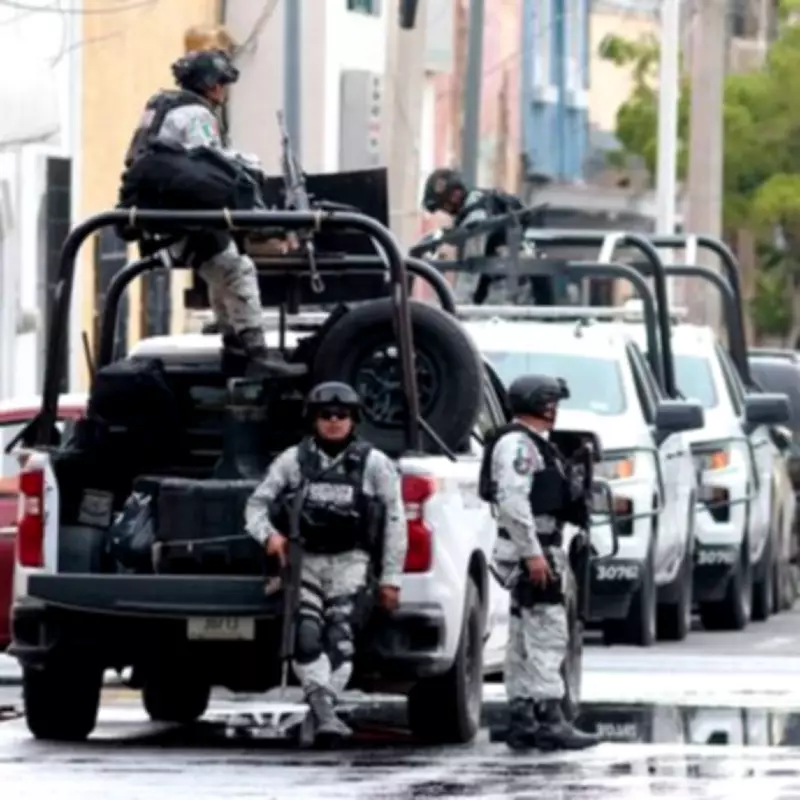
Mexico's Extensive World Cup Security Operation Revealed
Mexico has unveiled a comprehensive and technologically advanced security plan for the upcoming 2026 FIFA World Cup, deploying an array of measures including robot dogs, drones, and a massive force of 100,000 personnel. This announcement comes in the wake of a significant outbreak of cartel violence that has raised serious concerns about the country's ability to safely host the tournament.
Cartel Violence Sparks Security Concerns
The security preparations follow a turbulent period marked by the death of Nemesio Oseguera Cervantes, the notorious leader of the Jalisco New Generation Cartel. His demise triggered widespread retaliation from the cartel, resulting in road blockades, vehicle arson, and scores of fatalities. This surge of unrest led to calls from some quarters for Mexico to be stripped of its hosting duties, prompting FIFA to dispatch a delegation to evaluate the nation's preparedness.
FIFA officials have expressed sufficient concern to personally assess the security provisions, though Mexican authorities have moved swiftly to implement a robust response plan.

Unprecedented Security Deployment
The core of Mexico's security strategy involves the deployment of 100,000 security personnel, a mix of military, police, and private agency forces, to safeguard the 13 matches scheduled across three host cities: Mexico City, Guadalajara, and Monterrey. Mexico City is set to host the tournament's opening match, with a potential high-profile last-16 encounter involving England.
In addition to the human force, the operation will utilise 2,100 military vehicles for street patrols, 24 event security aircraft, and 33 drones to monitor the vicinity of the venues. The country is also employing advanced communication tools to reassure the estimated 5.5 million tourists expected to visit during the tournament.
Technological Innovations: The K9-X Division
One of the most striking elements of the security plan is the deployment of a fleet of robot dogs, dubbed the K9-X division. Officials in Nuevo Leon, where Monterrey is the capital, revealed these four-legged machines prior to the recent violence outbreak.
These pre-programmed robotic canines are designed to act as a first line of defence, using camera lenses to evaluate risks before entering potentially hazardous situations. They will provide officers with a crucial preview of any dangers, enhancing safety for both security forces and the public.
Official Reassurances and Preparedness
Following a meeting with FIFA officials, Mexico's Security Secretary Omar Garcia Harfuch stated on social media platform X that they reviewed intelligence, prevention, and operational deployment protocols for the international event. Mexican President Claudia Sheinbaum assured in late February that there is "no risk" to fans and that "all guarantees" of safety would be in place, particularly for matches in Guadalajara.
FIFA President Gianni Infantino has also expressed confidence, stating he is "very calm" about the matches proceeding as planned. The Mexican government has declared itself "fully prepared" to co-host the tournament alongside the United States and Canada, emphasising its commitment to a secure and successful event despite the challenging backdrop of cartel-related violence.






