MLS's Time-Saving Rule Changes Poised for Global Rollout After Success in US Leagues
The International Football Association Board (Ifab) is set to meet this weekend, with widespread anticipation that it will adopt two experimental rule changes pioneered by Major League Soccer (MLS) and its developmental league, MLS Next Pro. These regulations, designed to eliminate time-wasting and accelerate matchplay, have already demonstrated significant effectiveness in American soccer and are now on the verge of becoming part of the global game, potentially influencing events like the 2026 World Cup.
Key Rules Driving Faster Play and Reducing Stoppages
The first rule, known as the timed substitution rule, mandates that if a player takes longer than 10 seconds to exit the pitch, their team must play with a man down for one minute. The second, dubbed the off-field treatment rule, requires a player who remains on the ground for more than 15 seconds after an injury to be removed from the match for a minute. Both rules include specific exceptions; for instance, goalkeepers and injured players are exempt from the substitution rule, while serious fouls, card incidents, and head injuries are excluded from the treatment rule.
Since their implementation in MLS Next Pro in 2022 and subsequent adoption by MLS in 2024, these changes have yielded dramatic results. Injury-related stoppages in MLS plummeted by 72%, dropping from an average of five to six per match to just 1.50. The timed substitution rule saw minimal violations, with only 12 infractions recorded across 4,346 substitutions in 510 matches during 2025.

High-Profile Reactions and Immediate Impact on Players
Ali Curtis, president of MLS Next Pro and executive vice-president of sporting development for MLS, highlighted the immediate impact, stating, "The impact was overnight. We saw it in Next Pro early on when it was implemented in 2022, and we saw it very quickly in MLS two years later. These rules have been working, and we believe they are good for the game."
Notable players have been directly affected, with Inter Miami forward Luis Suárez serving as a prime example. In one instance, Suárez's slow exit led to a violation, forcing his team to play short-handed. Just days later, he was seen sprinting off the field to comply, showcasing the rule's rapid influence on behavior.
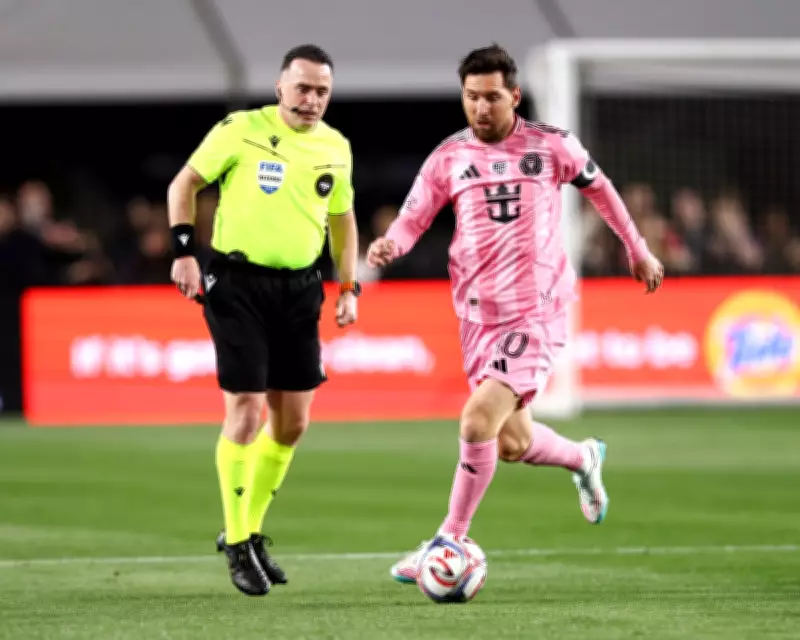
Perhaps the most prominent case involved Lionel Messi, who, during a 2024 match against CF Montréal, was removed for two minutes after staying down with an injury. Fieldside microphones captured Messi criticizing the rule, saying, "With these types of rules, we're going nowhere." Curtis acknowledged the challenges, noting, "Change is difficult for folks, and especially difficult in the moment," but emphasized that the goal is to evolve the game while maintaining its integrity.
Historical Context of American Soccer Rule Experimentation
The United States has a long history of innovating soccer rules, with mixed success. The American Soccer League of the 1920s was the first globally to use substitutes, predating their official adoption by decades. The North American Soccer League (NASL) experimented with the backpass rule and introduced red cards for denying clear goal-scoring opportunities years before Ifab formalized these changes. Additionally, the NASL pioneered features like names on jerseys and front numbers, which later became standard worldwide.
In 1995, the United States Interregional Soccer League (USISL) became a testing ground for various rules, ranging from practical adjustments like kick-ins to more eccentric ideas such as settling draws by counting corner kicks and implementing a "stampede kick" shootout. While some concepts, like the 35-yard shootout and countdown clock, were briefly retained by MLS upon its 1996 launch, they were eventually abandoned in favor of international norms due to criticism.
Curtis addressed past skepticism about American rule changes, stating, "We didn't invent the game, but we love it and we're passionate about it. Whether or not there is a stigma regarding Americans shifting rules, I think now we're into our 31st season. We are connected to the global football community." He emphasized that ongoing dialogues with global partners have been positive, focusing on improvement rather than perception.

Additional Proposals on Ifab's Agenda
Beyond the MLS-led initiatives, Ifab's meeting will consider other measures to combat time-wasting. These include penalizing delays on goal kicks and throw-ins by awarding corner kicks or reversing possession, as well as potential adjustments to the Video Assistant Referee (VAR) system, such as allowing reviews to correct incorrectly awarded corner kicks or second yellow cards.
As soccer continues to evolve, these rule changes represent a significant step towards faster, more fluid matches, with the United States once again at the forefront of innovation in the sport.