

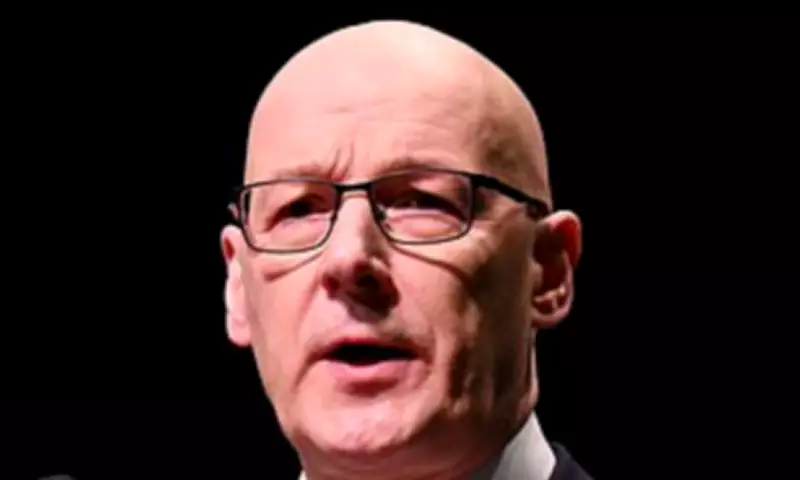
First Minister Condemns Old Firm Clubs Over Delayed Reaction to Ibrox Violence
First Minister John Swinney has launched a scathing criticism of Rangers and Celtic, accusing the Old Firm clubs of taking an unacceptably long time to respond to the widespread disorder that erupted following last Sunday's Scottish Cup quarter-final at Ibrox Stadium. The Scottish FA swiftly condemned the shocking scenes and pledged a full review, while the players' union PFA Scotland also spoke out after fans invaded the pitch. However, both Glasgow giants remained silent until Thursday evening, when Rangers issued an 'unequivocal' condemnation and Celtic acknowledged that 'examples of unacceptable behaviour' must be addressed.
Swinney Expresses Dismay at Clubs' Silence
In an upcoming episode of the BBC Scotcast series, Mr Swinney voiced his profound disappointment at the delayed public statements from the clubs. 'I think it took them too long to say anything about it, bluntly,' he stated emphatically. 'I think we've got to try to bring the clubs together with the football authorities because, at a very basic level, I am not prepared to tolerate that violence at a football match.' The First Minister stressed the urgency of collaborative action to prevent such incidents in the future.
Accusations of Malicious Intent Among Supporters
Mr Swinney further accused some supporters of attending the derby clash with malicious intent, pointing to the prevalence of balaclavas worn by ultra elements from both fanbases. 'Who needs to go to a football match wearing a balaclava? It wasn't very cold that day,' he remarked pointedly. 'You're going there with malicious intent. You don't need to wear a balaclava.' This observation underscores concerns about premeditated aggression among certain factions of the crowd.

Context of the Match and Future Implications
The derby was the first since 2018 to feature 7,500 visiting fans at either club's ground, due to Scottish Cup regulations. Despite widespread desire among fans and officials to extend this arrangement to league matches—where only 2,500 to 3,000 away tickets are typically allocated—such a move now appears unlikely in the near future following the violent outburst. Mr Swinney, who has previously stated he would not take his teenage son to an Old Firm game, stopped short of advocating for future Glasgow derbies to be played behind closed doors, but issued a stern warning.
'I would rather that's not the case, but I think none of us can watch those scenes and think that there isn't something that's got to give as a consequence of what happened at the weekend,' he cautioned. 'I want to take time to engage... the clubs and the SFA, to identify what is the best course of action to take.'
Detailed Account of the Disorder
Celtic's penalty shoot-out victory in the Scottish Cup quarter-final was severely marred by ugly scenes, triggered when dozens of visiting fans spilled onto the pitch after Tomas Cvancara converted the decisive spot-kick. In response, scores of Rangers supporters, primarily from the Copland Road stand section housing the Union Bears ultras, also entered the field and advanced over the halfway line towards a police cordon. The confrontation escalated with missiles being thrown, resulting in at least one fan injury and multiple arrests post-match.
Police Criticism and Broader Concerns
Chief Constable Jo Farrell had also criticised the Old Firm's ongoing silence prior to their Thursday statements, highlighting the lack of commentary from the clubs on the violence witnessed. Her remarks echo broader concerns about accountability and safety in Scottish football, as authorities grapple with balancing fan access with security measures. The incident has reignited debates over crowd control and the role of clubs in managing supporter behaviour, with calls for stricter enforcement and clearer protocols to prevent recurrence.






