

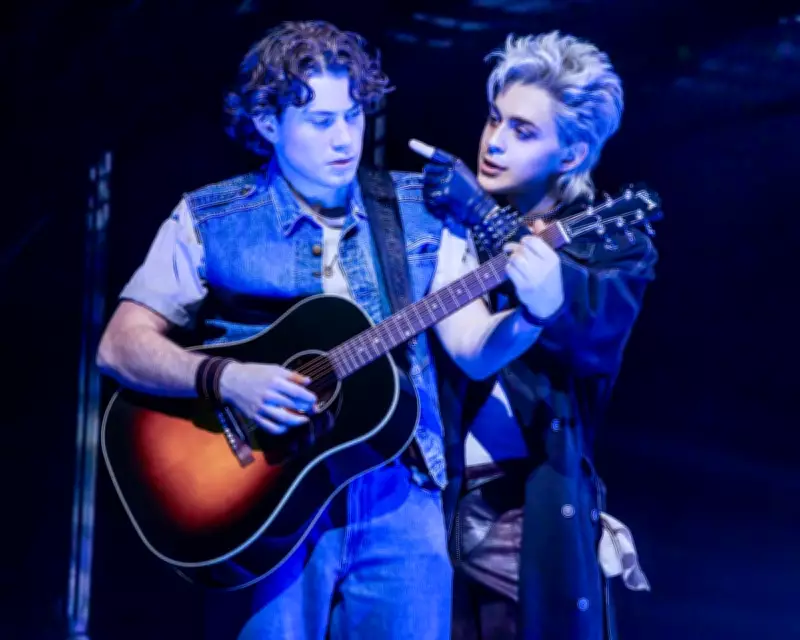
The stage adaptation of the 1987 cult classic film The Lost Boys has arrived on Broadway, but despite its technical prowess, the musical fails to capture the vampiric bite of the original. Directed by Michael Arden, the production at the Palace Theatre in New York offers a visually stunning experience, but the songs by the rock band the Rescues lack the energy and edge needed to elevate the show.
A Faithful Yet Flawed Transfer
The story follows the Emerson family—older brother Michael (LJ Benet), younger Sam (Benjamin Pajak), and their guilt-ridden mother Lucy (Shoshana Bean)—as they flee domestic troubles in Arizona and move to Lucy's hometown of Santa Carla, California. The children soon discover that the punk-infused boardwalk conceals a vampire lair. Michael is drawn to Star (Maria Wirries), unaware that vampire leader David (Ali Louis Bourzgui) intends to turn him. Sam, meanwhile, teams up with the Frog brothers (Miguel Gil and Jennifer Duka), amateur vampire hunters. The show retains iconic elements like the saxophone player, now a boardwalk eccentric.
Visual Spectacle Over Substance
Director Michael Arden excels in recreating the film's SoCal gothic atmosphere, using neon lighting, pyrotechnics, and aerial stunts to create an immersive world. The famous railway bridge scene, where Michael falls as part of a vampire initiation, benefits from the physicality of live performers. However, some choices feel excessive, such as lowering a giant Arizona postcard for a brief driving scene. The production often resembles a top-tier venue hosting a mediocre band.

The cast delivers sincere performances, avoiding camp despite the material's period setting. Modern updates include hints of Sam's homosexuality and the Frog brother played by a woman (Duka), who insists on male pronouns. Bourzgui channels Kiefer Sutherland's charisma as David, but the overall effect is more tribute band than original.
Limp Songs Undermine the Show
The musical's biggest weakness is its score. The Rescues' songs lean toward emo power ballads rather than goth-rock or punk, with generic Broadway yearning replacing vampire desire. The lyrics are clichéd, and the music lacks bite. While the show avoids jukebox musical pitfalls, it also fails to evoke the film's era or fun. The sax player never solos during a song, a telling omission.
The limp songs foreshadow a more emotional conclusion than the material supports. Streamlining the plot—omitting one character—helps focus the narrative, but redirecting attention to Lucy's parental concerns dilutes the youth-culture vitality. The high production values may leave audiences craving style over substance, but the show ultimately chooses sap over style.






