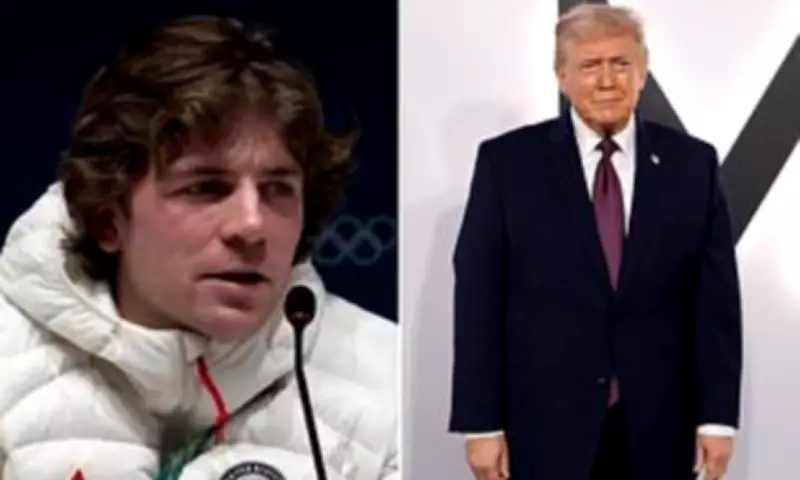
Trump Launches Scathing Attack on US Olympic Skier Over Political Remarks
Former President Donald Trump has launched a fierce offensive against a member of the United States Winter Olympic team after the athlete voiced concerns about representing America's current political climate. The controversy has erupted as American competitors face questions about the nation's political environment during the games in Milan and Cortina d'Ampezzo.
Athletes Navigate Political Questions at Global Event
American athletes participating in the Winter Olympics have found themselves fielding inquiries about their perspectives on the United States' shifting political landscape. Since Trump's return to office for a second term, the country's political climate has undergone significant transformation, prompting varied responses from competitors.
While some team members have addressed these sensitive topics with diplomatic caution, others have adopted a more direct approach in expressing their views. This divergence in response strategies has created a complex backdrop for American participation in the international sporting event.

Freestyle Skier Voices Mixed Feelings About Representation
Hunter Hess, a 27-year-old freestyle skier from Oregon preparing for halfpipe competition, revealed his conflicted emotions about representing the United States during what he described as a challenging period in the nation's history. "It's a little hard. There's obviously a lot going on that I'm not the biggest fan of, and I think a lot of people aren't," Hess stated during interviews.
The athlete further clarified his position by explaining, "Just because I'm wearing the flag doesn't mean I represent everything that's going on in the US." These comments have sparked intense debate about the relationship between athletic representation and political alignment in international competition.
Former President Fires Back on Social Media Platform
Trump responded forcefully through his Truth Social account, declaring that Hess should not compete for the United States if he planned to voice opposition to the current administration. The former president specifically targeted the freestyle skier, labeling him a "real loser" in his social media post.
"U.S. Olympic Skier, Hunter Hess, a real Loser, says he doesn't represent his Country in the current Winter Olympics," Trump wrote, offering a slightly altered interpretation of Hess' original statement. He continued with strong criticism, stating, "If that's the case, he shouldn't have tried out for the Team, and it's too bad he's on it. Very hard to root for someone like this. MAKE AMERICA GREAT AGAIN!"
Social Media Backlash Intensifies Controversy
Hess' comments ignited immediate backlash across social media platforms, with Trump's supporters leading the charge against the athlete and fellow Team USA skier Chris Lillis, who had expressed similar sentiments. The criticism ranged from calls for removal from the team to broader complaints about political expression in sports.
One social media user declared, "You shouldn't be representing the U.S.A. if you hate it here," while another demanded, "Chris Lillis and Hunter Hess should be sent back home immediately. They have insulted our entire nation on the world stage and should no longer be allowed to represent us."
The controversy has prompted broader discussions about the appropriate role of political expression in international athletic competition, with some commentators threatening to withdraw support from Team USA entirely. "I won't watch the Olympics anymore or support @TeamUSA if they can't just be athletes and proudly represent their country on the world stage without opining their own stances on political issues that have no place in sports," one critic wrote.
Additional comments included demands for immediate disciplinary action, with one person stating, "I'd say, 'you're off the team. Pack up and get your a** home.' No ifs, ands, or buts," while another criticized what they perceived as "anti-ICE, liberal athletes" at the Olympic Games.

The situation continues to develop as the Winter Olympics progress, raising questions about how athletes should navigate political discussions while representing their nations on the global stage. The incident highlights the ongoing tension between athletic representation and personal political beliefs in contemporary international sports.