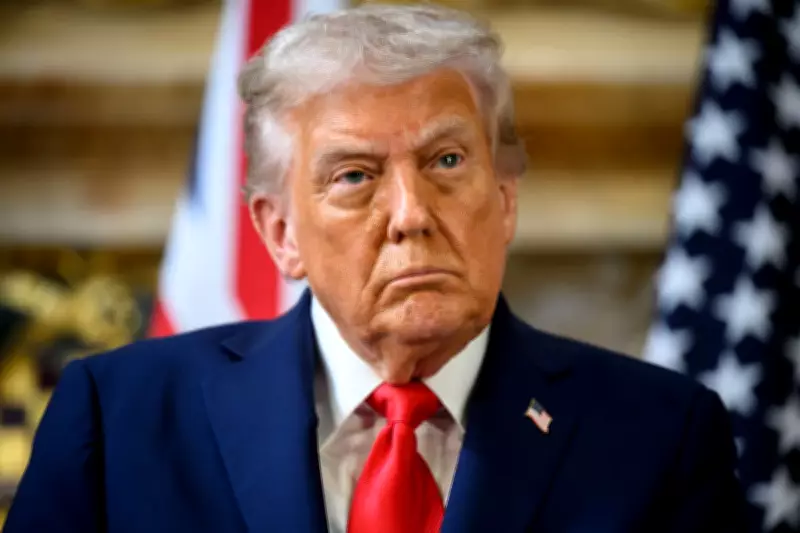
Former United States President Donald Trump has publicly declared that it would not be appropriate for Iran's national football team to participate in this summer's World Cup, citing significant safety concerns for the players. Trump emphasized that his warning stems from a genuine belief that their presence could jeopardize their own lives and security during the tournament.
Escalating Tensions and Security Fears
The backdrop to Trump's statement involves heightened military tensions between the US, Israel, and Iran. In late February, the US military and Israel conducted air strikes on Iran, which triggered retaliatory actions from Iran targeting Israel and Middle Eastern nations hosting US bases, such as Saudi Arabia and the United Arab Emirates. This volatile geopolitical climate has raised alarms about the feasibility of Iran's involvement in an international sporting event hosted primarily in the United States.
Iran's Sports Minister Casts Doubt on Participation
Earlier this week, Iran's sports minister, Ahmad Donyamali, appeared to rule out the possibility of the country competing in the World Cup finals. He stated that the necessary conditions for participation do not currently exist, though he did not elaborate on specific reasons. This announcement came just a day before Trump's remarks, adding to the uncertainty surrounding Iran's plans.

Trump's Social Media Statement
On Thursday, Trump took to Truth Social to express his views, writing: "The Iran National Soccer Team is welcome to The World Cup, but I really don't believe it is appropriate that they be there, for their own life and safety. Thank you for your attention to this matter!" His comments directly contrast with earlier assurances from FIFA President Gianni Infantino, who had reportedly received promises from Trump that Iran would be welcomed at the tournament.
FIFA's Position and Tournament Logistics
FIFA has yet to respond to requests for comment regarding Iran's participation in light of both Donyamali's and Trump's recent statements. The organization faces a delicate balancing act between ensuring the safety of all participants and maintaining the integrity of the global event. Iran is scheduled to play all three of their group stage matches in the United States, with their campaign set to begin against New Zealand in Los Angeles on June 15. Additionally, there is a potential scenario where Iran could face the United States in the last 32 if both teams finish second in their respective groups.
Implications for International Sports Diplomacy
This situation highlights the complex interplay between politics and sports, particularly in high-profile events like the World Cup. The involvement of a former US president in commenting on a team's participation underscores how geopolitical conflicts can spill over into the sporting arena, potentially affecting athlete safety and tournament operations. As tensions persist, stakeholders including FIFA, national governments, and security agencies will need to collaborate closely to address these challenges and ensure a secure environment for all competitors and spectators.