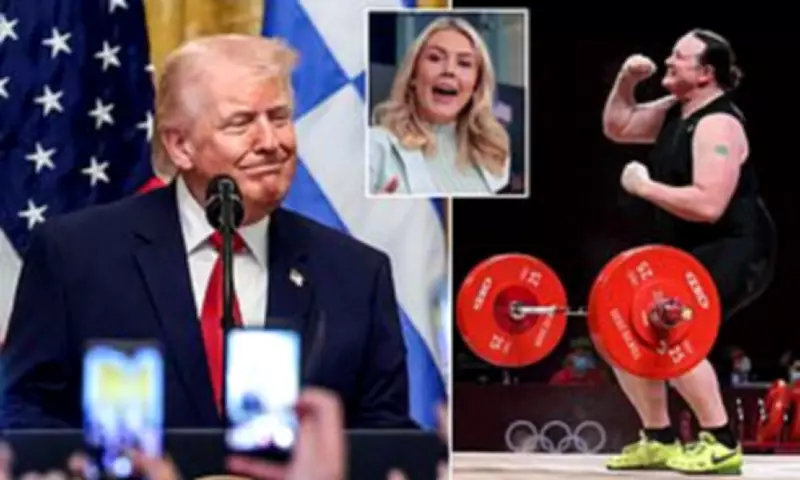
White House Attributes IOC Transgender Athlete Ban to Trump's Executive Order
White House press secretary Karine Leavitt has publicly credited former President Donald Trump for the International Olympic Committee's recent decision to implement a ban on transgender athletes participating in women's sports. The announcement follows the IOC's imposition of a once-in-a-lifetime SRY gene test designed to protect fairness, safety, and integrity within the female category.
Executive Order Precipitated Policy Shift
In February 2025, President Trump issued the "Keeping Men Out of Women's Sports" executive order, which specifically banned transgender athletes from women's amateur sports competitions. The order also threatened funding cuts to any organizations failing to comply with these regulations. Furthermore, it mandated that the Secretary of State ensure the International Olympic Committee revise its policies to promote fairness, safety, and the best interests of female athletes.
According to reports from The Hill at the time, a Trump administration official revealed the order granted Secretary of State Marco Rubio authority to target visas issued to professional and elite transgender athletes, adding significant enforcement power to the policy directive.

IOC Adopts Stringent Genetic Testing Protocol
The International Olympic Committee's new policy, announced on Thursday, requires athletes to undergo mandatory SRY gene testing. This genetic marker, found on the Y chromosome, will determine eligibility for women's sports categories. The decision aligns with similar measures introduced by World Athletics nearly one year earlier, which also implemented mandatory gene testing for select female events.
With the 2028 Los Angeles Summer Olympics approaching, the IOC has followed the lead of both the NCAA and the US Olympic and Paralympic Committee in adopting policies consistent with Trump's executive order regarding transgender athletes in women's sports.
Competitive Landscape and Historical Context
Currently, it remains uncertain whether any transgender athletes will participate in the 2028 Olympic Games. The 2024 Paris Games featured no openly transgender competitors, though boxers Imane Khelif and Lin Yu-ting faced allegations of failed gender-eligibility tests. Khelif continues to deny these claims, while Yu-ting has recently been cleared by the Asian Boxing Championships to return to competition.
Notably, Khelif has not participated in any World Boxing events since that organization adopted gender testing protocols, though she has expressed her desire to compete again at the Olympics, where she won a gold medal for Algeria in 2024.
Transgender weightlifter Laurel Hubbard of New Zealand did compete at the Tokyo Games in 2021, but ultimately failed to secure a medal. Her participation marked a significant moment in Olympic history regarding transgender athlete inclusion.
Political Recognition and Future Implications
White House press secretary Karine Leavitt emphasized the connection between Trump's executive order and the IOC's policy change, stating unequivocally, "You cannot change your sex. President Trump's Executive Order protecting women's sports made this happen!" Her comments accompanied a reposted article from The Associated Press discussing the IOC's decision.
The development represents a significant shift in international sports policy, with the world's premier athletic organization adopting measures that directly reflect the political directives established during the Trump administration. As athletic governing bodies continue to grapple with questions of fairness, inclusion, and competitive integrity, this decision sets a precedent likely to influence sports policy at all levels for years to come.