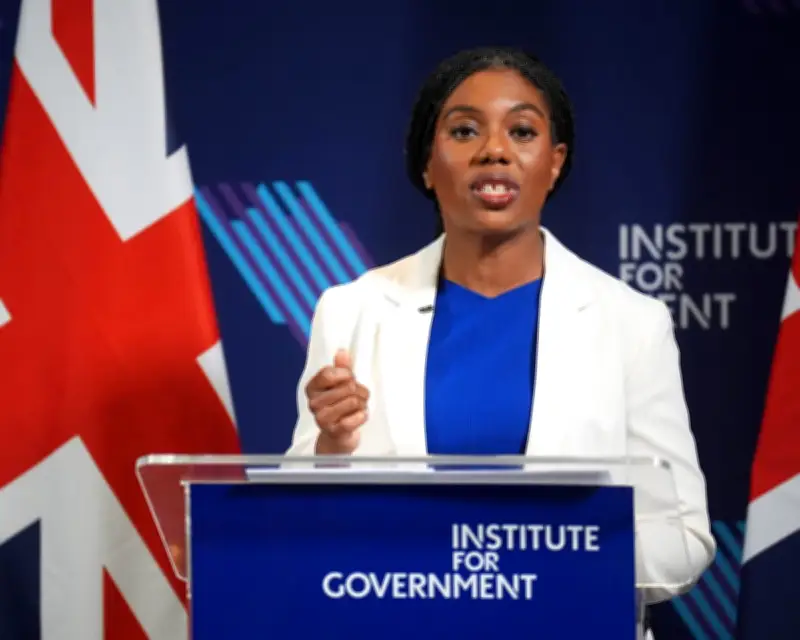
Kemi Badenoch, the Conservative leader, has pledged to abolish the public sector equality duty, arguing it encourages public bodies to adopt 'dangerous and divisive agendas' over common sense. However, legal experts warn that removing the duty could increase discrimination and legal uncertainty.
What is the public sector equality duty?
Introduced after the Stephen Lawrence inquiry, the duty requires public bodies like councils, police, and hospitals to consider the impact of their decisions on different groups, including race, sex, and disability. It aims to eliminate discrimination, advance equality of opportunity, and foster good relations.
Badenoch's criticism
In a speech on Tuesday, Badenoch cited examples like the Bank of England replacing historical figures on banknotes with wildlife as evidence of the duty leading to nonsensical diversity policies. She called for a return to 'common sense'.

However, experts say her claims misunderstand the duty. Karon Monaghan KC, a barrister specialising in equality law, explained that the duty only requires public bodies to 'have due regard'—not to implement specific policies. For instance, a council cutting library services must consider impacts on disabled people and young people.
Expert warnings
Colm O'Cinneide, professor at University College London, said the duty imposes a positive obligation to tackle problems proactively, beyond basic legal compliance. He called the criticism 'cherrypicking individual issues'.
Estelle du Boulay of Rights of Women noted the duty has been vital for improving accountability for domestic abuse survivors. The TUC's Paul Nowak accused Badenoch of wanting to 'legalise discrimination'.
Broader context
Badenoch's proposal targets only the public sector equality duty, but Reform UK has called for abolishing the entire Equality Act 2010. Without it, Monaghan warned, employers could refuse jobs based on race, fail to adjust for disabled workers, or discriminate against pregnant women.
The next general election, expected in three years, may decide the future of these protections.