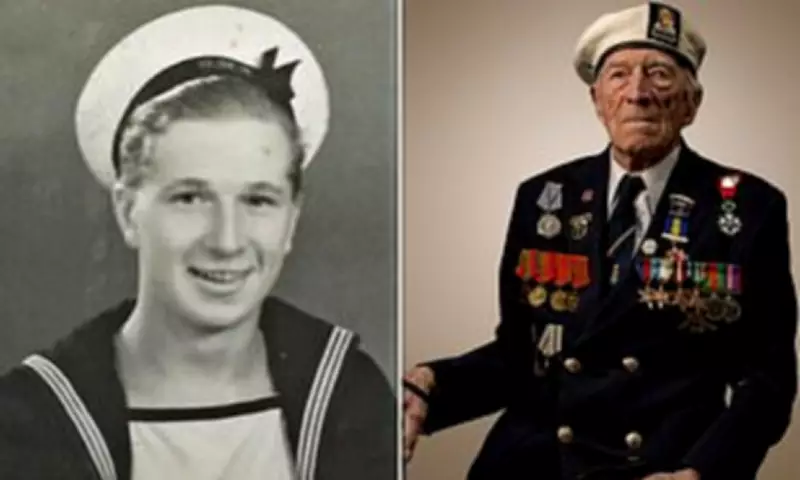
A World War Two hero who survived D-Day but claimed the sacrifice 'wasn't worth it' because of the state of the country has died at the age of 101. Alec Penstone, from Shanklin, Isle of Wight, dedicated his life to military service and patriotism.
Early Life and War Service
Born in the East End of London in 1925, Mr Penstone was just 15 when war broke out. He volunteered as an air raid messenger during the Blitz, pulling victims from bombed buildings. In 1943, he joined the Royal Navy, fulfilling a promise to his father not to serve in the trenches after the horrors of World War One.
He trained in submarine detection and served with distinction in the Arctic Convoys to Russia aboard HMS Campania. During D-Day in June 1944, he was on constant watch for torpedoes, mines and U-boats. He later described the missions as 'hell on earth'.

Post-War Life and Controversy
After the war, Mr Penstone worked as an electrician and ran his own business. He became the UK's oldest poppy seller at age 100. Last year, he shocked the nation by telling ITV's Good Morning Britain that the sacrifice 'wasn't worth it' given Britain's decline, saying the country 'has gone to rack and ruin'.
'What we fought for was our freedom, but now it's a darn sight worse than when I fought for it,' he said. He stressed he was not against foreigners but believed people were too self-centred. Despite his decorated career, he insisted 'the heroes are all the dead ones'.
Family and Later Years
He married his wife Gladys in July 1945, two days before returning to duty in the Far East. They had a daughter, Jacqueline, and were married for 77 years until Gladys died in 2022. Mr Penstone said her ashes rested on his mantelpiece and he spoke to her nightly.
In 2024, he returned to Normandy for the 80th anniversary of D-Day, meeting King Charles and Queen Camilla. He received the French Legion of Honour but refused to wear his Russian Ushakov medal due to Putin's invasion of Ukraine.
Mr Penstone died at Mountbatten Hospice in Newport on Thursday, surrounded by loved ones. His autobiography, My Ten and a Half Arctic Convoys: and my Life and Times, preserves his memories of the war and those who never returned.