Minnesota residents whose loved ones were killed by police have expressed outrage over the state Republican Party holding a public prayer for Derek Chauvin, the former police officer imprisoned for murdering George Floyd.
Community Reaction
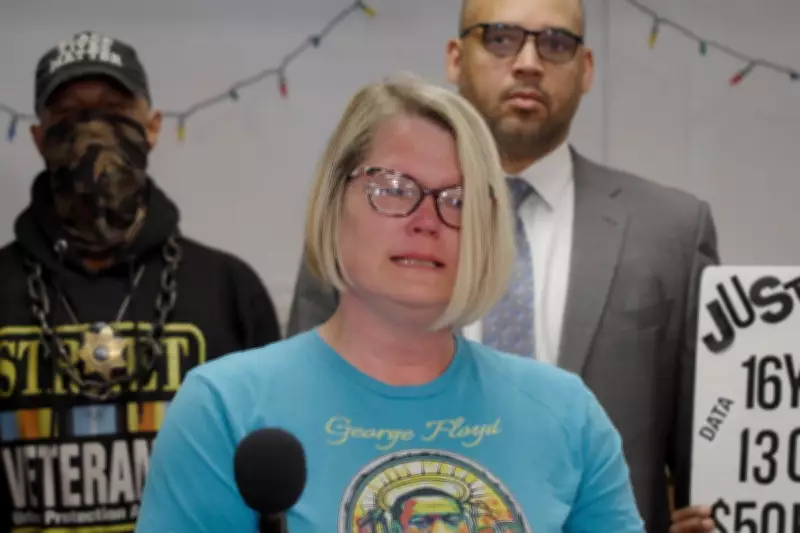
Valerie Castile, whose son Philando Castile was shot and killed by a Minnesota police officer in 2016, voiced her anger. "That is the most hurtful thing you can do," she said. "You give a moment of silence to a murderer? Come on."
Castile was among several community members who spoke at a news conference organized by the Twin Cities Coalition For Justice. The Minnesota Republican Party held a moment of silence for Chauvin at its nominating convention last weekend, sparking intense backlash.

Backlash and Condemnation
Racial justice groups, civil rights advocates, and Democratic officials condemned the action, accusing party officials of blindly supporting law enforcement and disrespecting George Floyd and his family. Chauvin has been in federal prison since 2021 after being convicted of murdering Floyd in 2020.
The moment of silence occurred days after the sixth anniversary of Floyd's death. The Minnesota GOP stated that it was a spontaneous motion from the convention floor, not part of the official program or a statement from party leadership.
Ongoing Pain
Castile emphasized that even if only one person participated, it was still hurtful. "I am proud of the ones who did not do the moment of silence," she said. "Those that did, they should be reprimanded in some fashion."
Minnesota Attorney General Keith Ellison, who led the prosecution of Chauvin, said he was "heartbroken and frankly shocked" by the prayer. He added, "This decision dishonors the memory of George Floyd and wounds his loved ones all over again."
Ben Crump and Antonio Romanucci, attorneys for Floyd's family, expressed disgust and demanded the GOP retract the moment of silence and apologize. Terrence Floyd, George Floyd's brother, said he was "glad to see people are still fighting with us for complete justice."
Pattern of Support
The moment of silence for Chauvin fits a pattern where conservatives react to police violence with "back the blue" initiatives. Similar cases include support for officers in the killings of Michael Brown, Laquan McDonald, and Eric Garner, where law enforcement unions often recast prosecutions as politically motivated.
Although legal outcomes vary, most prominent examples of support for officers charged in killings do not result in overturned convictions.
Associated Press editor Aaron Morrison in New York City contributed to this report.