A few years ago, while managing Hearts, Robbie Neilson criticized Scottish referees and questioned 'the old Glasgow long blink'. The implication was clear: when matches involve Celtic or Rangers against other teams, referees suffer from selective vision.
Those comments were made in 2021, and Neilson later received a touchline ban after losing his temper following a match against Rangers. When Scottish football introduced VAR the following year, it was meant to eliminate these blind spots and end conspiracy theories.
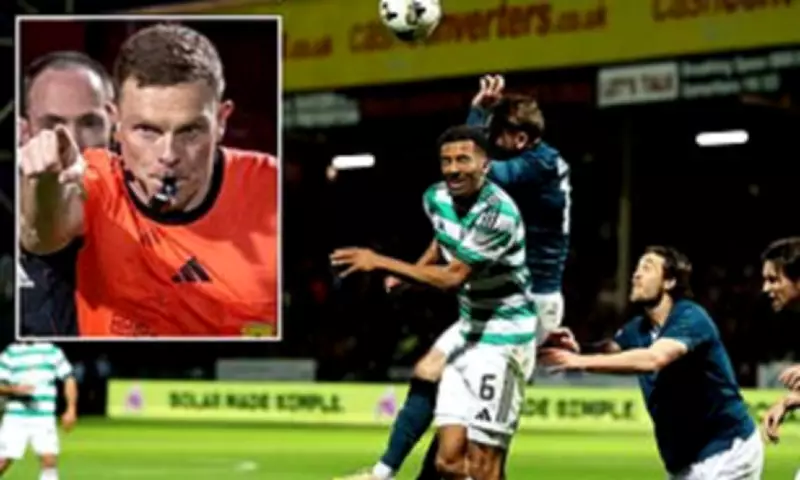
However, given recent events, few Hearts fans believe it has succeeded. The old Glasgow long blink hasn't disappeared; it has simply gone digital. Celtic were awarded a penalty after Nicholson was judged to have handled the ball.

The fallout from Wednesday night at Fir Park has been explosive. Opinions on the stoppage-time penalty incident have poured in from all sides. The overwhelming majority agree it was never a penalty. When a verdict is so emphatic from all corners, it tells its own story. The only people who believe it was a penalty are those who benefit from it—namely, Celtic supporters.
Derek McInnes branded the decision 'disgusting'. These comments could land him in trouble, with further action pending from the SFA's compliance officer. McInnes was not scheduled to speak before Hearts' title showdown with Celtic tomorrow, but due to the uproar, he will hold another media conference this morning. Don't expect him to back down. The Hearts manager could charge admission fees to those attending, as there may be more fireworks.
It was a scandalously poor decision. Referee John Beaton and VAR Andrew Dallas combined to produce perhaps the worst VAR decision in history—and that is a crowded field. With the world watching Scottish football as a thrilling title race reaches its climax, the utter ineptitude of referees has turned the league into a laughing stock.
There was always a danger this might happen—that an absolute clanger could decide the championship. That is the great shame in all of this. One of the greatest seasons in history is now likely overshadowed by blurry, pixelated pedantry and hopeless referees. All the thrills and spills of the past nine months are mired in controversy, and the outcome may have been decided by rank-rotten refereeing.
Yes, Hearts still have the power to go to Celtic Park and get a result tomorrow. They are good enough, fueled by a burning sense of injustice. But one cannot overstate how much Wednesday's decision changed the landscape. Had results stayed as they were, Hearts were on the brink of glory—poised to take a three-point lead to Parkhead on the final day, needing only to avoid a three-goal defeat to be champions. It is a massive change.
This is clearly not what VAR was introduced for. There was nothing clear and obvious about the incident, nothing warranting Beaton being sent to the pitchside monitor. Yet, in about 20 seconds, presented with inconclusive replays and with a league title on the line, he pointed to the spot.
Given some decisions that have gone against Hearts recently, McInnes could be forgiven for feeling the world is against them. Jamestown Analytics rate players in various aspects of their game, but if their system were applied to Scottish referees, few would be endorsed to referee a game between Cumnock Juniors and Johnstone Burgh.
But there is a bigger picture. The decision was an absolute stinker, beyond doubt unless you wear green-tinted spectacles. The wider point is where this leaves Scottish football and its relationship with VAR. This must be a seminal moment—a catastrophic injustice underscoring the need for radical change or for the technology to be scrapped altogether.
It cannot go on like this. Clubs voted to introduce VAR; they can vote to scrap it. The argument that the genie is out of the bottle is nonsense. If clubs unite or a few withdraw funding, there is no reason it couldn't be scrapped. Clubs in the Norwegian top flight have already done so. Scottish football is not wedded to VAR.

One argument for VAR was that it would help referees remain relevant to UEFA and FIFA. But that is nonsense; they aren't relevant because they are fundamentally not good enough, as evidenced by the latest FIFA snub for this summer's World Cup. VAR has only amplified the issue. The technology meant to drag Scottish referees into the big time has done the opposite, leaving them looking more amateurish and error-prone.
It is now at a point where few players, managers, or supporters want it to remain. The crux is that VAR in Scottish football is not improving; it is getting worse. These are not teething problems. It has lengthened games, killed momentum and euphoria, and multiplied grievances. It has amplified the dreadful standard of officiating and potentially savaged an otherwise brilliant season.
If any good can come from Wednesday night, it is that Scottish football has embarrassed itself on the world stage. If that is not sufficient reason for serious changes, nothing ever will be.