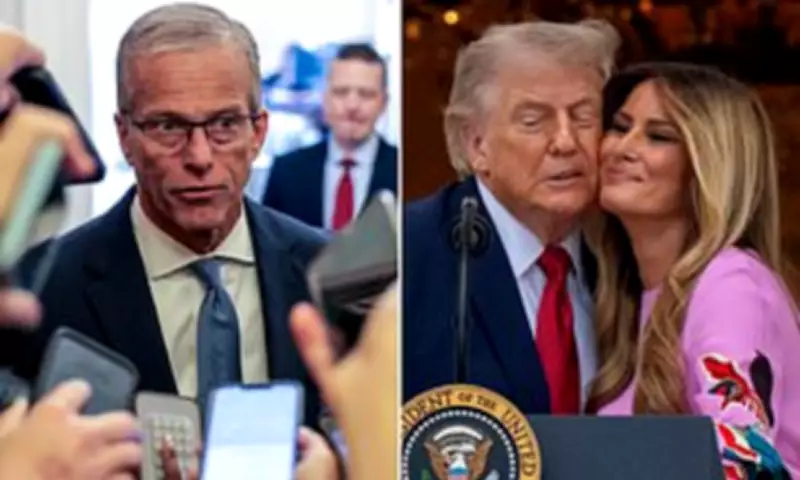
Donald Trump's most powerful senate ally has refused to fall in line behind the President. Senate Majority Leader John Thune declined to declare victory Monday after Trump's fund for prosecuted political allies was frozen, cautioning that his own party remains dissatisfied. The decision marked a significant reversal for Trump, as even his most ardent supporters in the Senate had expressed anger over the so-called 'Anti-Weaponization Fund.'
Justice Department Halts Payouts
The Justice Department confirmed it would comply with a federal judge's order halting any payouts until at least June 12. This retreat followed a surprise ruling on Friday that reopened Trump's underlying lawsuit against the IRS concerning the leak of his tax returns. However, Thune remains cautious and is tasked with navigating delicate negotiations with Democrats as Republicans shift focus to a pressing $70 billion funding package for immigration enforcement agencies.
Thune's Cautious Stance
Thune told reporters: 'The way the statement is worded, I think it's clear that they're not proceeding with the fund, but obviously whether that's sufficient to satisfy a number of our members is something we're still sorting through.' When asked if he feared Trump might veto the funding bill if the fund was banned, Thune gave a sharp four-word reply: 'Oh yeah, don't you?' The major risk for Republicans is a barrage of Democratic amendments forcing politically toxic votes to ban the fund outright, just months before the midterm elections.

Republican Allies Demand More
Even Trump's reliable allies are pushing for further action. Senate Judiciary Chairman Chuck Grassley stated the half-step was insufficient, telling reporters: 'It's pretty clear that the president has to say very explicitly that there's not going to be a weaponization fund.' Louisiana Senator John Kennedy, a staunch Trump supporter, was blunter: 'The reconciliation bill looks like a broken arm with the bones sticking out.' He added: 'Saying you're going to follow a court order doesn't tell me anything. You have to follow the court order.'
Court Order and Fund Status
U.S. District Judge Leonie Brinkema barred the administration last week from taking any further action to create or operate the 'Anti-Weaponization Fund' ahead of a June 12 court hearing. In a statement on X, the Justice Department said it 'disagrees strongly' with Brinkema's decision but 'will abide by the court's ruling.' The department described the fund as 'established in order to make up for the tremendous abuse, harm, and hate unfairly shown to so many people,' and stated it is 'open to anybody who was so weaponized, targeted, or persecuted, whether they were Democrat, Republican, Conservative, Independent, or otherwise.' Reports indicate the Trump administration plans to drop the fund, with one source telling Axios: 'It's dead for now.'
Implications for Trump
Scrapping the fund may not undo the most valuable part of the deal for Trump. The settlement granted the President, his sons, and businesses immunity from future IRS audits, and it remains unclear whether dropping the fund would strip that protection. The White House referred requests for comment to the Justice Department. The $1.776 billion fund was created by the DOJ as part of an extraordinary settlement of Trump's civil lawsuit against the IRS over the leak of his tax returns by a former government contractor.

Controversy and Legal Challenges
The administration claims the fund is intended to compensate people who suffered from government 'weaponization' and 'lawfare'—terms Trump uses for what he alleges was politically motivated targeting of conservatives and his supporters. However, opponents argue the fund has no clear legal basis, little public oversight, and could be used to reward loyalists, including defendants convicted of crimes related to the January 6, 2021 assault on the U.S. Capitol by Trump supporters. On his first day back in office last year, Trump pardoned more than 1,500 people convicted of attacking Congress in an effort to overturn Joe Biden's 2020 election victory. Brinkema's order came after a lawsuit by a group of plaintiffs who argued that the fund amounted to a 'collusive agreement' between Trump and his administration, with 'no congressional authorization, no basis in law, and no accountability.' The lawsuit is one of several legal challenges seeking to stop the fund, including cases brought by law enforcement officers who clashed with rioters and by government oversight groups.