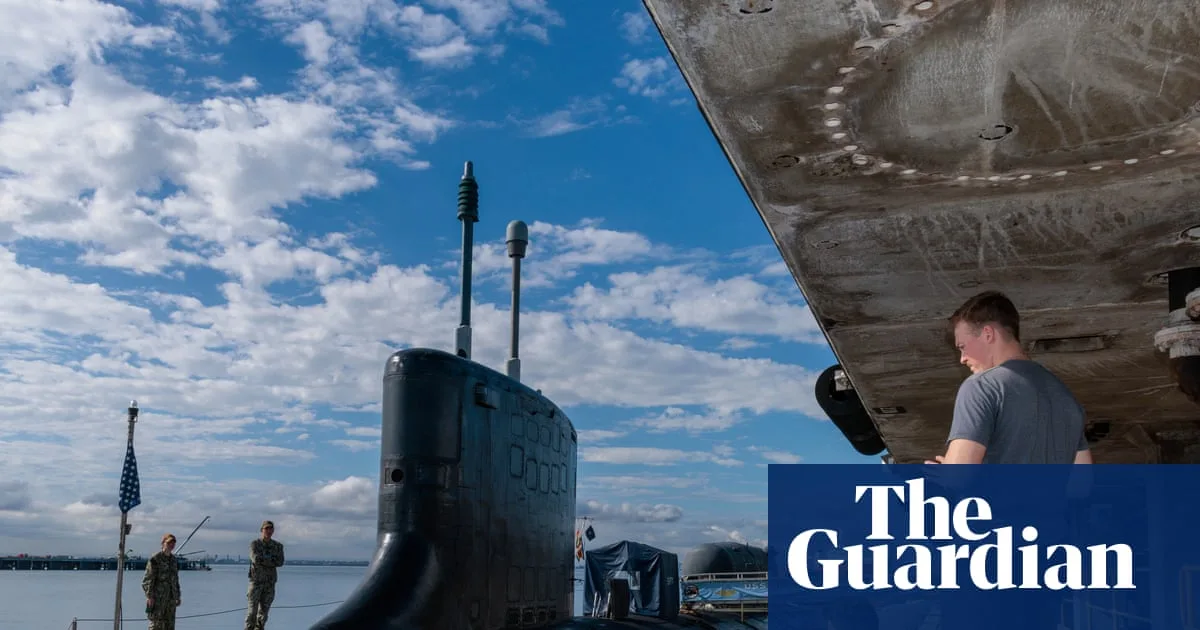
Australia will purchase three secondhand Virginia-class nuclear-powered submarines from the United States under the Aukus pact, abandoning plans to buy at least one new model. Defence Minister Richard Marles described the shift as a 'cost-effective' decision that prioritises simplicity, though he acknowledged it would not fundamentally alter the overall cost of the multi-decade deal, estimated at over A$370 billion.
Speaking at the Shangri-La Dialogue in Singapore, Marles said the move to three 'in-service' submarines would streamline training and operations for Australian crews, who will now operate only one type of US boat before the bespoke SSN-Aukus class enters service around 2042. The first secondhand Virginia-class sub is expected to arrive in Australia in 2032, with subsequent deliveries every four years.
Marles downplayed the cost of Aukus as 0.15% of GDP over the program's lifetime. However, critics have questioned the deal's value. Marcus Strom of Labor Against War called it 'dodgy Pete Hegseth's second-hand subs as significant savings', while Arthur Rorris of the South Coast Labour Council argued the proposed nuclear submarine base at Port Kembla would effectively be ceded to the US Navy.

To bridge the gap until the Aukus fleet arrives, Australia will extend the service life of its six Collins-class submarines by ten years. Meanwhile, US shipyards are struggling to meet production targets, currently building 1.1 to 1.2 Virginia-class boats per year against a required rate of 2.33. Marles expressed confidence that production rates would improve, noting that around 200 Australian tradespeople are working at Pearl Harbor to support US Navy Virginia-class operations.
Under the second pillar of Aukus, Marles announced joint development of new weapons and sensors for underwater drones to protect undersea cables and conduct surveillance. US Defence Secretary Pete Hegseth welcomed Australia's commitment to accelerate infrastructure projects at Australian bases, part of increased 'burden sharing' as President Donald Trump pushes allies to boost defence spending beyond 3% of GDP.