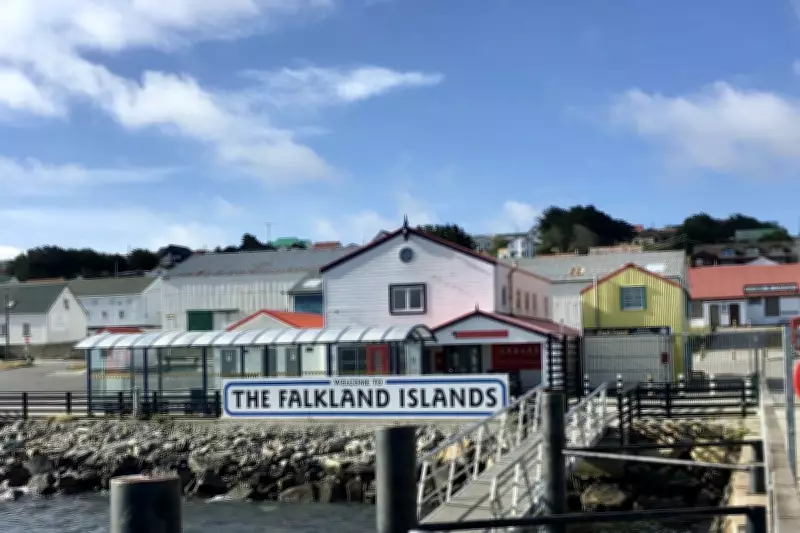
Downing Street has insisted that the sovereignty of the Falkland Islands is "not in question" following reports that the US administration may reconsider its position on the territory. A Pentagon email, first reported by Reuters, outlined potential options for the Trump administration to penalise NATO allies who refused to join US-Israeli strikes against Iran. Among the suggestions was a reassessment of US diplomatic support for "imperial possessions" such as the Falklands.
UK Government Response
A No 10 spokesman stated: "The Falkland Islands have previously voted overwhelmingly in favour of remaining a UK overseas territory, and we’ve always stood behind the islanders’ right to self-determination and the fact that sovereignty rests with the UK. The question of the Falkland Islands and the UK’s sovereignty and the islanders’ right to self-determination is not in question, and we’ve expressed that position clearly and consistently."
The Foreign Office has considered the potential shift in US policy as a "hypothetical scenario" but remains vigilant. The row is the latest sign of strain in the US-UK relationship, as King Charles and Queen Camilla prepare for a state visit to Washington on Monday. The No 10 spokesman expressed confidence that the visit would showcase the strength of bilateral ties.

Falkland Islands Government Statement
The Falkland Islands Government released a statement emphasising that self-determination is a fundamental human right, enshrined in the UN Charter. It referenced the 2013 sovereignty referendum, where 99.8% of voters, on a 92% turnout, chose to remain a UK Overseas Territory. "The Falkland Islands has complete confidence in the commitment made by the UK Government to uphold and defend our right of self-determination," the statement read.
Historical and Political Context
Argentina has long claimed sovereignty over the Falklands, invading in 1982 before being defeated in a brief but bloody conflict. US President Donald Trump is an ally of Argentine President Javier Milei, and his relationship with UK Prime Minister Sir Keir Starmer has deteriorated since the Iran crisis began. Starmer has restricted US use of British military bases for offensive operations against Iran, allowing only defensive actions after Tehran's retaliation.
The US State Department describes the Falklands as "administered by the United Kingdom, claimed by Argentina," using the Spanish name Islas Malvinas alongside the English name.
Political Reactions
Ben Judah, a former special adviser to Foreign Secretary David Lammy, expressed concern about the Milei issue. He suggested converting overseas territories into "overseas kingdoms" with MPs in Westminster. "If this were already the case, His Majesty would be visiting Washington to see Trump this week as King of the Kingdom of the Falklands," he said.
The Pentagon email expressed frustration at NATO allies' reluctance to grant access, basing, and overflight rights for the Iran war. It even suggested suspending Spain from NATO over its refusal to allow bases or airspace for attacks on Iran. Downing Street backs Spain's membership of the "absolutely critical" alliance.
Reform UK's Nigel Farage said he would raise the issue personally with President Milei, stating: "This is utterly non-negotiable. There is no way we’re even going to have a debate about the sovereignty of the Falkland Islands."
Tory leader Kemi Badenoch called the US stance "absolute nonsense," asserting that the Falklands are British territory. Liberal Democrat leader Sir Ed Davey urged the cancellation of the King's state visit, calling Trump "unreliable and damaging."