

Mississippi's Unvarnished Historical Exhibition Stands in Stark Contrast to Federal 250th Anniversary Efforts
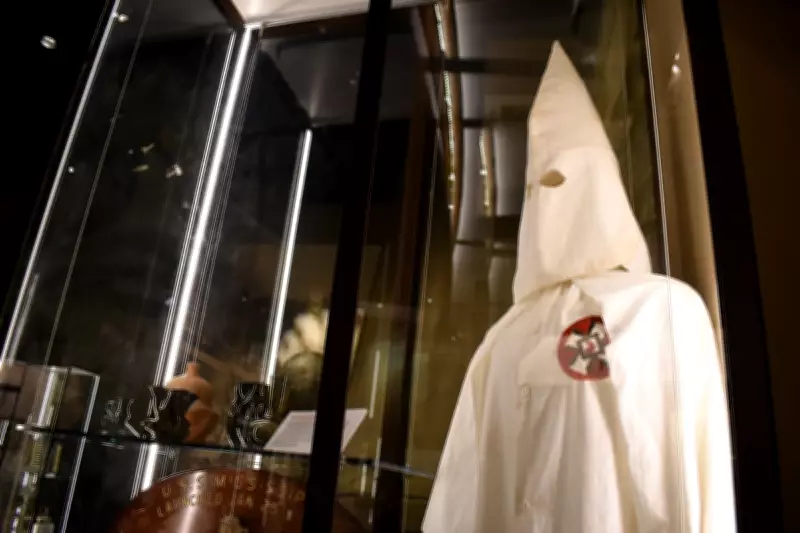
As the United States commemorates its 250th anniversary, the nation's complex history is being interpreted through strikingly different lenses at state and federal levels. Mississippi has launched a remarkably candid historical exhibition that directly confronts the state's brutal legacy of racial violence and oppression, creating a profound divergence from the Trump administration's efforts to reshape national historical narratives.
The Two Mississippi Museums: A Monument to Uncomfortable Truths
The Mississippi Civil Rights Museum and the adjoining Museum of Mississippi History, collectively known as the Two Mississippi Museums, have become central to the state's America 250 celebration. Located within sight of the state Capitol in Jackson, this massive complex houses thousands of exhibits and artifacts that refuse to sanitize Mississippi's difficult past.
Among the most powerful displays is the Lynching Victims Monolith, featuring glass panels etched with the names of more than 600 documented victims of racial killings in Mississippi. Each name tells a harrowing story, such as that of Malcolm Wright, beaten to death before his family in 1949 for the supposed offense of "hogging the road" with his mule-drawn wagon.

"That's just the people that we know about," remarked visitor Kiama Johnson from Monroe, Louisiana, fighting back tears as she contemplated the display. "Just imagine the ones that we don't. Imagine the ones that's never going to be written in history books."
Federal Historical Revisionism Under the Trump Administration
Mississippi's warts-and-all approach stands in stark opposition to developments at the national level since President Donald Trump returned to the White House in January 2025. The Trump administration has made easing discomfort around America's sometimes brutal history a central theme, beginning with an executive order eliminating diversity, equity and inclusion efforts in the federal government on his first day back in office.
A subsequent March 2025 executive order titled "Restoring Truth and Sanity to American History" has led to significant changes at federal institutions. These include altered or removed exhibits at national parks, changed signage, and renamed military bases. The Republican administration has also pressured federal institutions like the Smithsonian to present historical narratives less focused on discrimination and racial violence.
Mississippi's Commitment to Historical Integrity
Nan Prince, director of collections for the Mississippi Department of Archives & History, explained that the museums were conceived with clear instructions from scholars, politicians, staff members, and civic and civil rights groups: "Don't brush over anything, don't whitewash anything. Just tell the absolute truth."
This commitment extends throughout both museums. The History Museum opens with a gallery exploring Mississippi's Native American heritage, dominated by a 500-year-old canoe that serves as a vivid reminder of indigenous presence thousands of years before settlers arrived. The Civil Rights Museum immediately confronts visitors with audio exhibits featuring phrases like "We don't serve your kind," recreating the hostile environment of segregation.
Former Governor Haley Barbour, who helped advance the museum project, emphasized the approach: "We said at the beginning we weren't going to hide anything. We weren't gonna try to justify what was done. That's what the people wanted — to say, 'Look, we're not proud of this, but we're not going to deny it.'"
Confronting Infamous Chapters and Contemporary Relevance
The museums do not shy away from presenting Mississippi's most notorious racial violence cases, including the 1955 murder of 14-year-old Emmett Till. The exhibition details how Till was kidnapped, tortured, and killed after being accused of whistling at a white woman, with visitors able to view the .45-caliber pistol used in the killing. This murder became a pivotal moment in the Civil Rights Movement, particularly after Till's mother insisted on an open-casket funeral to show the nation her son's brutalized body.

Visitor reactions underscore the exhibitions' emotional impact. Lindsay Ward, 49, cried in the lobby after touring the Civil Rights Museum, noting that she had been raised in a sheltered environment in Salt Lake City. "We're not talking about hundreds and hundreds of years ago. We're talking 60 years. It just made me want to weep," she said. "It doesn't feel great, but it's important we understand what happened in the past."
Mississippi Made: Achievement Intertwined with Difficult History
For the America 250 celebration, the museums created "Mississippi Made," a temporary exhibition highlighting the state's products and achievements. Alongside displays of household cleaner Pine-Sol, Nissan and Toyota vehicles, space program contributions, and medical advances like the first human lung transplant, the exhibition includes a striking story quilt by renowned Mississippi quilter Hystercine Rankin.
This quilt tells the story of Rankin's father being killed in 1939, serving as what exhibit curator Jessica Walzer describes as "something kind of striking to remind us that Mississippi also has this very difficult history that a lot of people have been through."
Jackson Mayor John Horhn, who began pushing for the Civil Rights Museum as a state senator in 1999, praised Mississippi leaders' willingness to use the museums to tell the state's full story. "We still have issues, we still have a lot of challenges," he acknowledged. "But it's a demonstration that progress has been made."
As history teacher and social justice advocate Connor Lynch from Chicago observed, deciding how history will be told has always been a struggle. "All we have is human narrative, and that comes with bias," he noted. "I do believe that no matter what sort of erasure the country might be doing, we know the stories. We know the truth."
Mississippi's approach to its 250th anniversary commemoration thus represents not merely a historical exhibition, but a philosophical statement about historical integrity in an era of competing narratives about America's past.





