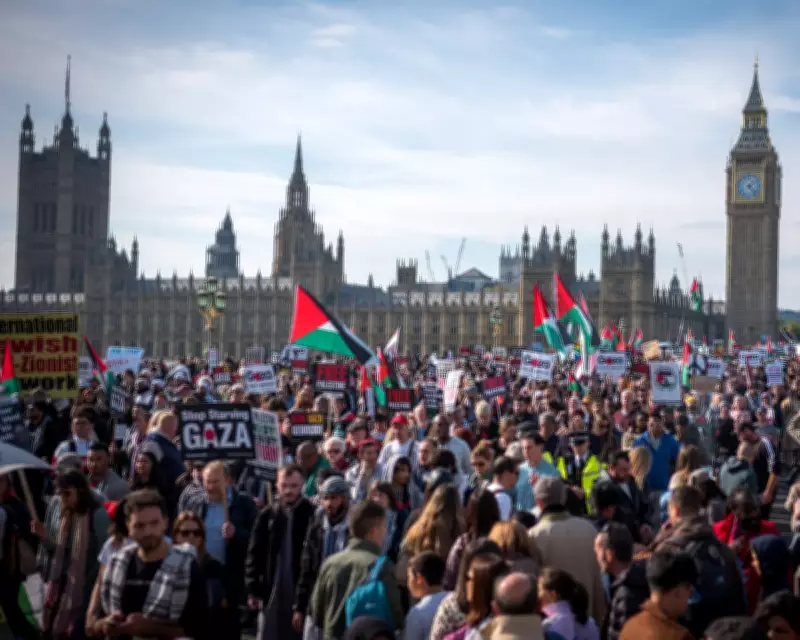
Some pro-Palestinian demonstrations could be halted, the prime minister has cautioned, as the UK's most senior police officer stated that the threat to the Jewish community is greater than ever before.
Starmer's Stance on Protest Chants
Keir Starmer indicated he wanted the language expressed on certain protest marches to face "tougher action" as he aimed to reassure British Jews following a series of attacks on their communities in recent weeks. "When you see, when you hear some of those chants – 'globalise the intifada' the one that I would pick out – then clearly there should be tougher action in relation to that," Starmer told BBC Radio 4's Today programme. While he stated he would not interfere in day-to-day policing, he acknowledged "there are instances" in which he would support stopping some protests entirely.
Met Police Commissioner's Warning
The prime minister's remarks came as Mark Rowley, the Metropolitan police commissioner, said a "dangerous and troubling" mix of hate crimes, terrorism, and hostile state involvement was converging in the UK, creating a terrifying atmosphere for British Jews. When asked if the threat to their community was greater than ever, he cited polling on antisemitic views, stating "that has to be true." He told the Times that Jewish communities feel the hostility, adding: "You can see that in how they talk, how it's making them change their lives. That's an appalling state of affairs."

Rowley explained that British Jews are on the "hate" list of every racist and extremist group, "whether you're extreme left, whether you're Islamist terrorist, whether you're rightwing terrorist, and some hostile states as well now with some sort of Iranian-related threats. There's a sort of ghastly Venn diagram that they're at the middle of." He added: "What troubles me is that this isn't just about a few racist idiots, this is standing on something that is more embedded in society that isn't being challenged. There's too much licensing of it in public debate."
Series of Antisemitic Incidents
There have been multiple incidents since the deadly antisemitic terror attack on Heaton Park synagogue last October. In March, four Jewish community ambulances were torched in Golders Green, north-west London, and the following month, a memorial wall for Iranian protesters was targeted. Between these events, several other attacks occurred, including an attempted arson at Finchley Reform synagogue in north London and items found near the Israeli embassy on the day a former Jewish charity building was attacked in Barnet, north London. In a separate incident, a court heard a teenage boy smashed the window of Kenton United Synagogue in Harrow before lighting a bottle and throwing it inside.
Prime Minister's Call for Reflection
Starmer stressed that his suggestion some protests could be banned was "not a discussion that has only been had this week in response to this awful incident. That is a discussion we've been having with the police for some time." He told Today: "In relation to the repeated nature of the marches, many people in the Jewish community have said to me, it's the repeat nature, it's the cumulative effect."
When asked if he supported calls for a moratorium on pro-Palestinian marches – notably from his independent adviser on terrorism, Jonathan Hall – Starmer said: "I think it's time to look across the board at protests and the cumulative effect. I think it's time for, I would say, some people protesting to just reflect on what the Jewish community is going through and the overall impact that this is having."
"I will defend the right of peaceful protest very strongly and freedom of speech. I have defended those principles all my life and I will continue to do so. And so I'm not stepping back from that one bit. But if you are on a march or a protest where people are chanting, 'globalise the intifada', you do have to stop and ask yourself, why am I not calling this out?"