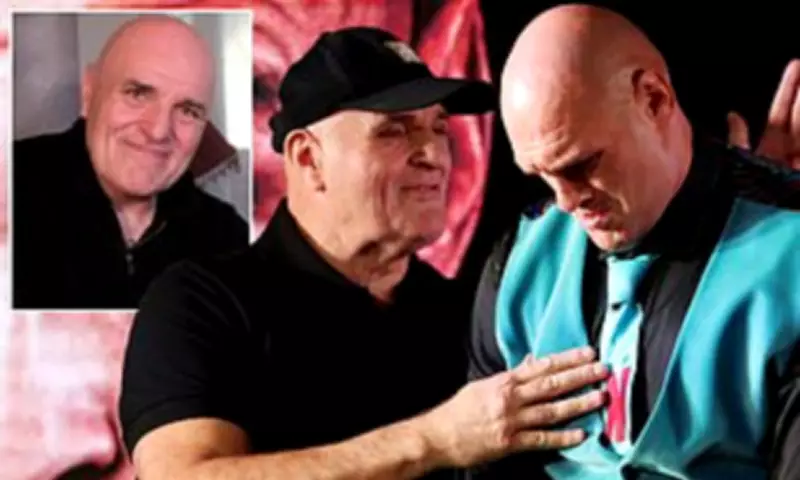
John Fury Declares Relationship with Son Tyson 'Destroyed Completely'
In the quiet, secluded fields of Mobberley, where hedgerows give way to open land, John Fury lives a life stripped of extravagance. A simple fire burns against the chill, a pot simmers on a makeshift stove, and the patriarch of boxing's most famous family waits, ready to deliver a devastating verdict. Within minutes of meeting, he states plainly: his relationship with his son, world heavyweight champion Tyson Fury, is "destroyed completely."
A Father's Bitter Estrangement
John Fury will not be present at the Tottenham Hotspur Stadium on April 11 when Tyson faces Arslanbek Makhmudov. He will not watch the fight. In his view, Tyson is "gone" as a fighter since the brutal trilogy with Deontay Wilder, and he places the blame squarely on those now surrounding his son. What unfolds is not merely a pre-fight interview but a father laying bare the bitter collapse of one of sport's most iconic relationships, filled with regret, lingering love, and searing criticism.
The setting is starkly fitting. John lives with defiant simplicity—his meals are fuel, not pleasure: chicken, cabbage, broccoli, carrots, and onion, eaten three times daily without salt or seasoning. Breakfast might be porridge with nuts, honey, ginger, and garlic; weekends bring ice cream "for sugar"; Fridays see two pints of Guinness "for iron." Around him roam 30 horses, chickens, and sheep—a world away from the multi-million-pound spectacle his son inhabits.

"My relationship with Tyson is destroyed," he tells Daily Mail Sport via Playbook Boxing. "Boxing destroyed it completely. I'll say it on camera: I've never taken £10 off him in my life and I never will. I don't want Tyson's money and I don't need Tyson's money. Whatever he's got, good luck to him. But, don't forget who built his story when he was a kid. He didn't build it himself, did he? Me, his father."
Emotional Facade Falters
This sense of ownership—of having created something extraordinary—makes the estrangement cut deeply. Yet, for all the force in his words, the facade occasionally falters. As talk turns to their relationship, his eyes redden, his voice tightens, and he nearly stops. "I was 30 seconds away from asking for a break there. I haven't really expressed these emotions before but they're strong and they're there," he admits. It's a striking contrast to the man known for roaring at press conferences and flipping tables; here, the emotion is raw and contained, not performative.
John delivers a relentless, unfiltered assessment of Tyson's current standing. "I think he's past his best. I'm a no-filter kind of guy—I say it how I see it. I love him, but there are too many people patting him on the back and telling him things that aren't true, building him up like he's invincible. He's not and he hasn't been for a while."
He argues the Wilder trilogy took an irreversible toll. "Tyson has been gone since the Deontay Wilder fights, they finished him. Wilder completely done him. He's not got a leg underneath him. He's took a lot away from Tyson. Makhmudov is a problem for Tyson. I am the first one to say it. Listen, I understand now that Tyson is testing himself. But, I can tell you now, his legs aren't there anymore."
Scathing Critique of Inner Circle
If Wilder marked the decline, John believes mismanagement accelerated it. His criticism of trainer SugarHill Steward is scathing. "He is useless. A complete waste of space and has been ruining Tyson. Everyone who's been in that corner with Tyson has seen it. Everyone who has had him as a trainer has been beaten."
He describes a camp lacking discipline, where individuals "flew in with only two and a half weeks left, just to pick up a paycheque," drawn by cameras and money rather than genuine investment. "The team is b*****s—the lot of them. Same squad, same nonsense. Tyson's strength and conditioning is built on a carrot—it's not about looking pretty. Look at him, he's not a beautiful body type. You get in the ring, you need to be right physically, especially when that kind of money's involved. And Tyson hasn't looked right on a lot of occasions and it's because of the people around him."

Displacement and Disagreement
Behind every professional critique lies a personal grievance: his voice, once central, has been replaced. "He's taken their word over mine," John says. "And that's eaten me up, more than I can explain." He recalls a "furious bust-up" before Tyson's first fight with Oleksandr Usyk, insisting he begged his son not to take it due to a cut and insufficient recovery.
"I'll tell you about that, you should never have taken the fight with Usyk. I begged and prayed with him before the first fight. He'd already been through a full training camp, and then he got cut in the last week. He was worn out from that camp. You can't just have three weeks' rest and then go straight into another seven weeks—that's what happened."
John claims his tactical advice saved Tyson in the Usyk fight, contrasting it with Steward's instructions. "Do you know what Sugar's instructions were in the tenth round? Get your back foot up there, go and take him out. I said, he's got no legs under him—don't do that. He's got no power left. Get on your bike, get behind your jab, just work your way through it and get your legs back. Was that not sensible advice? If I hadn't been in that corner, he'd have gone out in the tenth round trying to knock him out—throwing big punches."
A Bleak Outlook and Lingering Love
Despite everything, John does not predict disaster against Makhmudov—Tyson may even look "sensational." But certainty has been replaced by doubt. "There's always that risk. He's 38, he hasn't been in the ring for 18 months, and people are filling his head with nonsense." For a potential third Usyk fight, his assessment is bleak: "Nothing's gonna change. Tyson's getting weaker and Usyk's getting stronger."
He issues a stark warning about safety. "All I ever said to him was this: if I’d been in his corner and he got into trouble, he wouldn’t die. But if he gets into trouble with them in his corner, he could end up dead or with brain damage for life. Because when your legs are gone, you need someone to save you. They won’t do that. They won’t throw the towel in. They won’t pull him out. Their egos are bigger than Tyson, bigger than the fight itself. And that’s how people get seriously hurt in this game."
As the interview closes, contradictions define John Fury. He insists the relationship is beyond repair—"No. It's his own fault"—yet speaks with detailed intensity that suggests otherwise. He claims to want nothing, yet cannot hide what has been lost. He presents as detached, living simply in Mobberley, yet remains emotionally tethered to a world he says he has left behind.