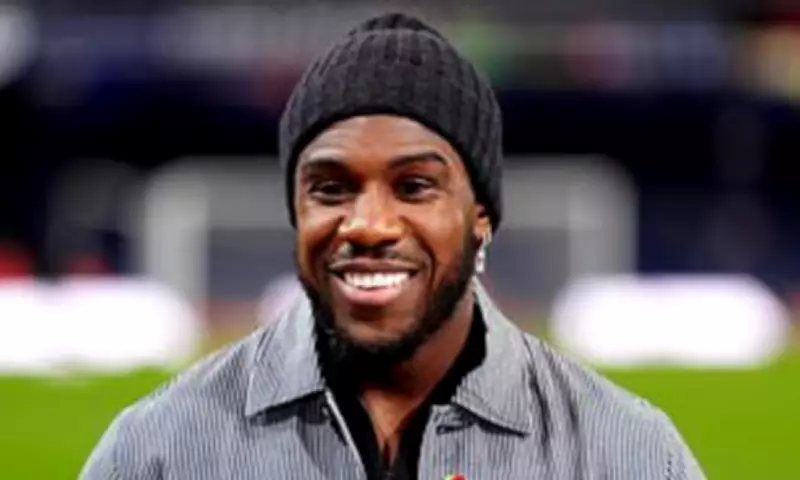
Former West Ham United forward Michail Antonio has candidly revealed the psychological and physical challenges he faced during his search for a new club, ultimately leading to his move to Qatari side Al-Sailiya. The 35-year-old Jamaica international admitted he had to 'swallow his ego' to accept training trials after a harrowing car crash 15 months ago that was nearly fatal and resulted in multiple leg fractures.
A Grueling Recovery and Contract Hunt
Antonio's journey back to professional football has been fraught with obstacles. Following the devastating accident, which he cannot recall, the experienced attacker engaged in discussions with several English clubs. He trained and held talks with Brentford and Leicester City regarding potential contracts, but neither deal materialised due to various complications.
Subsequently, Antonio was in advanced negotiations to join Charlton Athletic on a short-term arrangement. However, he ultimately decided to accept an offer from the Middle East, signing with Al-Sailiya in Qatar. This decision came after what he describes as a humbling period where he had to reassess his approach to securing employment in the sport.

Overcoming Pride and Proving Fitness
In an exclusive interview with BBC Sport, Antonio opened up about the difficulties of finding a club willing to take a chance on him post-injury. He suggested that many teams were apprehensive about offering contracts because of his accident history and the associated risks.
'I've still got the qualities I had in the Premier League for the past 10 years,' Antonio asserted confidently. 'It shows, because every single manager was putting a contract in front of me once I trained with them. But there were managers and clubs who refused to look at me because of what happened - the accident, the injury. Some owners went against it. In football, the manager can want you, but it's the owner's money.'
The forward described how his initial pride created additional hurdles. 'My agent kept calling clubs, and the same thing happened - clubs wanted me to train first. With the ego I had, I said, "I'm not coming to train. You've seen me play with Jamaica, you've seen my past 10 years. I shouldn't have to train to get a contract". Clubs said, "if you don't train, we won't sign you".'
The Turning Point and Setbacks
Antonio's perspective shifted after remaining at West Ham, training with their under-21 squad, and participating again with the Jamaican national team. 'After staying at West Ham, training with the under-21s and going away with Jamaica again, my agent said, "you're going to have to train, prove your fitness". I had to swallow my ego - that's how I ended up at Brentford. I trained with them for two weeks.'
His departure from West Ham occurred in the summer when he was deemed surplus to requirements by then-manager Graham Potter. Since then, Antonio has been diligently seeking a new club while continuing his recovery from the crash.
The path was further complicated by additional injury woes. He was on the verge of joining Brentford when he suffered a calf tear the day before signing. 'When I found out I'd torn my calf the day before signing for Brentford, I laid in bed for two days,' he recalled emotionally. 'First day, I was just crying. The second day, I just didn't want to get out of bed. I thought, "I'm back where I want to be, I'm back in the Premier League."'
Antonio also mentioned that Leicester City withdrew their interest because they were concerned about potential injury relapses affecting their squad management. This led him to train independently for a week before engaging with Charlton Athletic.
Looking Forward with Confidence
Despite these significant challenges, Antonio remains optimistic about his footballing future. He made a competitive return to action in June during the CONCACAF Gold Cup with Jamaica, demonstrating his ongoing capabilities on the pitch.
Now with Al-Sailiya, Antonio is focused on regaining his best form and putting the nightmare of his accident behind him. His story serves as a powerful testament to resilience in professional sports, highlighting the intersection of physical recovery, psychological adjustment, and the practical realities of football contracts.