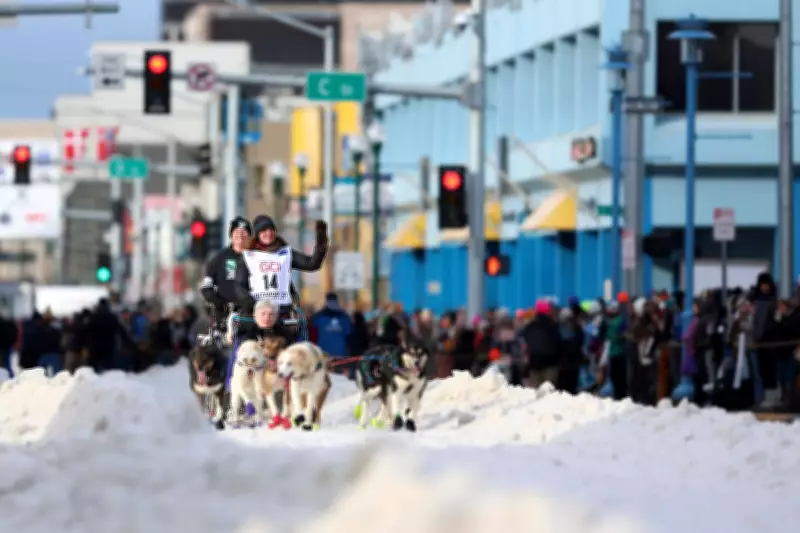
Downtown Anchorage Braces for Canine Takeover as Iditarod's 54th Run Commences
The streets of downtown Anchorage are set to be transformed by the sounds of hundreds of barking dogs this Saturday, marking the ceremonial start of the world's most famous sled dog race. The Iditarod Trail Sled Dog Race returns for its 54th running, with fans gathering to cheer on their favourite mushers a day before the competitive start begins.
Historical Roots and Modern Evolution
The Iditarod was originally conceived by co-founders Dorothy Page and Joe Redington Sr. as a long-distance sled dog race to honour Alaska's rich mushing tradition and the historic Iditarod Trail. This trail was a 938-mile freight and mail route stretching from Seward on Alaska's southern coast to Nome on the Bering Sea. The race's start was strategically placed in the Anchorage area to energise residents of Alaska's largest city, while the late Howard Farley was instrumental in establishing Nome, approximately 1,000 miles away, as the finish line.
In the inaugural 1973 race, thirty-four mushers started with only twenty-two finishing. Dick Wilmarth claimed victory in twenty days but never raced again, famously stating, "Cause I won." Since then, winners have become significantly faster, now reaching the finish line in about ten days.

A Small but Competitive Field
The number of mushers competing has fluctuated over the years, with retirements of longtime participants and rising costs, such as dog food, contributing to smaller fields this decade. The largest field was ninety-six mushers in 2008, while the race's first five decades averaged about sixty competitors. Only thirty-three started in both 2023 and 2025, the fewest ever recorded.
This year, thirty-four mushers are competing, matching the 1973 number. They will glide their sleds over eleven miles of trails in Anchorage on Saturday, with the competitive 1,000-mile race starting Sunday on a frozen lake about seventy-five miles north of the city.
Norwegian Billionaire's Financial Backing
Although thirty-seven mushers are participating this year, three are ineligible for the championship or prize money due to the new Iditarod Expedition Musher Program. This honorary category allows participants like Norwegian billionaire Kjell Rokke, now residing in Switzerland, and Canadian entrepreneur Steve Curtis to race with outside assistance.
Rokke is providing substantial financial support, boosting the race purse by $100,000 to a total of $650,000 and offering $170,000 to the seventeen Alaska Native villages serving as checkpoints. Iditarod CEO Rob Urbach noted that this donation should increase payouts, with the winner receiving about $80,000, significantly above last year's $57,000.
Norwegian musher Thomas Waerner, the 2020 Iditarod winner, will support Rokke's dog team, while four-time champion Jeff King aids Curtis on a snowmachine. Waerner commented, "I believe it is healthy for the sport to evolve and look at new opportunities. The cost of running a competitive kennel has increased significantly over the years, and this initiative is an attempt to explore more sustainable ways to finance both a racing kennel and the race itself—while maintaining high standards for dog care, training, competition, and overall quality."
Former Champions and International Competitors
This year's field includes three former champions vying for their second title: defending champion Jessie Holmes, 2023 champion Ryan Redington, and 2019 winner Pete Kaiser. Holmes, a former reality television star on National Geographic's "Life Below Zero," aims to join Susan Butcher and Lance Mackey as the only mushers to win their second title the year after their first. Both Butcher and Mackey, who each won four championships, passed away from cancer.
Redington is the grandson of co-founder Joe Redington Sr., and Kaiser was the first Yup'ik to win the race. Additionally, four competitive mushers from other countries are participating: two from Canada, one from Norway, and one from Denmark.

Challenging Route and Historic Finish
Mushers will face deep snow along much of the 1,000-mile trek to Alaska's western coast. The route traverses two mountain ranges, the frozen Yukon River, and treacherous Bering Sea ice before concluding on Front Street in Nome. The finish line near City Hall sits on the former site of The Dexter, a bar owned by Wyatt Earp during Nome's gold rush days.
The winner is expected to reach Nome early in the week of March 16, continuing a tradition that blends Alaska's heritage with modern competitive spirit.