In a wide-ranging interview that has sparked significant debate across the footballing world, FIFA President Gianni Infantino has issued a formal apology to British supporters over controversial comments made at last month's World Economic Forum in Davos. The Swiss administrator also staunchly defended the decision to award a peace prize to former United States President Donald Trump and indicated that FIFA would need to consider readmitting Russia to international football competitions.
Apology Over British Fan Remarks
Infantino's apology comes after he remarked that the 2022 World Cup in Qatar was special because "for the first time in history no Brit was arrested." Speaking to Sky News, Infantino clarified that his comment was intended as a lighthearted observation about the peaceful nature of the tournament. "I need first to apologise," he stated. "It was meant to be more of a lighthearted remark to show that actually the World Cup in Qatar was a celebration, was a peaceful event and everyone came together in a peaceful way."
The Football Supporters' Association had previously described the comments as a "cheap" joke at the expense of fans, while Chief Constable Mark Roberts, the UK's football policing lead, noted they were "neither helpful nor accurate" given the exemplary record of British supporters at numerous tournaments both before and after the Qatar event.

Defence of Trump Peace Prize Decision
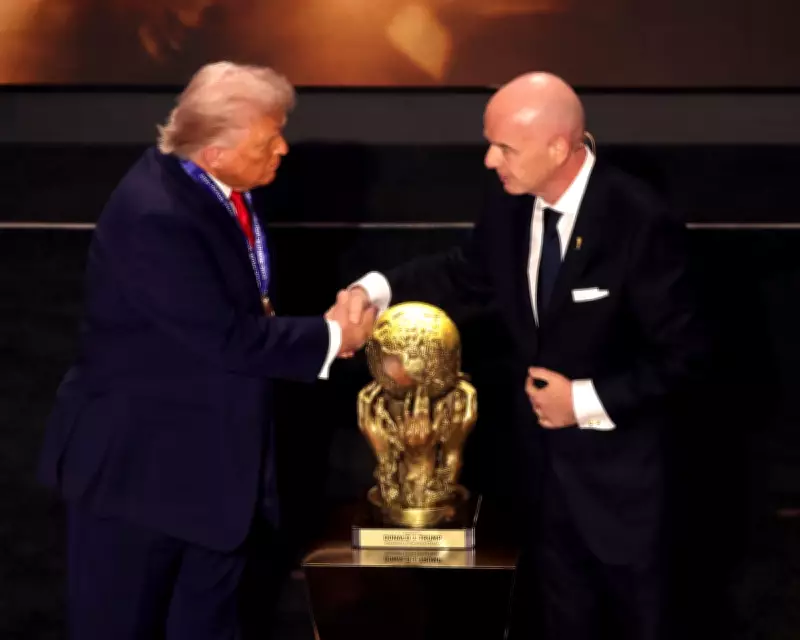
Perhaps more controversially, Infantino robustly defended FIFA's decision to award its inaugural peace prize to Donald Trump at December's World Cup draw in Washington DC. The move had attracted substantial criticism, particularly following US military actions in Venezuela and Trump's threats regarding Greenland. When questioned about the award, Infantino responded unequivocally: "Objectively, he deserves it."
The FIFA president elaborated on Trump's diplomatic efforts, specifically highlighting his role in brokering a ceasefire between Israel and Hamas. "He was instrumental in resolving conflicts and saving lives and saving thousands of lives," Infantino asserted, presenting this as justification for the controversial honour bestowed upon the former US leader.
Potential Russian Readmission to International Football
In another significant development, Infantino revealed that FIFA and UEFA would "have to" examine the possibility of allowing Russia back into international football. The nation has been banned from competitions since its invasion of Ukraine in 2022, but recent recommendations from the International Olympic Committee have suggested that international sports federations should admit Russian teams at youth level.
"We have to [look at readmitting Russia]. Definitely," Infantino declared. "This ban has not achieved anything, it has just created more frustration and hatred. Having girls and boys from Russia being able to play football games in other parts of Europe would help."
This position aligns with FIFA's announcement on 17 December regarding new under-15 festivals, with events open to all 211 member associations, suggesting a pathway for Russian youth participation.
Dismissal of World Cup Boycott Concerns
Addressing concerns about potential boycotts of this summer's World Cup due to policies of the Trump administration, Infantino dismissed such notions outright. He pointed to unrest in US cities over immigration enforcement and the Greenland controversy as issues that had raised concerns among traditional allies.
"In our divided world, in our aggressive world, we need occasions where people can come, can meet around the passion [for football]," he argued, questioning why football should face boycotts when businesses typically do not. "There were never calls for businesses to boycott a country, so why football?"
The FIFA president's comments represent a significant intervention in several ongoing controversies within international football governance, touching upon fan relations, political diplomacy, and the complex intersection of sport with global geopolitical tensions.