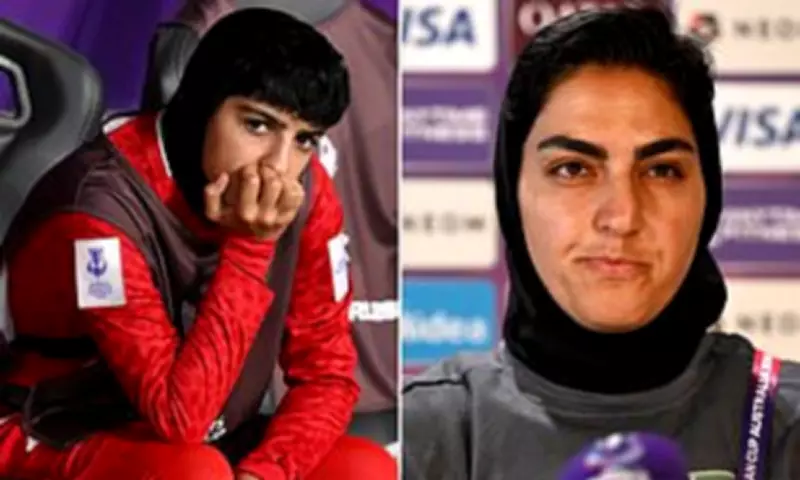
Iranian Footballers Granted Asylum in Australia Following Defiant Protest
Five Iranian women footballers have been granted humanitarian visas by the Australian government after a dramatic escape from their handlers during the Asian Cup. The players, who initially feared for their future due to language barriers and employment concerns, were also reportedly terrified of local police based on their experiences with Iranian authorities.
The Escape and Asylum Process
Fatemeh Pasandideh, Zahra Ghanbari, Zahra Sarbali, Atefeh Ramezanizadeh and Mona Hamoudi successfully applied for asylum after escaping from a Gold Coast hotel on Monday. The quintet had been in Australia participating in the Women's Asian Cup tournament when they made their bold move to seek protection.
According to migration agent Naghmeh Danai, who informed the players of their asylum options, the situation was highly stressful for the footballers. "They were under a lot of stress. They didn't know what to do, they were worried about their family, their assets in Iran," Danai told ABC News. "They wanted to stay, but they were worried about the consequences because, you know, how the government of Iran... can confiscate everything."

The Silent Protest That Sparked International Attention
The players first attracted global headlines when they refused to sing Iran's national anthem before their opening match against South Korea on March 2. As the Islamic regime's anthem played, the players and coach Marziyeh Jafari stood in complete silence. This protest occurred less than 48 hours after the United States announced that Iran's Supreme Leader Ayatollah Ali Khamenei had been killed.
Harrowing footage subsequently emerged from Iran, with the players who remained silent being labelled as 'wartime traitors' who must be dealt with severely. The political implications of their protest created an environment where returning to Iran became increasingly dangerous for the athletes.
Additional Team Members Choosing to Stay
Daily Mail understands that teammates Gooloosh Khosravi and Mohadeseh Zolfi have also decided to remain in Australia, along with team procurement manager Fleur Meshkin-Kar. The rest of the women's national squad are flying home to the Middle East, creating a significant split within the team based on individual choices about their future safety and freedom.
Home Affairs Minister Tony Burke has confirmed that each player from Iran's Asian Cup squad was given the option to either return to their families or start a new life in Australia. "We made sure there was no rushing. There was no pressure. Everything was about ensuring the dignity for those individuals to make a choice," Burke stated.
Initial Fears and Concerns
The footballers faced numerous concerns about their potential life in Australia. According to Danai, the players wanted clarity over issues such as their right to work in Australia and how they would adapt given they don't speak English. The language barrier presented a significant practical challenge for their integration into Australian society.
Perhaps most tellingly, the footballers were reportedly fearful of Australian police based on their previous dealings with Iranian authorities. This fear highlights the psychological impact of living under an authoritarian regime and how it shapes perceptions of law enforcement even in democratic countries.
Government Support and Emotional Meetings
Minister Burke described emotional meetings with the players as they weighed their difficult decision. "They were emotional meetings...I can't begin to imagine what people have been weighing up," he said. "These individuals were meeting a government that said, the choice is up to you, and here is the opportunity if you want to take it, but the choice and the dignity of that decision is yours as Australians."
The minister emphasized Australia's commitment to providing refuge, stating: "We should be proud that we are that sort of country." The humanitarian visas represent a significant commitment from the Australian government to protect individuals facing potential persecution in their home country.

Broader Implications and Future Challenges
The situation reveals the complex intersection of sports, politics, and human rights. While the players who chose to return to Iran faced their national anthem in subsequent matches against the Matildas on the Gold Coast, those who stayed must now navigate the challenges of building new lives in a foreign country.
Danai revealed that the Iranian regime attempted to "brainwash" the players, urging them to return home. This pressure campaign underscores the political stakes involved in their decision to seek asylum and the risks faced by athletes who use their platform for political expression.
The footballers' journey from international competitors to asylum seekers represents a dramatic transformation in their lives, highlighting the personal costs of political dissent and the sanctuary offered by countries like Australia to those facing persecution.