Mexico's World Cup Hosting Under Scrutiny Amid Cartel Violence Surge
As Mexico gears up to host matches in the upcoming FIFA World Cup, football enthusiasts are expressing growing apprehension about visiting the nation. This concern follows a significant escalation in violence triggered by the capture and death of a powerful cartel leader. The Mexican military confirmed on Sunday that it eliminated Nemesio Ruben Oseguera Cervantes, widely known as 'El Mencho', the head of the Jalisco New Generation Cartel. This action effectively decapitated what had emerged as Mexico's most dominant criminal organisation.
Violence Erupts Across Jalisco State
The killing has ignited a wave of unrest, placing a country already mired in brutal cartel conflicts on high alert. In the ensuing chaos, cartel operatives have blocked roads, torched vehicles, and launched assaults on security forces. This turmoil intensifies pressure on Mexico as it prepares for its role in the 2026 World Cup, jointly hosted with Canada and the United States.
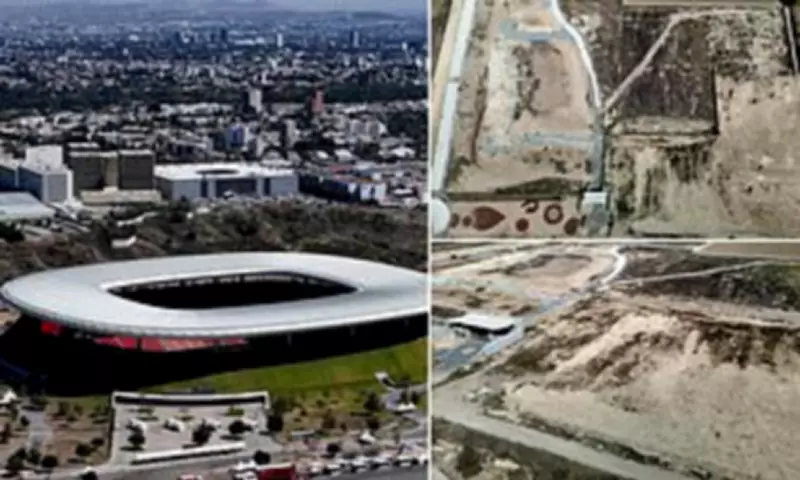
Recent discoveries have further heightened anxieties. Last year, hundreds of human remains were found within a ten-mile radius of Akron Stadium in Guadalajara, located in Jalisco state. This venue is slated to host four matches during the tournament. Initial findings occurred in February when construction workers uncovered plastic bags containing human remains at a housing development site.

Mass Grave Discoveries Near World Cup Venues
Subsequently, in March, a civilian activist group unearthed a clandestine grave in Jalisco, with video footage showing searchers excavating a property in Teuchitlan. Just months ago, dozens of additional human remains were discovered near Akron Stadium. The Guerreros Buscadores collective, volunteers searching for missing relatives, made one of the largest finds in 2025 at "Las Agujas" in Zapopan, Jalisco, uncovering 227 bags of human remains.
Haunting evidence from these sites includes at least 400 pairs of footwear, clothing items, luggage, and backpacks, believed to belong to victims kidnapped and massacred at the Izaguirre Ranch, allegedly operated by the Jalisco New Generation Cartel. Other mass graves have been reported across Jalisco, with up to 48 bags of human remains found in Guadalajara as recently as October.
National Crisis of Missing Persons
These discoveries contribute to dozens of similar cases in Jalisco, the state most severely affected by Mexico's missing persons crisis, where over 127,000 individuals have vanished nationwide. Most disappearances are linked to cartel violence, which has plagued Mexico for decades following government anti-drug military operations. One of the largest mass graves in North America was reported in 2017, with more than 250 skulls found near Veracruz.
Mexicans are now questioning Guadalajara's capability to serve as a host city for the summer football competition. Despite government assurances that the international event will proceed unaffected, scepticism persists. Hugo Alejandro Perez, a restaurant owner near the Guadalajara stadium, voiced concerns, stating, 'I don't think they should host the World Cup here. We have so many problems, and they want to invest in the World Cup? With all the violence, it's not a good idea.'
Government and FIFA Responses
President Claudia Sheinbaum, at a daily news briefing, asserted 'Every guarantee' for World Cup matches in Jalisco, claiming 'no risk' for attending fans. Jalisco Governor Jesús Pablo Lemus confirmed discussions with local FIFA officials, who have 'absolutely no intention of removing any venues from Mexico. The three venues remain completely unchanged.'
However, international observers are monitoring the situation closely. Portugal's football federation noted it is 'closely monitoring the delicate situation' in Mexico, with its national team scheduled for a friendly match at Mexico City's Azteca Stadium, which will host the World Cup opener on June 11.

Root Causes and Broader Implications
Jalisco state has long faced scrutiny due to stark examples of cartel violence and serves as the central hub for the Jalisco New Generation Cartel. The operation that killed El Mencho and subsequent violence resulted in over 70 deaths, with cartel gunmen setting cars ablaze to block streets and clashing with Mexican forces into Monday, though the government declared the conflict under control.
El Mencho's death aligns with Mexico's intensified offensive against cartels, partly in response to demands from US President Donald Trump to crack down on criminal groups. The White House acknowledged providing intelligence support for the capture and praised Mexico's army for apprehending one of the most wanted criminals in both nations. Trump briefly referenced the operation in his State of the Union address, stating, 'We've also taken down one of the most sinister cartel kingpins of all. You saw that yesterday.'
The fundamental worry for many Mexicans is that El Mencho's demise could fuel further violence. Eliminating kingpins often sparks internal cartel conflicts and prompts rival groups to seize territory, potentially exacerbating the security challenges as the World Cup approaches.