Premier League Grappling Crisis: Referees Face Penalty Area Chaos
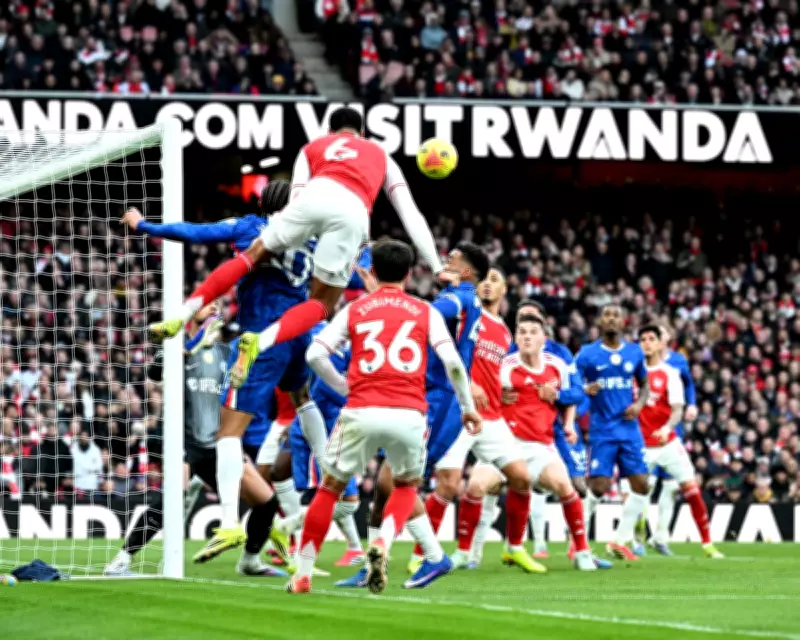
The Premier League is witnessing a dramatic escalation in grappling incidents within penalty areas this season, with recent matches highlighting the intense challenges faced by referees. Arsenal's victory over Chelsea served as a stark example, where multiple holding offences occurred during a single corner kick, involving players like Declan Rice, David Raya, and Gabriel Magalhães. This trend underscores a proactive approach by officials to clamp down on holding, yet the issue has intensified over the past two months as clubs increasingly load the box during set pieces.
Referees' Critical Decisions Under Scrutiny
Referees are tasked with identifying material impact offences, where players clearly impede opponents from playing the ball. This includes non-footballing actions, such as shepherding or persistent shirt-pulling. In the north London derby, Tottenham's disallowed goal due to Randal Kolo Muani's push on Gabriel was deemed correct, with no VAR intervention needed. Similarly, Fulham's goal against Tottenham stood despite complaints, as the contact was minimal and not penalised under current guidelines.
However, the line between acceptable contact and foul play remains blurred. Attackers and defenders alike are often culpable, engaging in mutual holding that referees may allow to continue if it doesn't significantly affect play. The preference this season has been to avoid penalising slight contact, a stance that has sparked debate among fans and pundits.

VAR's Role in High-Stakes Incidents
The use of VAR has been pivotal in recent weeks, though not without controversy. Burnley's disallowed goal against Brentford, due to Ashley Barnes' handball, took over four minutes to review, partly because of a technical area melee that required additional scrutiny. This incident raised questions about the speed and accuracy of decisions, as well as the handball law itself.
At Old Trafford, a collaborative effort between referee Chris Kavanagh, his assistant, and VAR Tony Harrington led to a red card for Crystal Palace's Maxence Lacroix. The holding foul, which started outside the penalty area and continued inside, resulted in a penalty and a sending-off for denying an obvious goalscoring opportunity. This example showcased effective teamwork among officials, ensuring a correct and decisive outcome.
Player Responsibility and Game Dynamics
Players bear significant responsibility in this grappling epidemic, with histrionics and easy falls complicating referees' jobs. Offences are often obscured by crowded penalty areas, making detection difficult. The Premier League's shift towards aggressive set-piece tactics has exacerbated the problem, requiring referees to maintain vigilance and consistency.
As the season progresses, the focus on grappling will likely intensify, with referees striving to balance proactive enforcement with the flow of the game. The English game's desire for VAR to remain in the background, only intervening for clear errors, adds another layer of complexity to these high-pressure decisions.